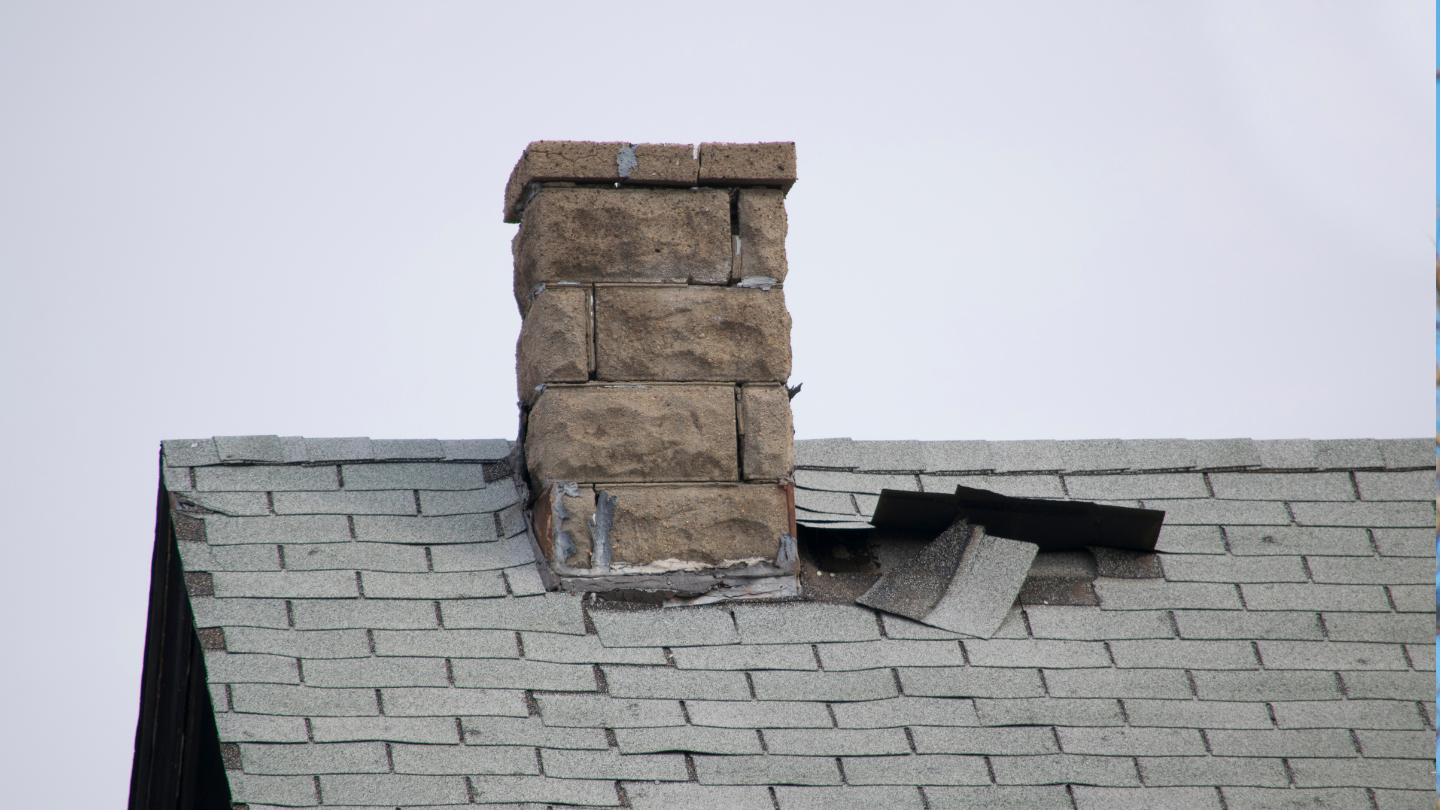
The chimney is the most exposed part of most Bristol roofs, and it's the part homeowners look at least. It sits up above the ridge taking the full force of the weather from every direction, and because you can't see it up close from the ground, problems tend to go unnoticed until water is coming through a bedroom ceiling. This guide covers what goes wrong with chimneys here, how to spot it early, and what the repairs actually cost.
Why Bristol Chimneys Take Such a Beating
A chimney stack is a little tower of brickwork standing proud of the roof, exposed on all four sides with nothing sheltering it. Rain hits it, wind drives water into the joints, and in winter that water freezes and expands. The rest of the roof has tiles angled to shed water away. The stack just sits there and takes it, year after year.
Bristol makes this worse in two ways. The city gets well over 800mm of rain a year, with prevailing south-westerly weather driving rain hard against the exposed faces of a stack. And a huge proportion of Bristol's housing is Victorian and Edwardian - the terraces of Bedminster, Easton, Totterdown, St George and Redland - with tall original chimney stacks built with soft lime mortar that's now well over a century old. Those stacks were built to be maintained, and many haven't been touched in decades.
The result is that chimney work is one of the most common jobs we get called out for across Bristol, and chimney flashing is behind a large share of the roof leaks we trace.
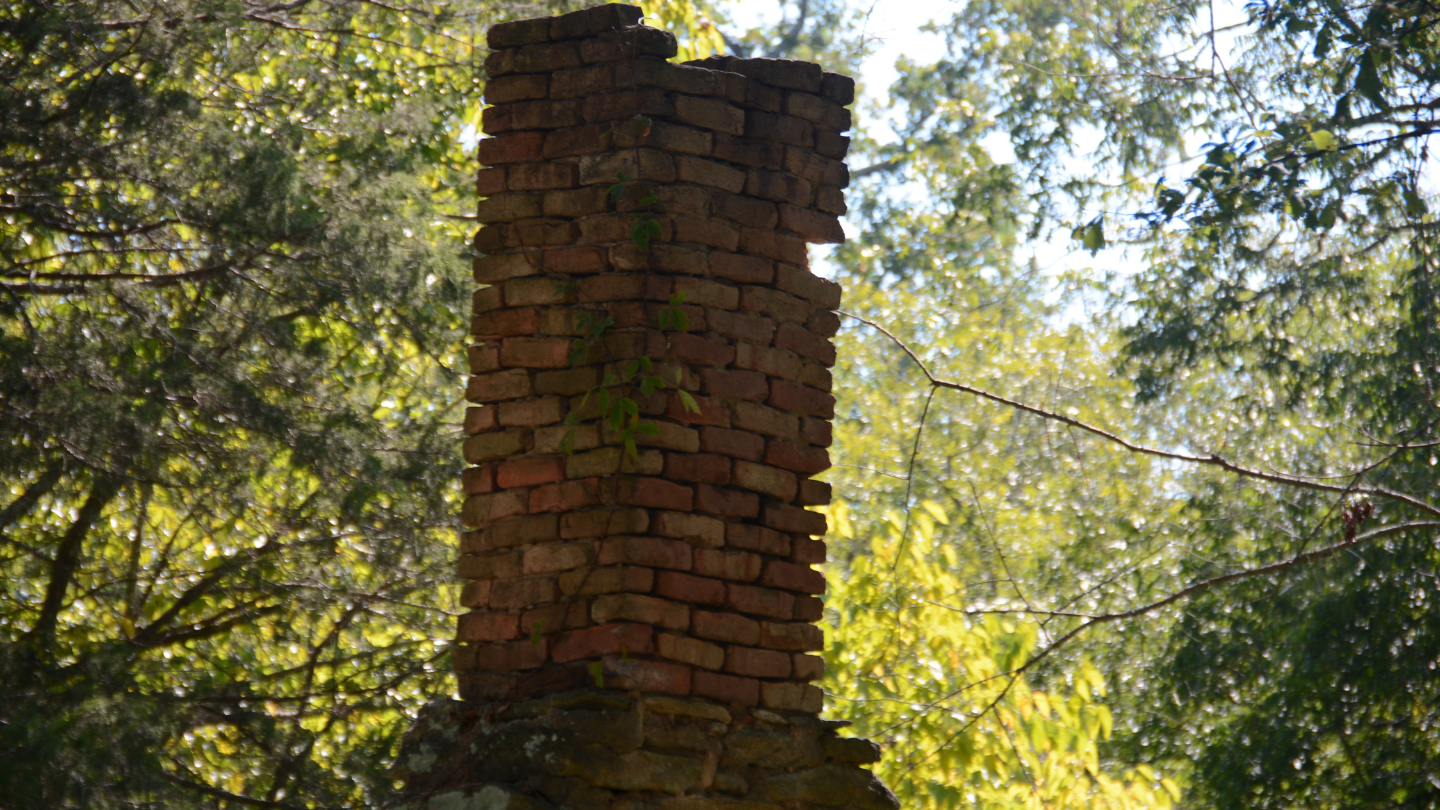
A chimney stack stands fully exposed above the roof, taking wind and rain from every direction - which is why it's usually the first part of the roof to fail.
The Signs Your Chimney Needs Attention
Most chimney problems are visible if you know what to look for, either from the ground with a pair of binoculars or from inside the house. Here's what tends to signal trouble:
- Crumbling or missing mortar joints: The mortar between the bricks softens, recesses and eventually falls out. If you can see gaps in the joints, or bits of sandy mortar are turning up in your gutters, the pointing has failed.
- Spalling brickwork: Bricks that are flaking, crumbling or losing their faces. This is frost damage - water gets into the brick, freezes and blows the face off. Common on stacks pointed with the wrong mortar.
- A leaning or bowing stack: If the stack looks like it's tilting, it needs attention urgently. Years of weather can erode the mortar unevenly and let the stack move.
- Damp on the chimney breast inside: Staining on the wall around the fireplace or in the bedroom above, especially after rain, often means water is getting into the stack and tracking down.
- White staining (efflorescence): A white, powdery deposit on the brickwork is salts being carried out by water moving through the masonry - a sign the stack is holding water.
- Rusted or lifting flashing: The lead where the stack meets the roof is a leak point in its own right, covered in the next section.
If you're seeing any of these, it's worth getting the stack looked at before the next hard winter. Frost is what turns a minor pointing problem into spalled brick and, eventually, an unsafe stack.
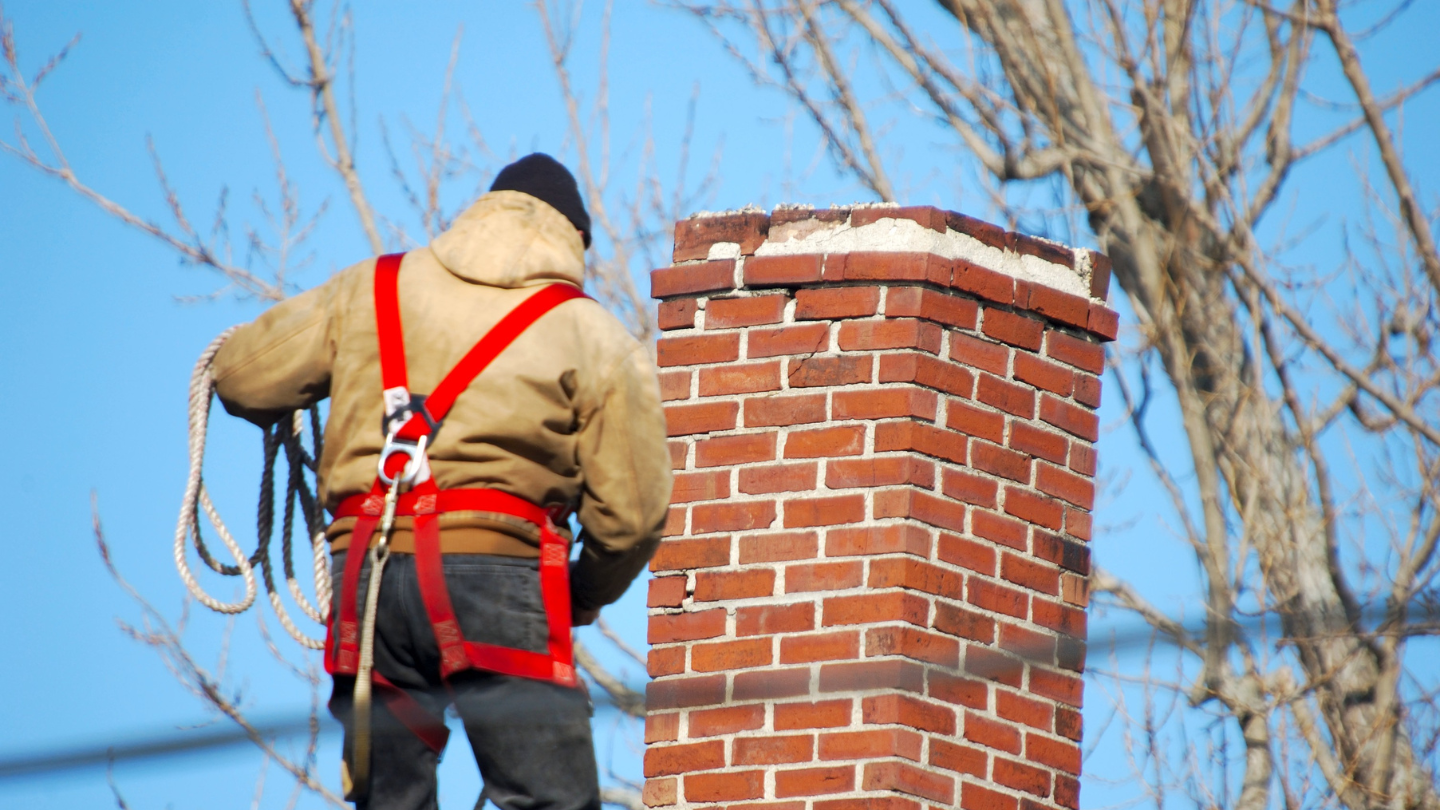
Raking out the failed mortar and repointing the joints is the most common chimney repair - and the one that prevents the expensive problems later.
What Repointing Actually Involves (and Why the Mortar Matters)
Repointing means raking out the old, failed mortar from between the bricks and replacing it with fresh mortar, sealing the joints against water again. It's the single most common chimney repair, and done properly it can add decades to the life of a stack.
Here's the part cheaper jobs get wrong, and on Bristol's period stacks it matters enormously. The original mortar on a Victorian or Georgian chimney is lime-based: soft, breathable, made to flex and let the wall breathe. Repoint it with hard modern cement, because that's quicker and cheaper, and you seal moisture into the soft old brick. Come the first hard frost, that trapped water freezes and blows the faces clean off the bricks. Now you've got spalled, crumbling brickwork that's worse than what you started with. We get called out to undo this more often than you'd think.
On a period stack, the right approach is to match the original lime mortar. It costs a little more and takes more skill, but it's the difference between a repair that lasts and one that actively damages the chimney. It's exactly the kind of thing worth asking any contractor about before they start. Our chimney repair service covers repointing across Bristol, and we treat period stacks with the materials they need.
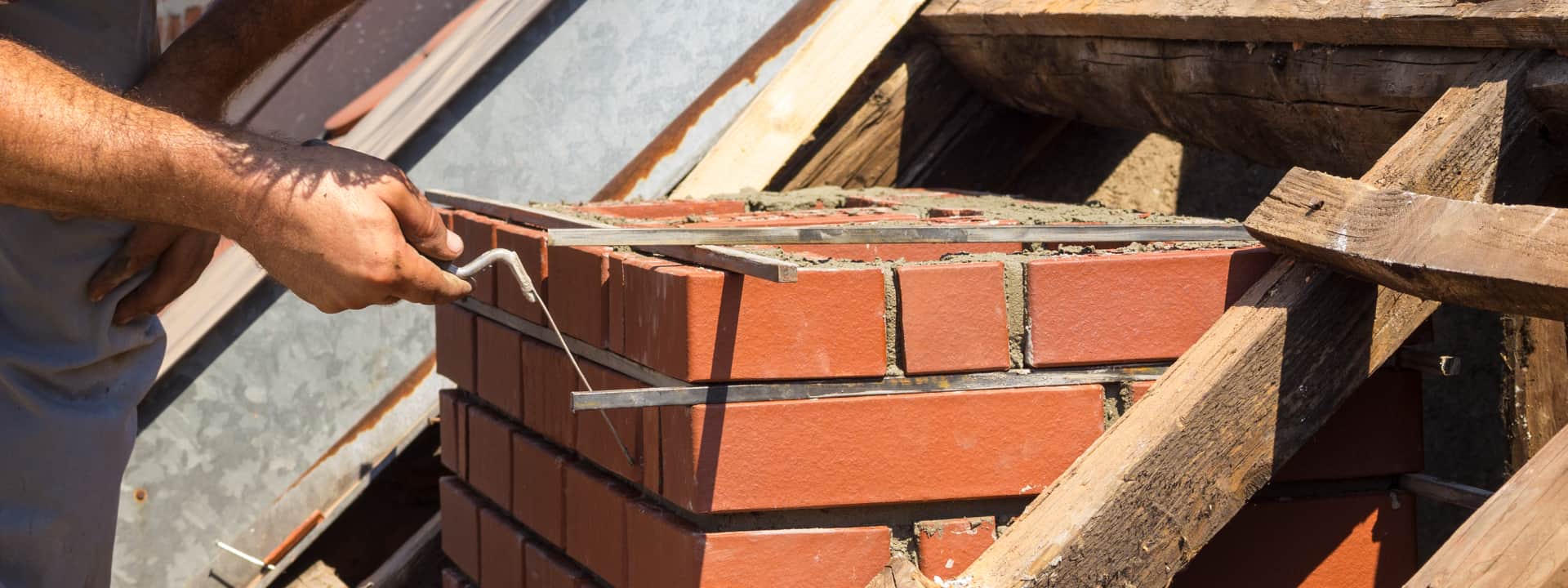
On Bristol's Victorian and Georgian stacks, matching the original soft lime mortar is essential - hard cement traps water and spalls the brick.
Lead Flashing: The Chimney's Biggest Leak Point
Where the chimney passes through the roof, the joint is sealed with lead flashing - shaped sheets of lead that lap under the tiles and tuck into the mortar joints of the stack. When it's right, it's watertight for decades. When it fails, it's one of the most common causes of roof leaks we deal with in Bristol.
Flashing fails when the lead lifts, cracks or splits, or when the mortar joint holding the top edge (the flashing that's tucked into the brickwork) crumbles and lets the lead pull away. Water then runs straight down the side of the stack and into the roof, often appearing on the ceiling some distance from the actual chimney, which makes it easy to misdiagnose.
Repairing or renewing chimney flashing is a job in its own right, and it's frequently done at the same time as repointing since the access is already there. We've covered this in detail in our guide to lead flashing repairs in Bristol, which is worth a read if you've got a leak near the chimney.
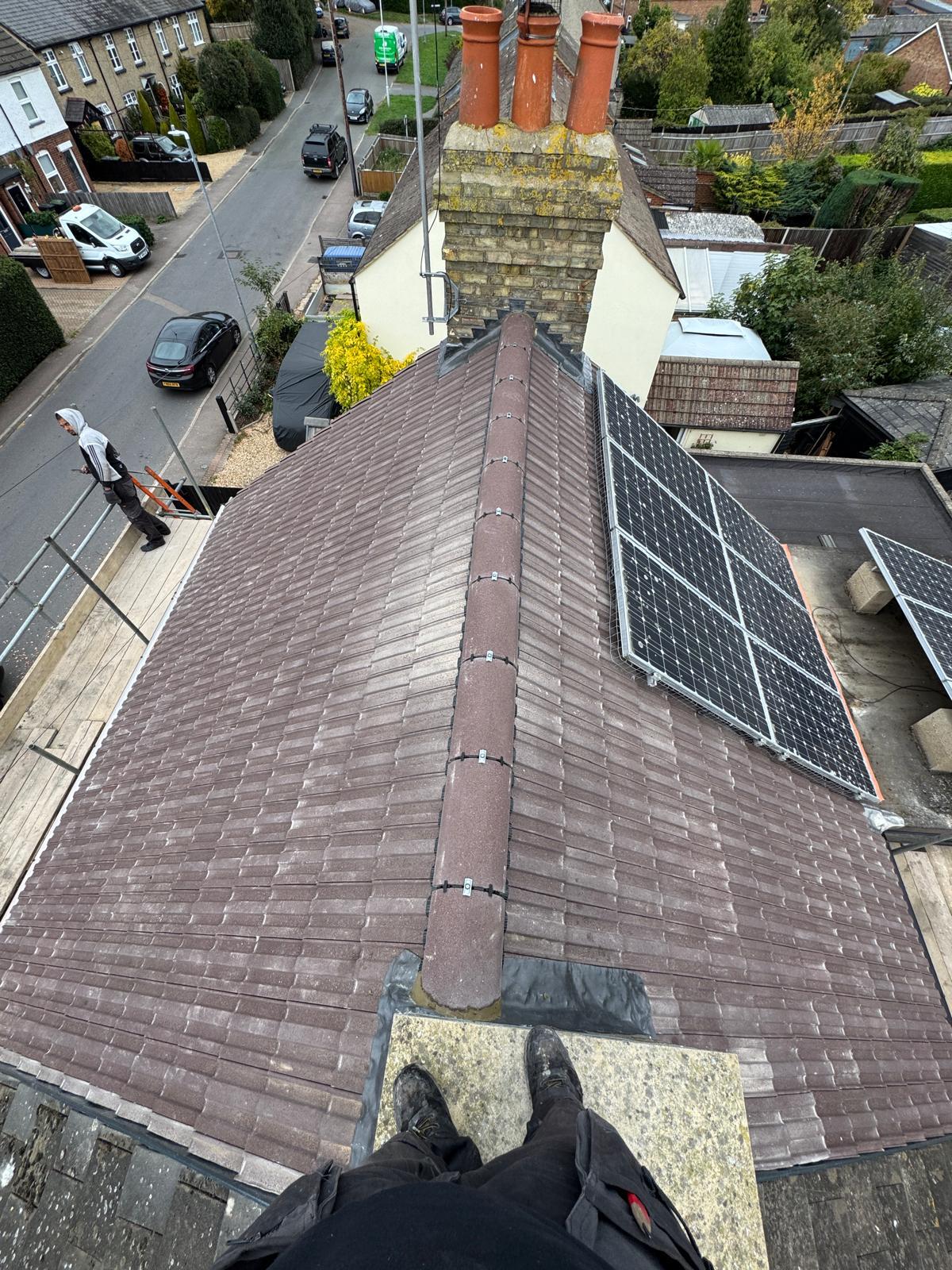
The lead flashing where the stack meets the roof is a leak point in its own right - often the real source of a leak that shows up on a ceiling nearby.
Repointing, Partial Rebuild, or Full Rebuild?
Not every chimney problem is fixed with pointing. How far you need to go depends on the condition of the brickwork itself, not just the joints between it.
- Repointing: The right fix when the bricks are sound but the mortar has failed. The most common and most affordable option.
- Partial rebuild: When the brickwork above the roofline is spalled, loose or leaning, the section above the roof is taken down and rebuilt, reusing sound bricks or matching new ones. The part of the stack inside the roof space is usually fine and left alone.
- Full rebuild: Where a stack is badly deteriorated or unsafe throughout, it's rebuilt from the roofline or lower. A bigger job, but sometimes the only safe option on a neglected stack.
- Removal: If a chimney is redundant and in poor condition, taking it down and making the roof good can be more sensible than repeatedly repairing it - though it's worth thinking about the look of the house and any conservation rules first.
A leaning or visibly loose stack is the one situation where you shouldn't wait. A chimney is a heavy piece of masonry sitting high on the roof, and a stack that's moving is a genuine safety issue, not just a maintenance one.
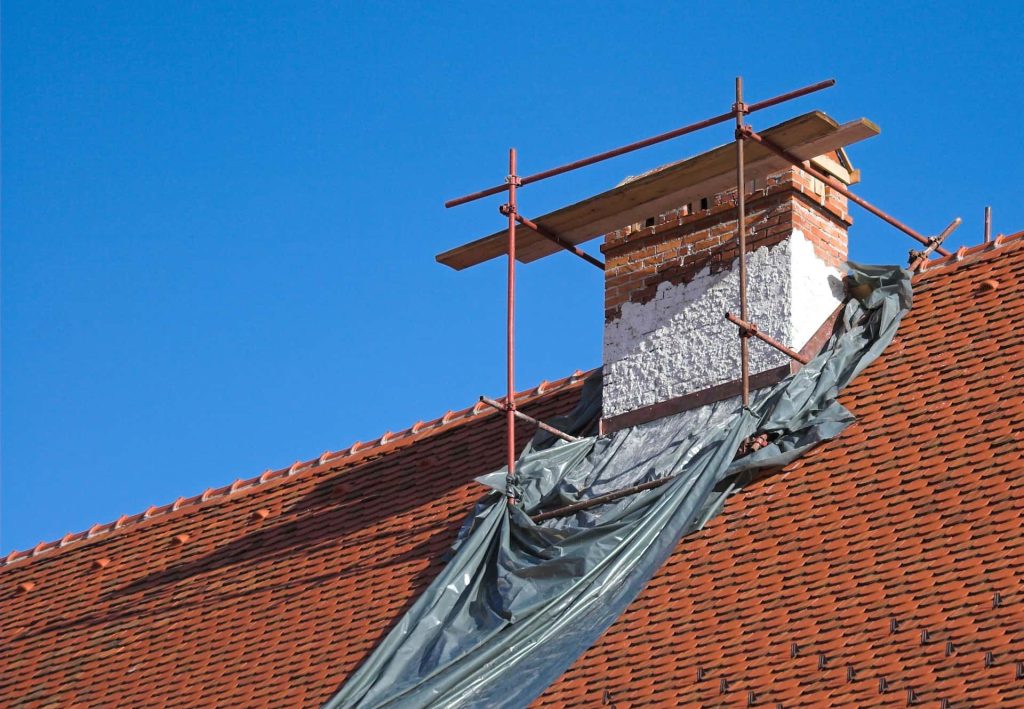
Where the brickwork above the roofline is spalled or leaning, the stack is taken down to a sound course and rebuilt - the part inside the roof is usually left alone.
What Chimney Work Costs in Bristol (2026)
Here are realistic guide prices for chimney work on a typical Bristol property. The figures vary with the size of the stack, how easy it is to reach, and whether scaffolding or a tower is needed for access.
- Repointing a stack: £400 - £1,200
- Renewing lead flashing around a stack: £300 - £800
- Partial rebuild (above roofline): £1,000 - £2,500
- Full rebuild: £2,000 - £4,500+
- Removing a stack and making good: £1,000 - £2,500
- Capping a redundant chimney with a vented cowl: £150 - £400
Almost all chimney work needs safe access at height, so a scaffold or tower is usually part of the cost - be wary of anyone quoting to rebuild or repoint a stack while balancing off a ladder. It's neither safe nor how proper work is done. For context on wider repair pricing, see our 2026 roof repair cost guide for Bristol.
When choosing someone for chimney work, use a vetted contractor - the National Federation of Roofing Contractors lists assessed members by area, and the TrustMark scheme lets you check they meet consumer-protection standards.

Chimney work needs safe access at height - a scaffold or tower should be part of any quote to repoint or rebuild a stack.
Redundant Chimneys, Capping and Conservation Rules
A lot of Bristol homes have chimneys that no longer serve a working fireplace. If a stack is sound, there's often no need to remove it - but an unused flue does need thinking about, because a completely sealed, disused chimney can trap moisture and cause damp. The usual answer is a vented cowl or cap: it keeps rain and birds out of the flue while still letting it breathe.
If you're considering removing a stack altogether, two things are worth checking first. One, taking a chimney down can affect the structure and the look of a terrace, particularly on a symmetrical Victorian street where every house has matching stacks. Two, if your property is listed or in one of Bristol's many conservation areas - Clifton, Redland, Cotham, Montpelier, Bishopston and others - chimneys are frequently treated as a protected character feature, and removing or altering one may need consent from Bristol City Council. GOV.UK's planning guidance covers the general position, and we'll flag anything relevant to your address during the assessment.
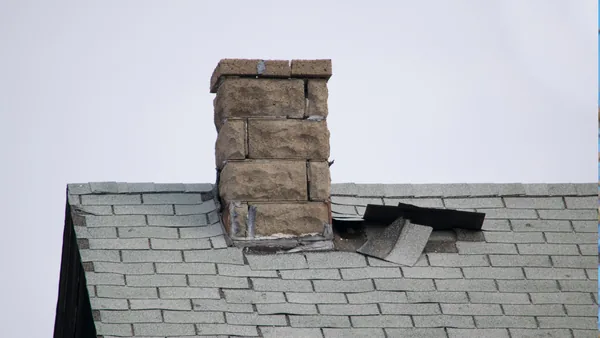
A redundant chimney usually doesn't need removing - a vented cowl keeps water out while letting the flue breathe to prevent damp.
Frequently Asked Questions
Worried about your chimney?
If you've spotted crumbling mortar, spalled brick, or damp near the chimney breast, get it looked at before winter. We offer free, no-obligation assessments across Bristol - we'll inspect the stack properly and tell you honestly whether it needs repointing, a rebuild, or just a cap.
Book a Free Assessment