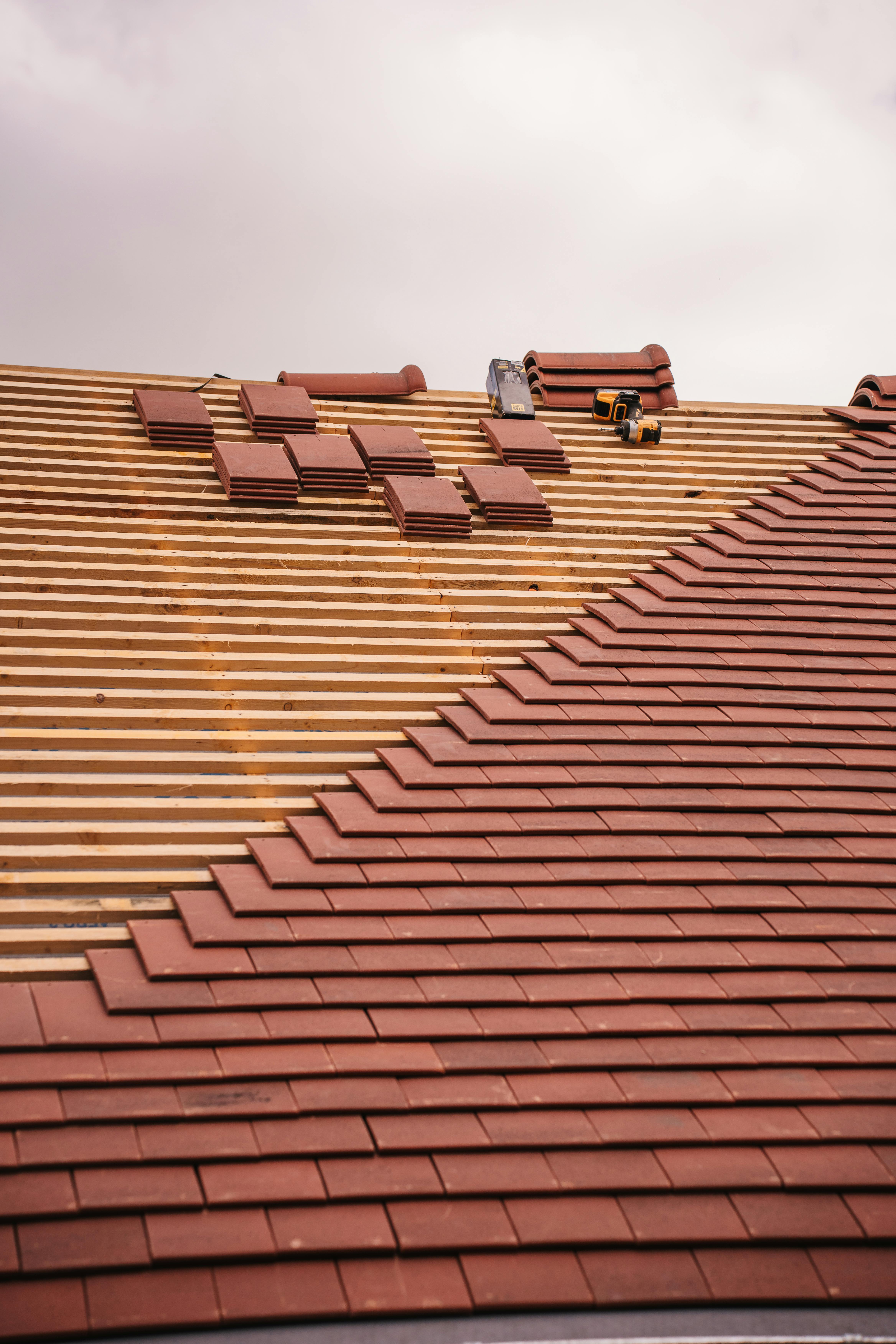
It's one of the most common questions we get: is this roof worth repairing, or is it time to start again? There's no universal answer - it depends on the age of the roof, the condition of everything underneath, how many repairs you've already spent money on, and what the property is actually worth protecting. This guide works through each factor so you can go into the conversation with a contractor knowing what to ask.
How Do You Know When a Repair Is No Longer Enough?
A single slipped slate or a cracked ridge tile almost always makes sense to repair. The cost is low, the fix is quick, and there's no reason to pull off a functional roof because one component has failed. Things shift when problems start coming back - the same section keeps leaking, different areas start going at once, or you're calling out a roofer two or three times in the same winter.
The maths change when you're looking at your third repair in eighteen months. A £400 job once is fine. Three times, on a roof that's clearly past it, and you've spent over a thousand pounds without actually solving anything. The underlying felt, the battens holding the tiles, the mortar on the ridge - these things wear out together. Patching the visible bit while the base underneath is shot is like changing a tyre on a car with a failing axle. It buys you a bit of time. That's all.
For a sense of where your roof sits, see our roof replacement service page - or read our guide to roof repair costs in Bristol for 2026 for individual job prices.
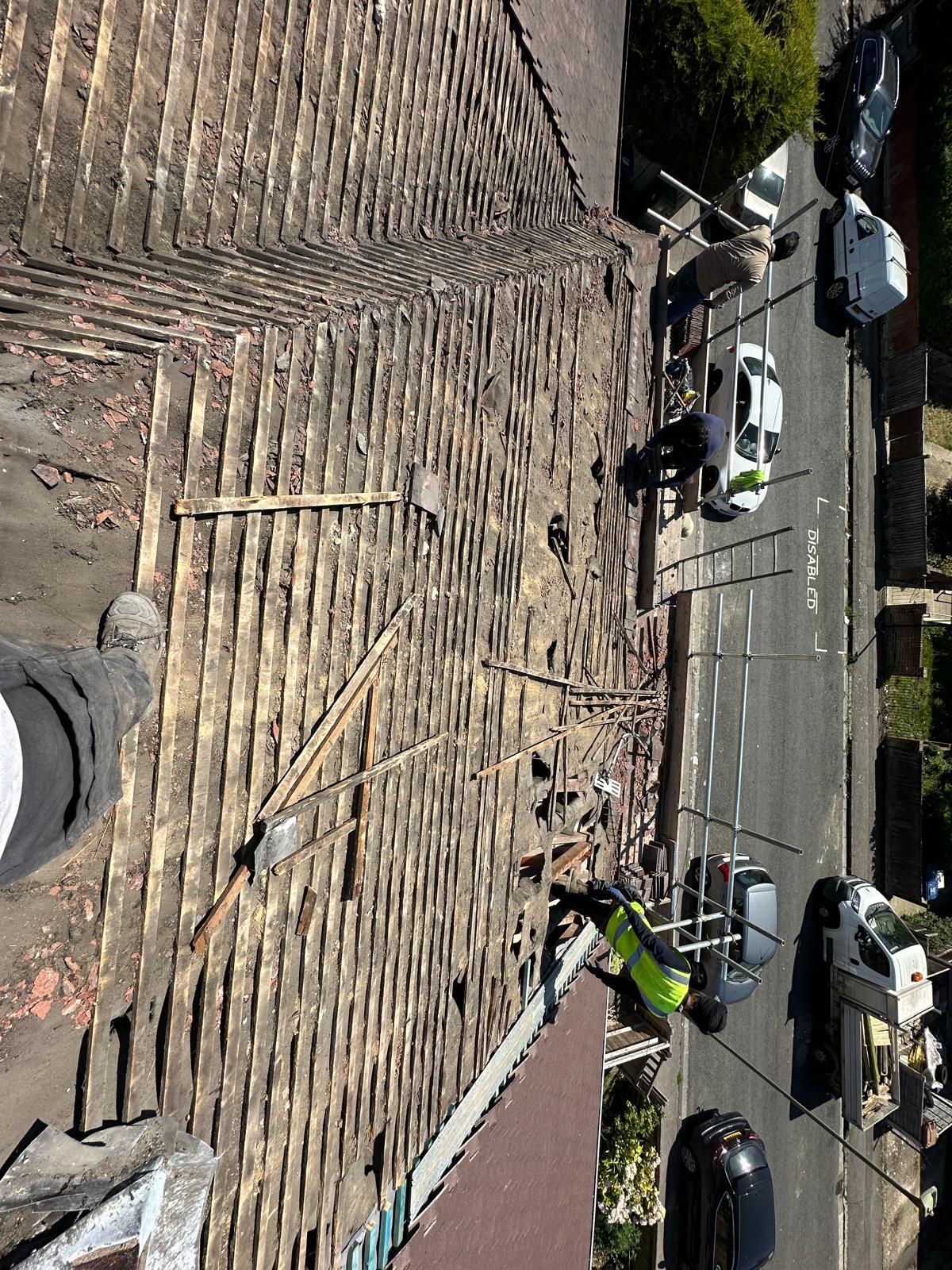
When tiles are lifting, slipping, and failing across multiple sections, repeated repairs become more costly than a full replacement.
How Old Is Your Roof? Why Age Matters for Bristol Properties
Age is the most useful number to start with. Every roofing material has a realistic lifespan, and once you're past it, you're in borrowed time - regardless of how the surface looks from the ground.
- Concrete and clay tiles: 40 to 60 years. A large number of Bristol's 1970s and 1980s houses are right at this threshold now - which is why we're seeing significant demand for replacements across areas like Hartcliffe, Horfield, Stockwood, and Whitchurch.
- Felt flat roofs: 10 to 20 years. EPDM rubber and GRP fibreglass last considerably longer at 25 to 50 years. Most felt flat roofs on Bristol extensions built before 2000 are well overdue.
- Natural Welsh slate: 75 to 150 years. The slate on a Victorian terrace in Redland may well have another 40 years left in it. The failure points are usually the nails, the pointing, and the battens - not the slate itself.
- Synthetic composite slate: 30 to 50 years. A reasonable middle option, though the earlier composite products installed in the 1990s are now reaching end of life.
If you don't know when your roof was last replaced, your solicitor's paperwork from purchase may include it. If not, a roofer can usually estimate from the materials and installation method. The National Federation of Roofing Contractors recommends a professional inspection every five years as a minimum, and annually for older roofs.
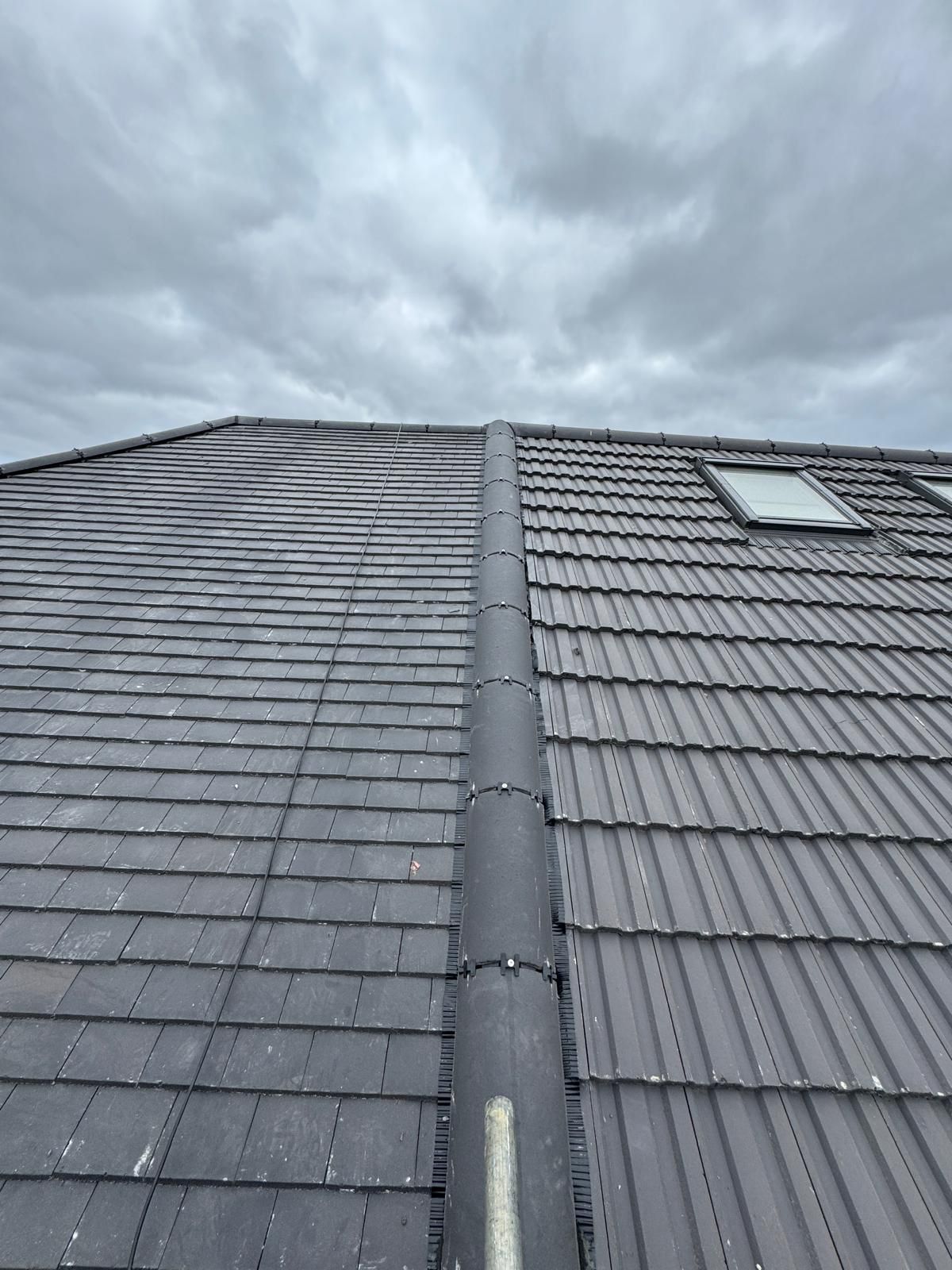
Many Bristol properties built in the 1970s and 80s are now at the end of their original roof's lifespan and due for a full replacement.
Structural Warning Signs to Look for on a Bristol Property
Some signs of a failing roof are visible from the pavement. Others only become apparent during a proper inspection. Here's what to look for at both levels.
From the ground:
- Sagging or uneven roofline - this suggests structural timbers are failing, not just surface materials
- Tiles or slates missing from multiple sections across the roof
- Visible moss and lichen growth across most of the surface - a sign the surface coating has broken down and moisture is penetrating the tile
- Crumbling, loose, or missing mortar on ridge tiles and hips
- Rusted or damaged lead flashing around the chimney, skylights, or valleys
From inside the loft:
- Daylight visible through the roof structure - even small gaps allow significant water entry
- Damp patches, staining, or active drips on the rafters or felt
- Felt that is cracked, crumbling, or pulling away - the felt is your last line of defence before water reaches the interior
- Soft or spongy rafters - press on the timber. If it gives, rot has set in and structural work will be needed regardless of what's on top
If you're seeing two or more of these signs together, a replacement assessment is worth getting. A roofer who only offers to fix the obvious surface problem without checking the structure underneath is not giving you the full picture.
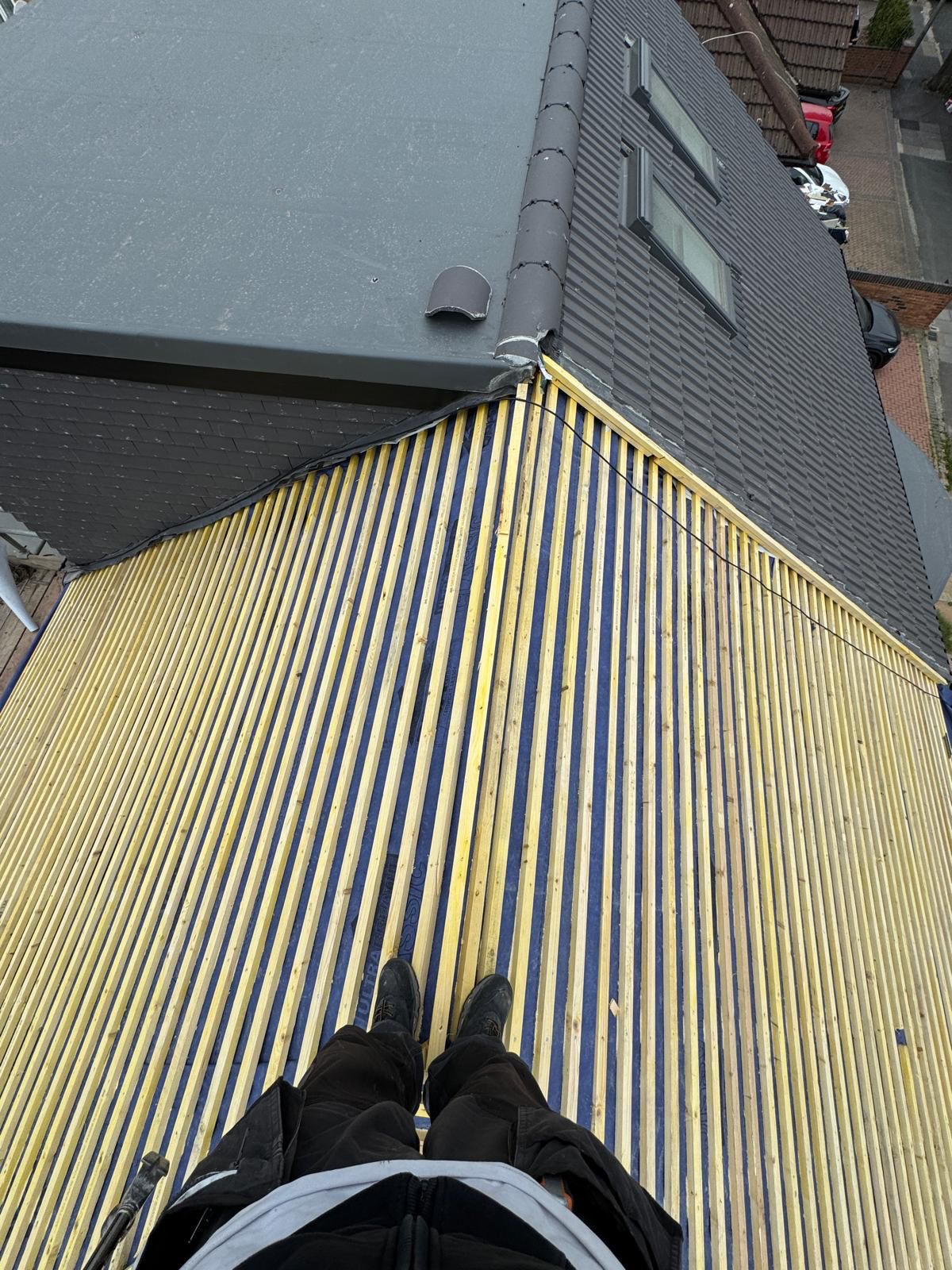
Inspecting the timber structure is essential during any roof assessment - soft or rotted rafters mean the problem goes beyond the surface materials.
The Problem with Repeated Repairs That Never Hold
Every roof has a point where repairs stop making economic sense. Bristol's climate accelerates this process. We get more than 800mm of rain annually, higher than the UK average, with regular Atlantic fronts pushing through from the west. That sustained wetness means that any gap in a roof's integrity - however small - lets water in repeatedly, and water that gets in doesn't stay where it lands. It tracks along timbers, pools in unexpected places, and causes damage out of proportion to the size of the original defect.
We regularly go out to properties where a homeowner has had the same section repaired three or four times and can't work out why it keeps coming back. The answer is almost always that the repair is addressing the symptom rather than the cause. Failed underfelt, corroded fixings, or a completely worn-out tile surface means the repair sits on an unstable base and fails again within a season or two.
There's also what the water has already done in the meantime. Wet insulation loses most of its thermal value - heating bills go up and you don't immediately know why. Damp timbers start to rot. Leave it long enough and you're no longer just replacing a roof. You're replacing a roof, plus treating structural timbers, plus replastering ceilings. That bill looks very different. Before you commission any larger roofing work, the TrustMark government-endorsed quality scheme is a good place to verify the contractor you're considering.
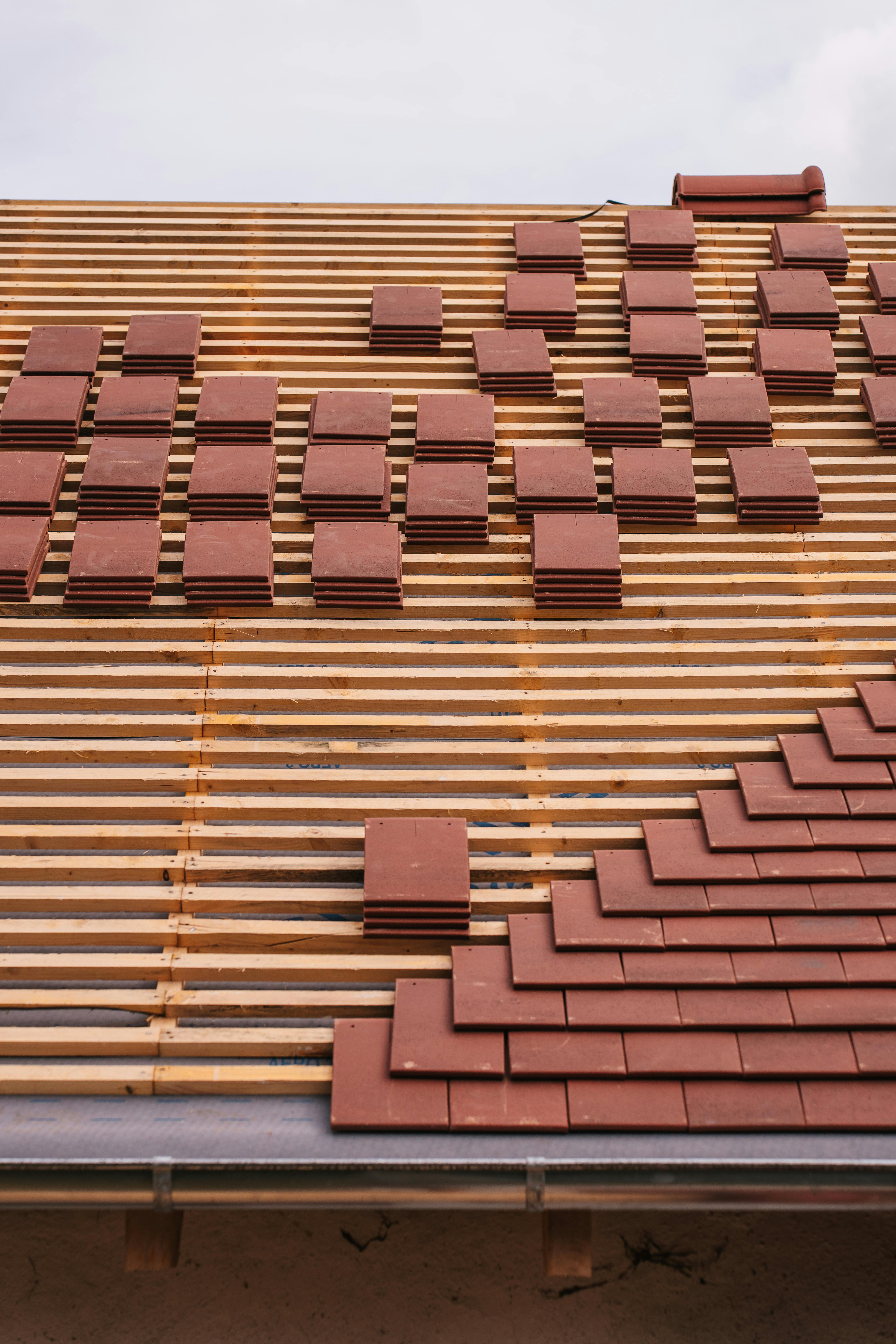
A proper roof inspection looks beyond surface damage to assess the condition of the felt, battens, and timber structure below.
Conservation Areas and Planning Rules in Bristol
Bristol has a significant number of conservation areas, and if your property sits within one, there are additional considerations before you replace your roof. Clifton, Redland, Cotham, Hotwells, Montpelier, St Andrews, Bishopston, and parts of Bedminster and Southville all have conservation area designations that restrict what changes you can make to the external appearance of a property.
A straight like-for-like replacement - replacing Victorian Welsh slate with the same material, for example - is generally covered by permitted development rights and does not require planning consent. However, changing the material or colour of the roof surface on a property visible from a public highway may need approval from Bristol City Council. Listed buildings require listed building consent for almost any external change, and the rules are enforced strictly.
If you're in any doubt, we can advise during the free assessment visit, and Bristol City Council's planning department can confirm what applies to your specific address. The consequence of getting it wrong - replacing a slate roof with tile without consent in a conservation area, for example - can include an enforcement notice requiring you to undo the work at your own cost. Worth checking before you start. Full planning guidance is available from GOV.UK's planning permission guidance.
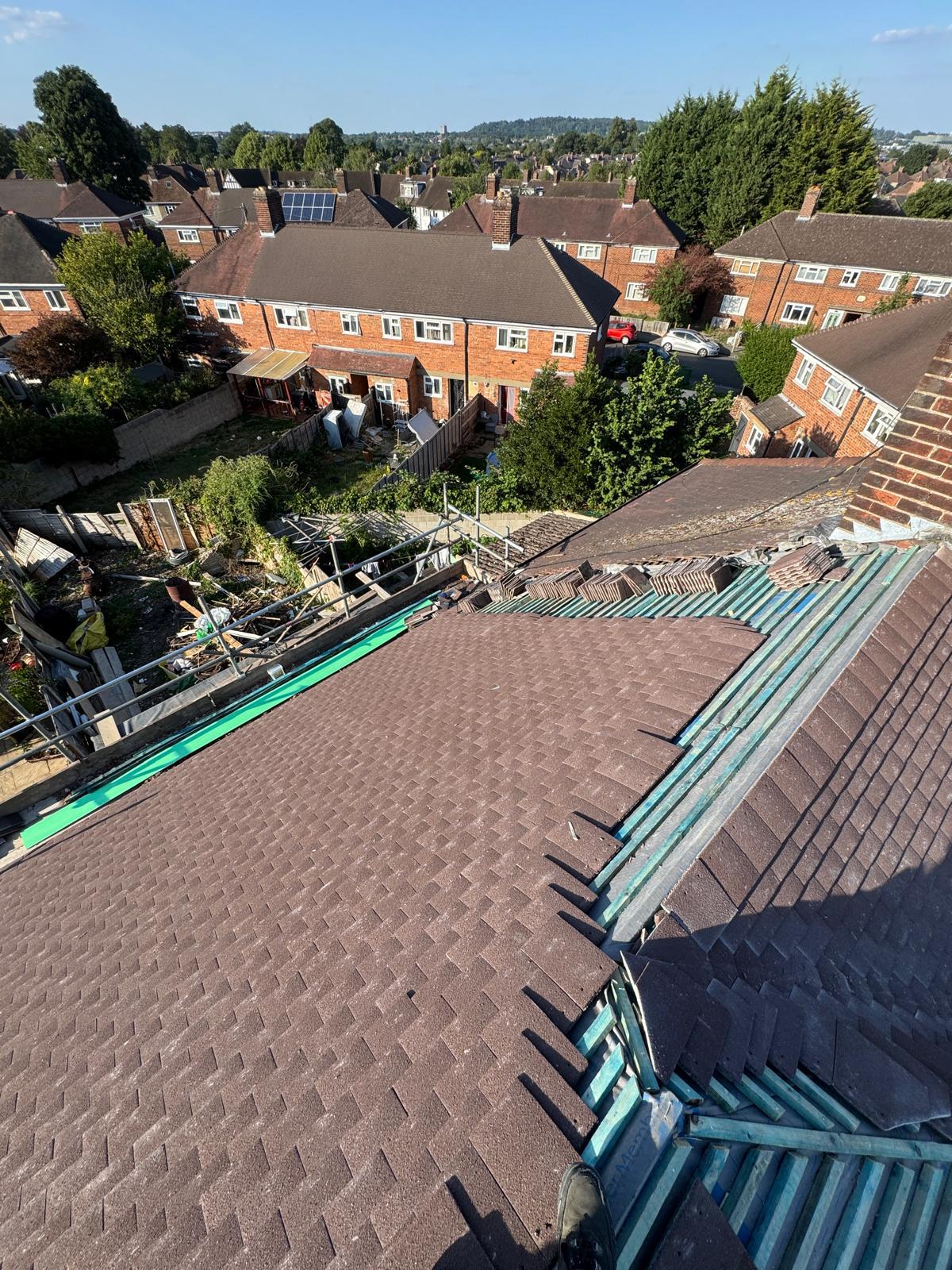
Period properties in Bristol's conservation areas - like those in Clifton and Redland - typically require like-for-like material replacement to meet planning requirements.
What Does a Full Roof Replacement Actually Cost in Bristol?
Cost is always a factor in this decision, so here are realistic current figures for a typical Bristol semi-detached property. These are guide prices for 2026 - the actual quote will vary based on the roof's size, pitch, access, the condition of the underlying structure, and the material chosen.
- Concrete tile replacement: £3,500 - £7,000
- Clay tile replacement: £4,500 - £8,000
- Spanish slate replacement: £5,000 - £9,000
- Natural Welsh slate replacement: £7,000 - £14,000
- Synthetic composite slate: £4,000 - £7,500
These figures assume the roof structure is sound. If timber rafters or battens need replacing, or if the chimney stack needs repointing at the same time, that adds to the cost. In our experience, around 30% of full replacements on older Bristol properties involve some structural timber work as part of the job.
Scaffolding is required for any full roof replacement and is typically included in the quote from a reputable contractor. Be wary of any quote that doesn't mention scaffolding - working off ladders on a full re-roof is not safe and is not how professional contractors operate. The Federation of Master Builders' find-a-builder tool is another useful resource for verifying contractor credentials before you commit.
A roof replacement is not a repair bill. It's a 40 to 100 year decision, depending on the material. Break the cost down per year and it's not a large number - and it's considerably less than what you'd spend over the same period repeatedly patching a roof that's already past it.
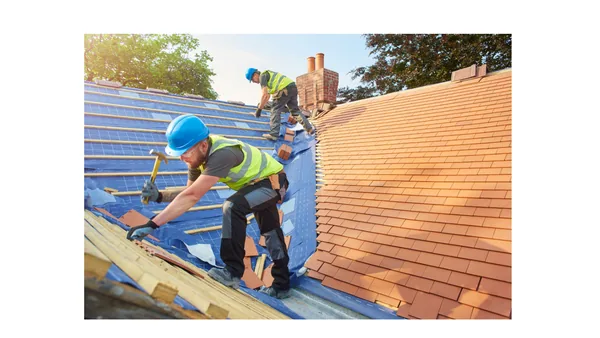
A full roof replacement is a long-term investment - properly installed, a quality tile or slate roof should not need replacing again for 40 to 100 years.
Frequently Asked Questions
Not sure if your roof needs replacing?
We offer free, no-obligation assessments across Bristol and the surrounding areas. We'll inspect the roof properly, tell you honestly where it sits, and give you a clear written quote - whether the answer is a repair or a full replacement.
Book a Free Assessment