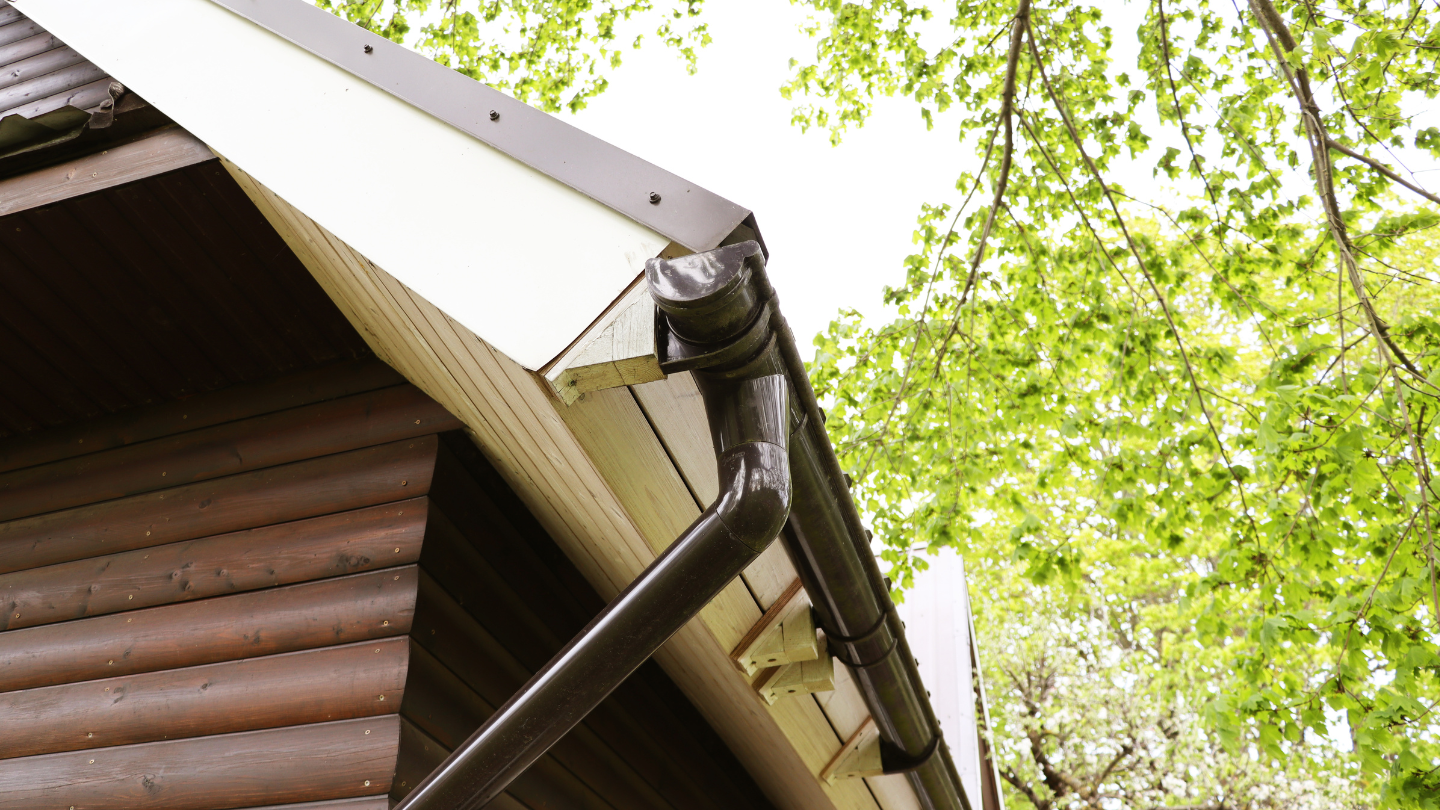
Blocked or leaking gutters are one of those problems that's easy to ignore - until the damage shows up on your walls. Bristol gets around 860mm of rain a year, well above the UK national average of roughly 670mm, so the guttering on a Bristol property works harder than most. When it fails, water tends to find its way into fascias, soffits, render, and eventually internal walls. We see the results regularly: damp patches on bedroom ceilings, crumbling render on gable ends, and rotted timber around window frames - all of it traced back to a gutter that had been dripping quietly for a season or two. This guide covers how to tell what's wrong, what can be fixed versus what needs replacing, and what you should expect to pay.
The Signs Your Gutters Are Failing
Some gutter problems are obvious. Water pouring over the edge during heavy rain, or a downpipe that's visibly cracked and dripping onto the path, are hard to miss. Others take longer to notice.
The ones that cause the most damage are the slow leaks - a union that's slightly open, a joint that's been seeping at the bracket for a year, or a section that's lost its fall and pools rather than runs. Pooled water breeds moss, adds weight to the gutter, and creates ideal conditions for the fascia behind it to start softening.
Watch for dark staining on the fascia or soffit directly below a joint. That's usually a dripping union. Moss or algae growth on a section of gutter that's higher than its neighbours suggests the fall has reversed somewhere along the run. And if you're seeing damp on an internal wall that's below the roof line but above the windows, check the gutter before you start investigating the roof - it's often the simpler explanation.

Regular inspection - ideally twice a year - catches most gutter problems before they cause water damage.
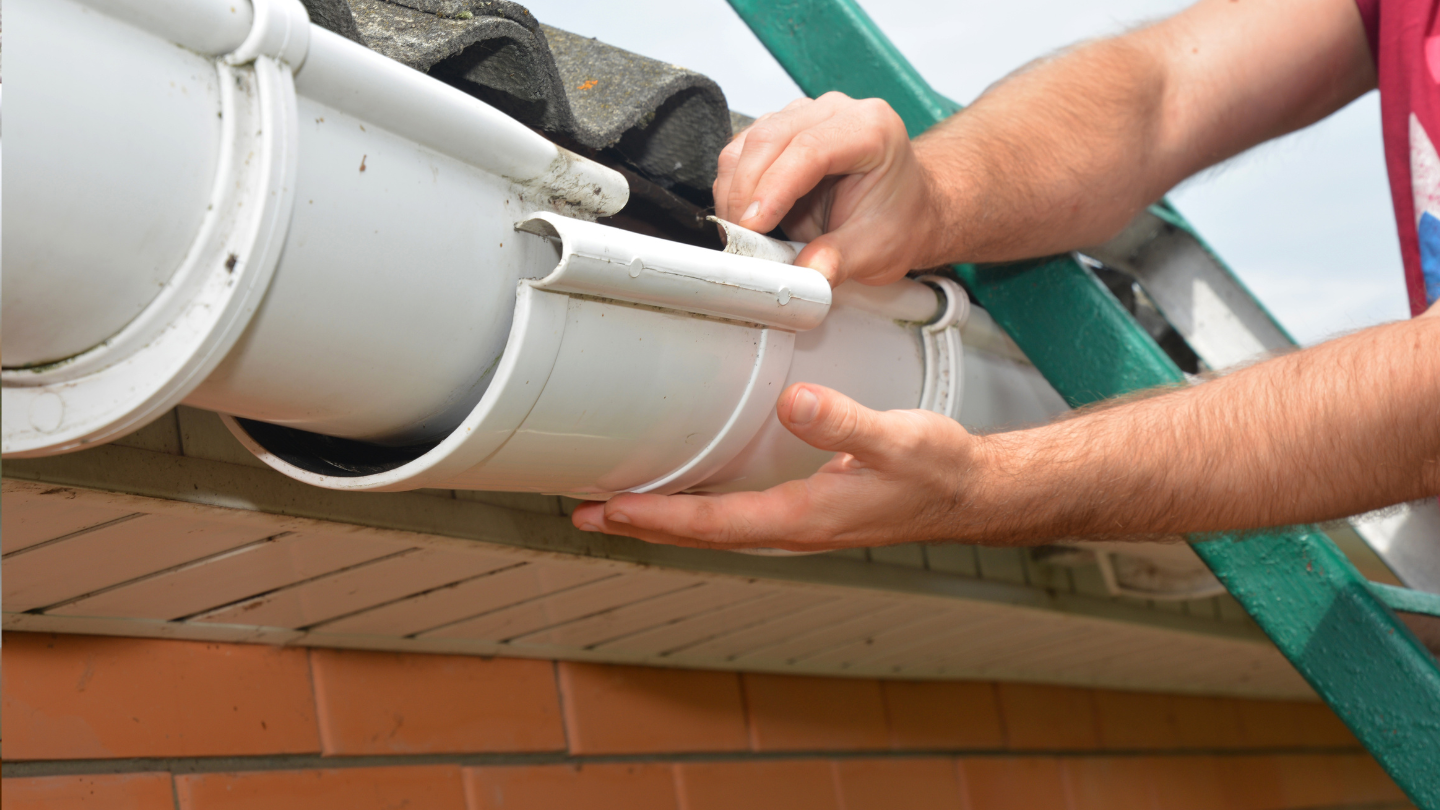
Regular inspection - ideally twice a year - catches most gutter problems before they cause water damage to fascias and walls.
What Can Be Repaired and What Needs Replacing?
Most individual faults can be repaired without replacing the whole run. A leaking union can be resealed or a new connector fitted. A blocked downpipe can be cleared. A bracket that's pulled out of the fascia can often be redrilled and re-fixed, provided the timber behind it is still solid.
The calculus changes when faults are recurring or widespread. If you're resealing three unions on a 25-year-old uPVC run, the fourth and fifth will follow soon enough. And if the fascia behind the gutter has started to rot - which is common on Bristol properties built in the 1960s and 70s with untreated timber - then fixing the gutter without addressing the fascia is a short-term answer. The brackets need solid timber to grip into, and soft fascia defeats that quickly.
A full replacement makes more sense when the gutter is old enough to be broadly fatigued, when the fascia also needs work, or when a partial repair still leaves you with a mismatched run that needs attention again in a couple of years. For a full picture of what's involved, see our gutter installation service page.
Bristol's Older Housing Stock - What to Expect
Bristol has a high proportion of Victorian and Edwardian terraced housing, particularly across Bedminster, St George, Easton, and Horfield. These properties were built with cast iron guttering, which is heavy, prone to rust, and has often been repaired multiple times with sealant that's now well past its useful life.
Cast iron in genuinely good condition - properly painted, no cracks, well-supported - can last well over 100 years. But cast iron that's been painted over rust, bodged at joints, and left un-maintained tends to fail in multiple places at once. Replacing with uPVC is by far the most common choice because it's light, cheap, and low maintenance. Aluminium is a step up - more durable, better looking, and more resistant to impact - and it costs more. Some conservation-area properties need cast iron like-for-like, which is available but expensive to source and install.
If you're on a Victorian terrace and the gutters have always "just about worked" but you've never had them properly inspected, it's worth getting someone up a ladder. We find cast iron runs in quite serious condition more often than homeowners expect - the rust is usually on the back face and inside, invisible from street level.
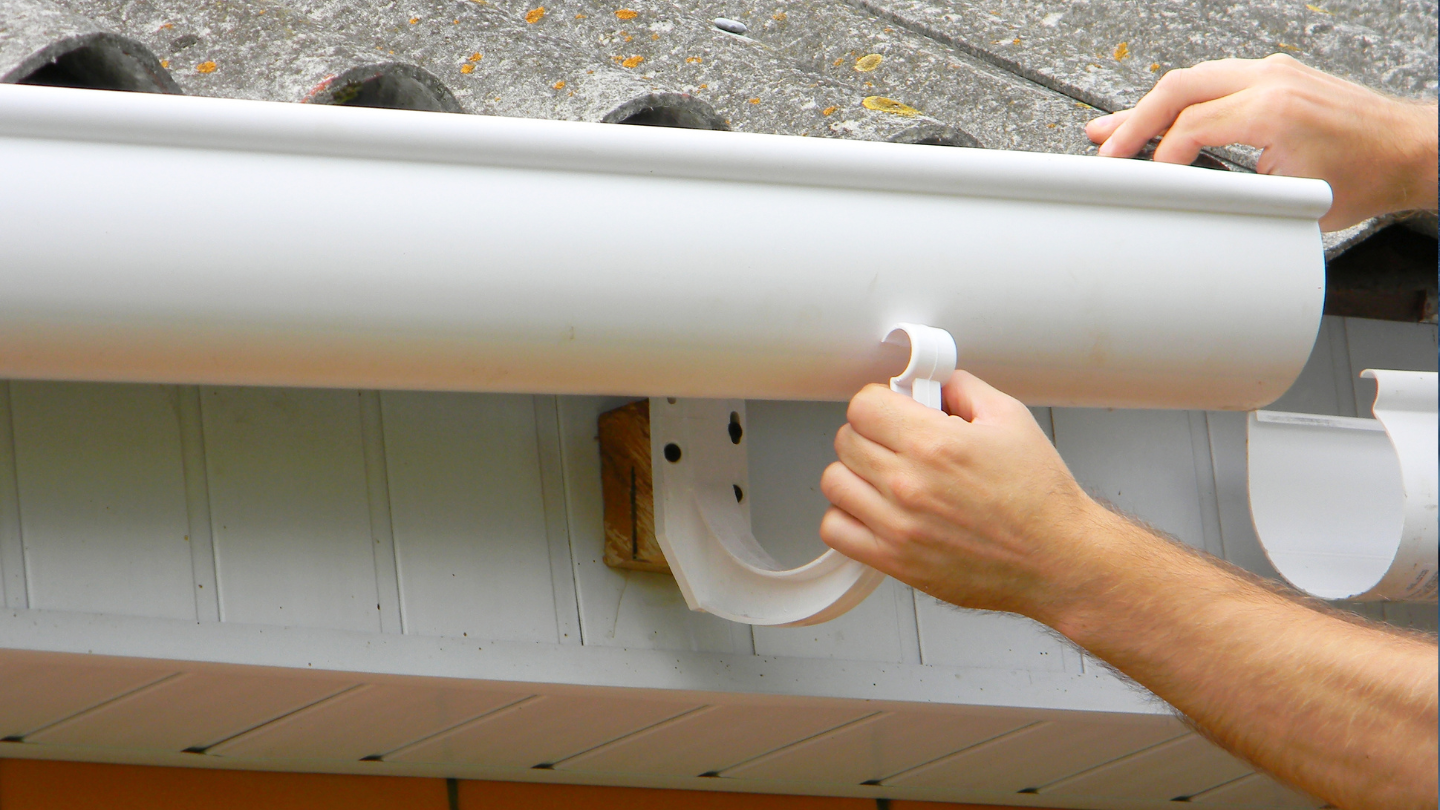
Victorian terraces across Bristol still have original cast iron guttering - some in surprisingly good shape, others not.
What Does Gutter Work Cost in Bristol?
Gutter clearing for a standard semi is usually between £60 and £120 depending on access and how much vegetation is involved. Bristol's street trees - chestnuts and limes are the worst offenders in autumn - can pack gutters solid, and some terraces have mature ivy that needs cutting back before you can even get to the gutter.
A single repair - resealing a joint, replacing a bracket, clearing a blocked downpipe - typically runs from £80 to £200 depending on how long it takes and what materials are needed.
Full gutter replacement for a typical semi runs from around £350 to £700 for standard uPVC. If you're replacing fascias at the same time, which is often the sensible approach on older properties, add another £300 to £700 depending on the length of run and the condition of the underlying timber. Aluminium guttering sits higher - roughly double the cost of uPVC for a comparable property. Cast iron is higher still, and is usually only specified where there's a genuine requirement.
- Gutter clearing (semi-detached): £60 - £120
- Single repair (joint reseal, bracket replacement): £80 - £200
- Full uPVC gutter replacement (semi): £350 - £700
- Fascia and soffit replacement (semi): £300 - £700 additional
- Aluminium guttering (semi): £700 - £1,400
These are rough guide figures. The actual quote will depend on property size, access, the number of storeys, and what's found when work starts. Scaffold is rarely needed for guttering but occasionally required on taller or more complex properties.
How to Choose a Contractor
Guttering is a job that attracts a lot of cold callers - people who knock and point at your gutters from the street, often inflating the apparent problem. Getting someone to look from the ground and tell you the gutters are "falling away" and "at risk of causing serious damage" is not a proper inspection.
Ask any contractor to show you the actual problem - either by going up a ladder with you or by showing you photos taken during the inspection. A clear, itemised quote in writing is standard for any reputable tradesperson. The Federation of Master Builders' find-a-builder tool lets you search for vetted contractors by postcode. Membership requires a quality assessment and insurance checks, which filters out much of the cold-call end of the market.
It's also worth checking whether the contractor offers a guarantee on the work. A new gutter run should come with at least a year's workmanship guarantee, and reputable contractors will typically cover the period over which early failures are most likely to show up.
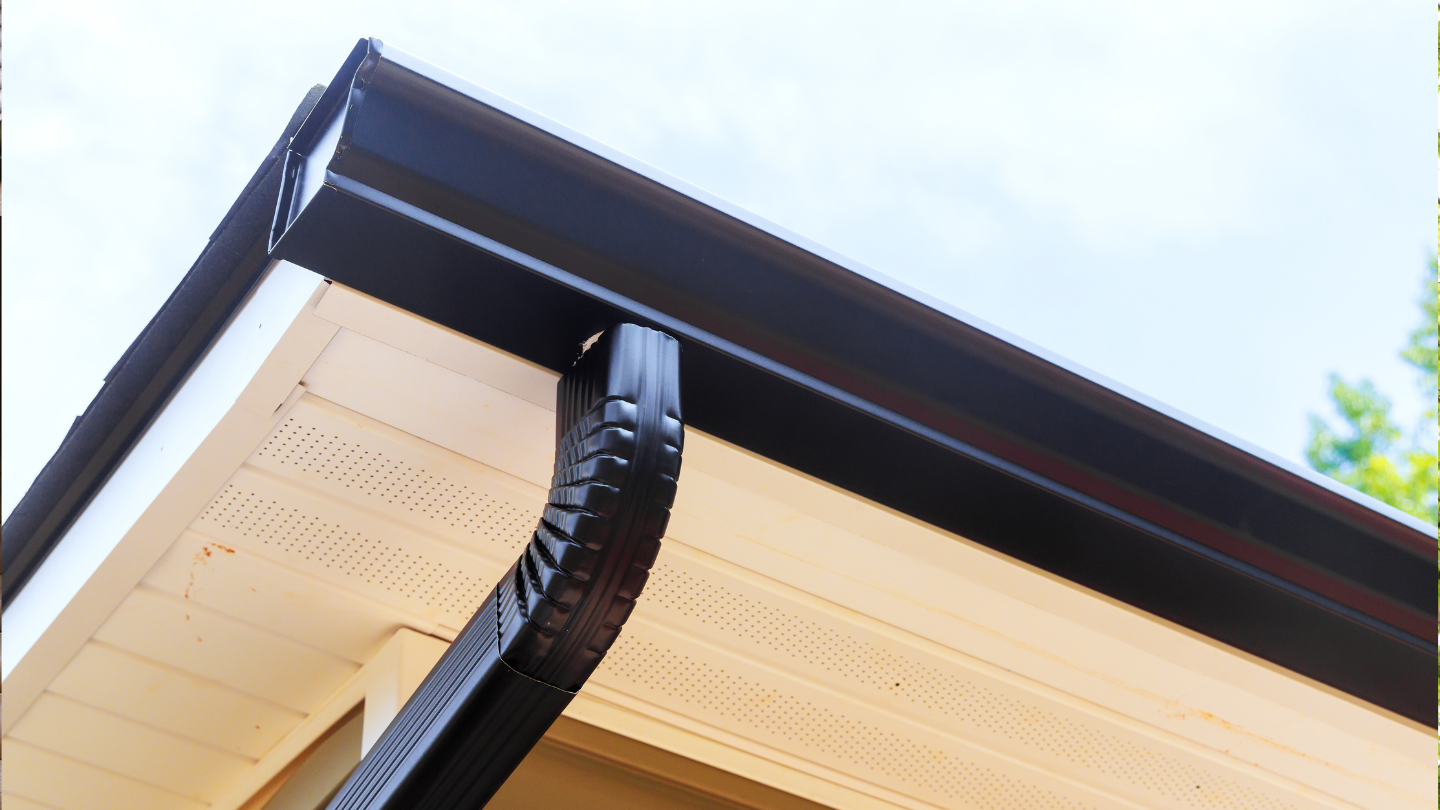
A reputable gutter contractor will inspect from the ladder, show you the problem, and provide a written quote before starting any work.
Downpipes - Often the Overlooked Part
Downpipes get less attention than gutters but they're just as important. A cracked downpipe behind a drainpipe shoe - the angle fitting at the bottom that directs water to the drain - can soak the base of the wall for years without being noticed. The water finds the path of least resistance, and sometimes that's into the house rather than away from it.
Blockages tend to happen where the downpipe connects to an underground drain or at bends. Leaves and debris build up at the shoe, water backs up, and eventually the gutter overflows upstream. Clearing the blockage is usually quick - rodding or a jet wash through the access point at the bottom. What makes it worse is when the underground drain connected to the downpipe is also blocked or has collapsed, which is a separate job and a separate cost.
If you're replacing gutters, it's worth replacing downpipes at the same time if they're the same age. The material cost is low relative to the labour already involved, and you avoid a return visit when the pipe fails six months later. You can also read our post on choosing the right roofing material for Bristol properties if you're doing broader work on your roof at the same time.
The National Federation of Roofing Contractors covers guttering and rainwater systems as part of their roofing contractor assessments, and searching their directory for approved members in your area is a reliable way to find contractors who carry adequate insurance and meet a recognised quality standard.
Frequently Asked Questions
Need someone to look at your gutters?
We cover Bristol and the surrounding areas. We'll get up the ladder, show you what's actually there, and give you a clear written quote before any work starts - no obligation.
Book a Free Assessment