Ask us what sets roof repairs in Clifton and Redland apart from the rest of Bristol and the answer is height and paperwork. A Clifton job usually means a Georgian terrace three storeys over a basement, its roof hidden behind a parapet, a railed lightwell exactly where the scaffold wants to stand, and a conservation officer who cares which slate goes back on. Redland is gentler: later Victorian villas in Pennant stone with bay windows, valleys and tall brick chimneys. It still sits inside a conservation area of its own, though, so the same questions about materials come up. Bristol has 33 conservation areas, and these two neighbourhoods fall within Clifton & Hotwells and Cotham & Redland, both covered by council appraisals written in 2010 and 2011. Below we go through what fails on each kind of roof, what you can do without consent, how scaffolding works on these streets and roughly what you'll pay.
Roof Repairs in Clifton and Redland Start With the Roof You Actually Have
The two suburbs are neighbours, but they were built about two generations apart. Most of Clifton's terraces went up between the 1780s and the 1830s. Rodney Place dates from 1782-85, and several of the grander terraces stood half-finished for years after the 1793 banking crash bankrupted their builders.
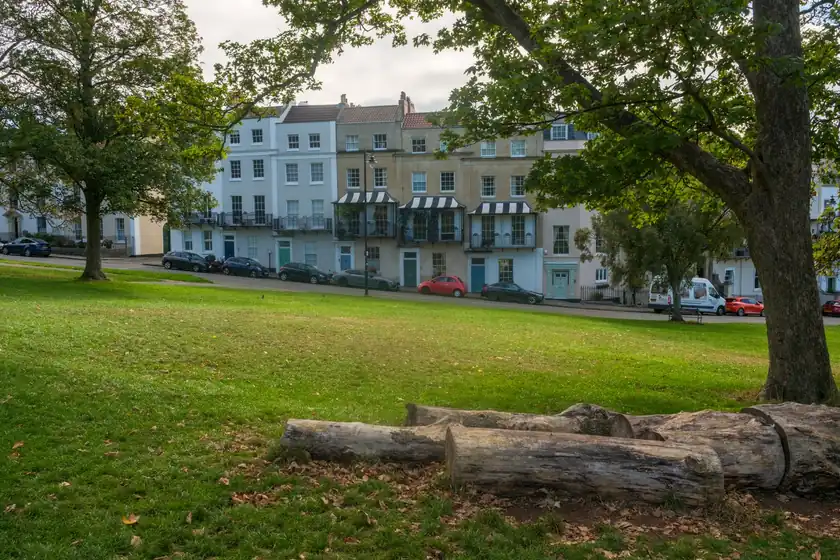
Georgian townhouses with attic storeys and balconies, looking across a lawn.
Redland came later. Bristol City Council's appraisal describes it as the leafier, later Victorian suburb to the north of Cotham. Walls are mostly Pennant sandstone with limestone dressings, roofs are natural slate or clay, and the chimney stacks are brick with clay pots on top.
That gap in age matters more than the postcode. A leak on a Clifton mansard and a leak on a Redland bay window have almost nothing in common, so the first thing we do on any visit is work out the roof form. Our slate roof repair and re-slating service covers both areas, and the quote changes a lot depending on which one you live under.
Clifton's Georgian Terraces: Mansards, Parapets and Hidden Gutters
Stand on the pavement outside a lot of Clifton terraces and you can't see a roof at all. The roofs are pitched, gabled or mansard, and they sit behind a stone parapet and cornice. So the first sign of trouble is rarely a slipped slate spotted from the street. It's a brown ring on a top-floor ceiling.
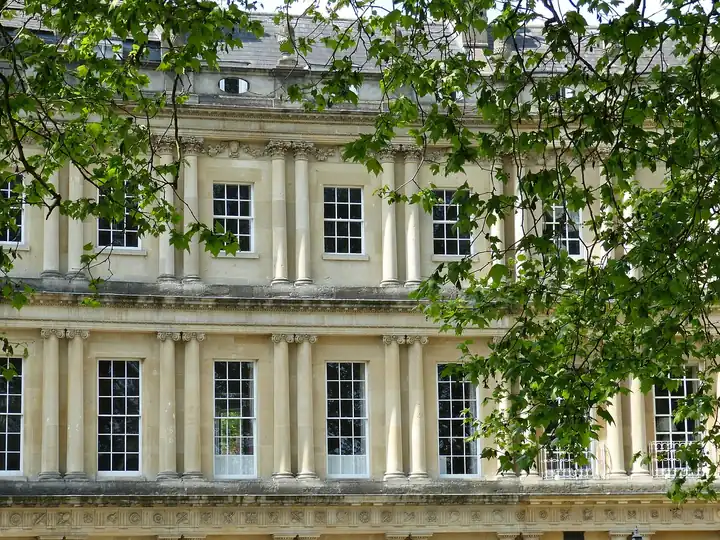
A stone cornice and parapet. On terraces like this the gutter sits out of sight behind the top course.
These are the faults we find most often up there:
- Parapet box gutters. Everything off the front slope drains into a lead-lined trough behind the parapet. Lead laid in lengths too long for its weight splits as it expands and shrinks, earlier patch jobs flatten the steps between lengths, and the outlets through the parapet choke on leaves and moss.
- Mansard slopes and dormers. The steep lower slope is hung with slate, often on battens with nothing behind them. Iron nails rust through, slates slide, and the cheeks and tops of the dormers leak where they meet the slope.
- Pantile mansards. Not every Clifton mansard is slate. List entries for some 1790s terraces, Richmond Terrace among them, record pantile mansards, and they need matching clay, not a concrete substitute.
- Copings and cornices. Bath stone copings open up at the joints and let water into the wall head just below the gutter, where it shows up as damp in the top corner of a room.
You won't see any of this from the ground. We'd always rather get up, photograph the gutter and show you than quote from the pavement.
Redland's Victorian Villas: Bays, Valleys and Tall Chimneys
Redland roofs are easier to see and usually easier to reach. The houses tend to be two or three storeys, many are semi-detached villas or short terraces with a front gable and a canted bay, and that shape means more junctions. Junctions are where water gets in.
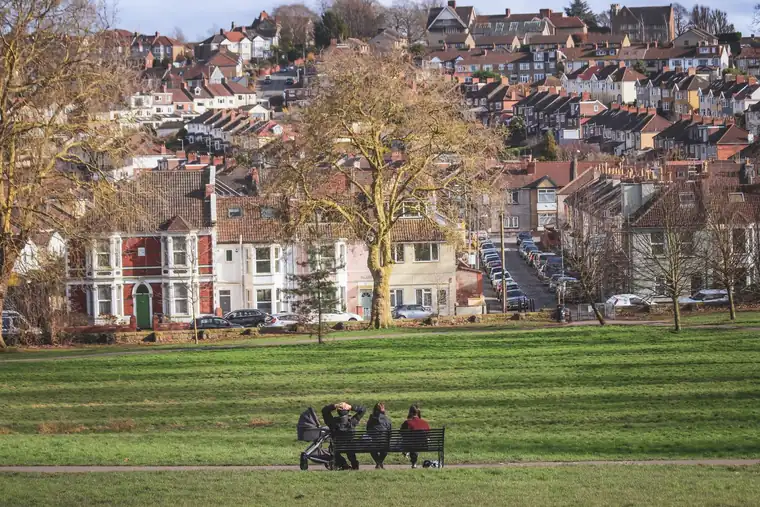
Front gables and bay windows on a hillside of Victorian houses.
Bay roofs come up constantly. They're small lead or slate roofs butting against the main wall, and the flashing where they meet the stone gives up first. Valleys between a front gable and the main roof drain a big area, and the lead in many of them has been there since the house was built. Then there are the stacks. Brick sits on top of the Pennant walls, each stack carries several pots, and once the flaunching cracks and the flashings lift, water runs down inside the stack to the bedroom fireplace below.
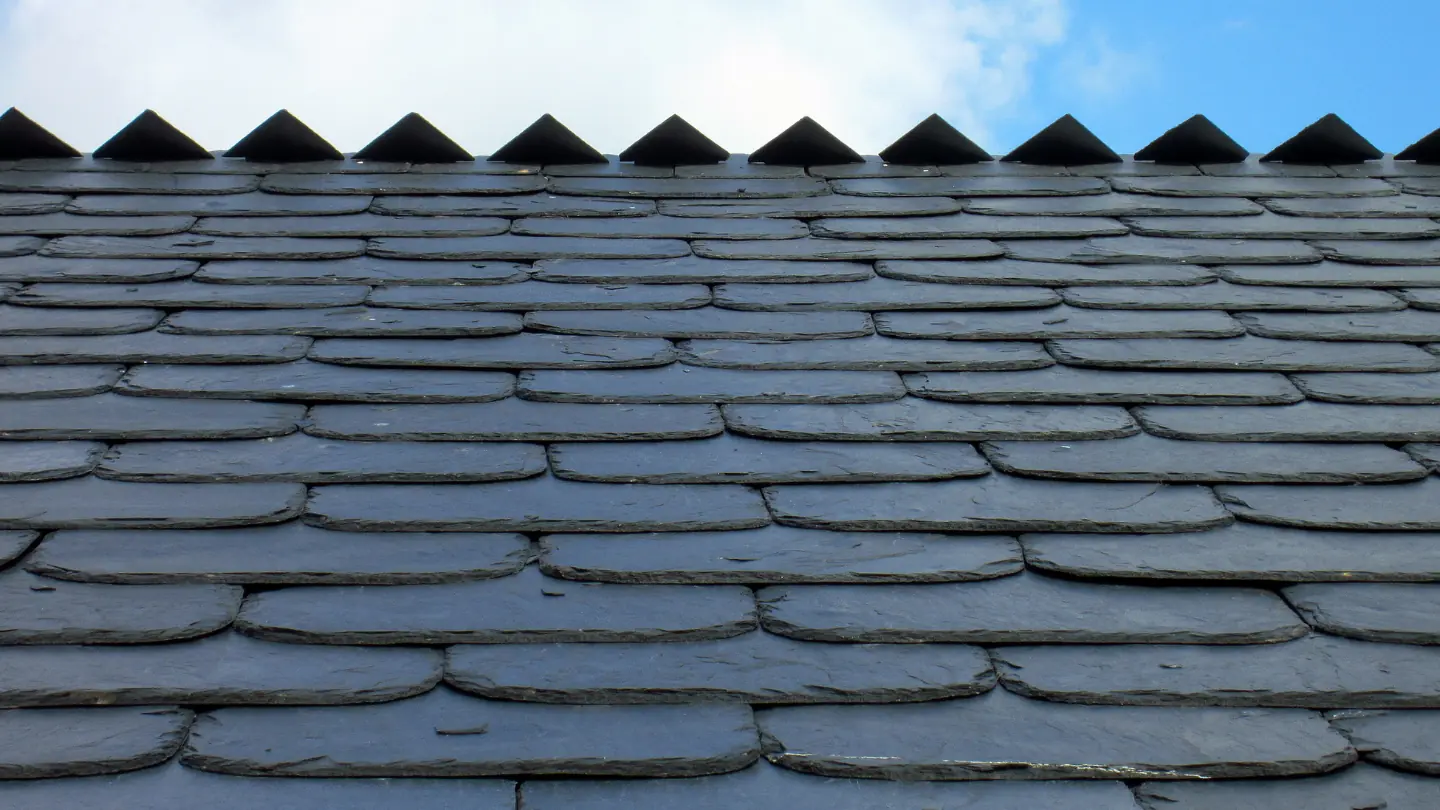
Slate is the other story. Good natural slate lasts well over a century. The iron nails holding it don't. That's nail sickness, and on a lot of Redland roofs you can spot a scatter of copper strips (tingles) holding up slates from past repairs. A handful is fine. Dozens across one slope means the fixings are finished, and stripping and relaying that slope with the sound slates will cost you less over ten years than paying for call-outs.
Conservation Area and Listed Building Rules for Roof Repairs
Both neighbourhoods are conservation areas, and Bristol City Council publishes a character appraisal for every Bristol conservation area. The Clifton & Hotwells appraisal was adopted in 2010 and the Cotham & Redland one in 2011. Skim yours before you agree a scope, because it lists the materials and roof details the council sees as part of the area's character.
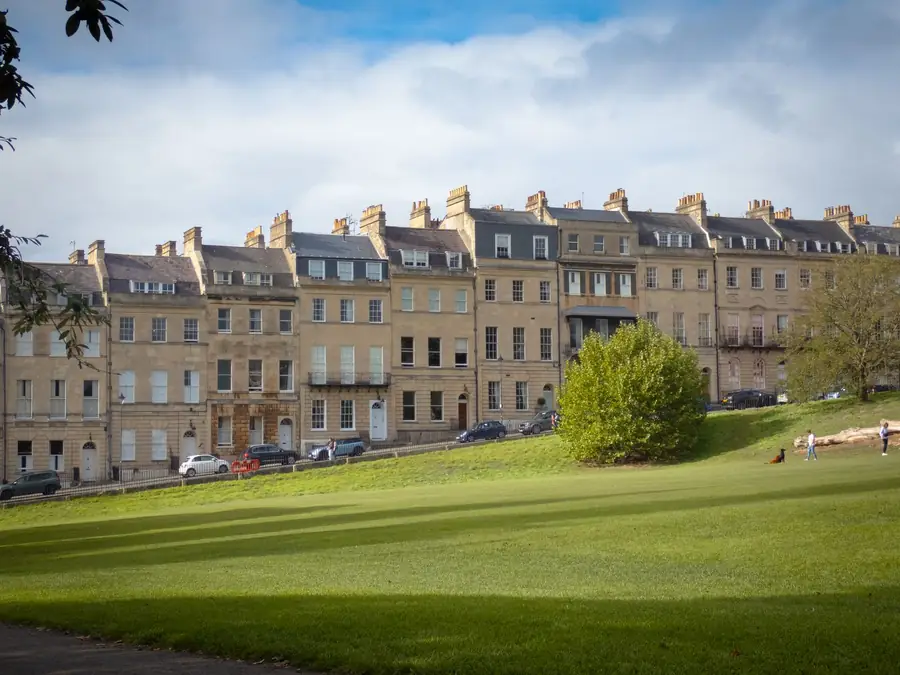
A Georgian stone terrace with parapets and a long line of chimney stacks.
On an unlisted house, like-for-like repairs normally need no permission. Natural slate replaced with natural slate, a gutter re-leaded in lead, a chimney rebuilt in matching brick: that's maintenance. People get caught out when the look changes. Swapping natural slate for concrete tiles or fibre-cement slates, adding a rooflight on the front slope or taking a chimney down can all need planning permission in a conservation area, so ask the council first.
Listed buildings are stricter, and plenty of Clifton's Georgian terraces are listed. The council's page on making alterations to a listed building in Bristol says like-for-like repairs that use the same materials and methods, removing only damaged parts, are likely to be covered by a Certificate of Lawfulness. Re-roofing in a new material generally needs Listed Building Consent or a certificate. Doing the work without the right consent is against the law, and it's the owner who carries that, not the roofer. If you own a flat in a listed Clifton house, the freeholder or managing agent normally sorts this out. Ask them whether they have.
Scaffolding on Steep Streets and Tall Terraces
On a Clifton job, access is often the biggest single line on the quote. Three storeys over a basement is a lot of scaffold before anyone reaches the roof. The railed basement lightwell means the scaffold has to bridge a drop instead of standing at the kerb, and on slopes like Constitution Hill or Granby Hill the base has to be levelled on a gradient as well.
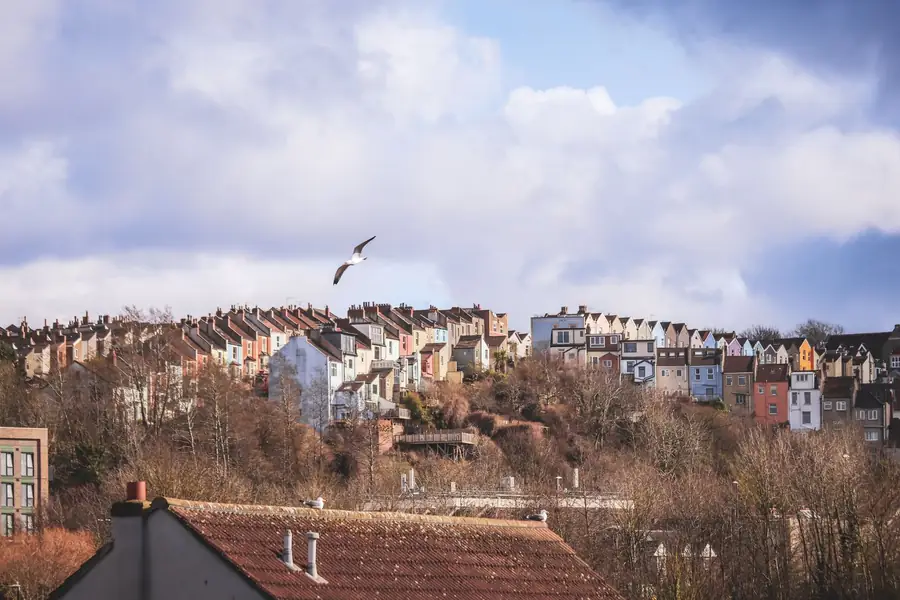
Painted terraces climbing a steep, wooded hillside.
If the scaffold stands on or next to the pavement or road, it needs a council licence before it goes up. Under Bristol's rules for a scaffolding licence on the highway, the scaffolder applies online at least five working days ahead, processing takes three to ten days and the fee starts at £90 for up to a month. A walkway wide enough for wheelchairs and prams has to stay open. Suspending a parking bay for the lorry is a separate application. Check your quote says who is paying for the licence. Ours spells it out.
Rear access can be worse than the front. Plenty of Clifton gardens are only reachable through the house or down long flights of steps. In Redland, lower roofs and wider plots mean a tower or a roof ladder from the side often does for a small repair, which is a big part of why Redland jobs come in cheaper. If your gutter is shared with next door, read our piece on shared roofs and party walls on Bristol terraces before booking anything, because two households sharing one scaffold saves both of them money.
What Roof Repairs Cost in Clifton and Redland
These are rough guide prices for the work we quote in these two areas, VAT included and consent fees excluded. Your roof may land either side of them, which is why we only give a firm price after looking.
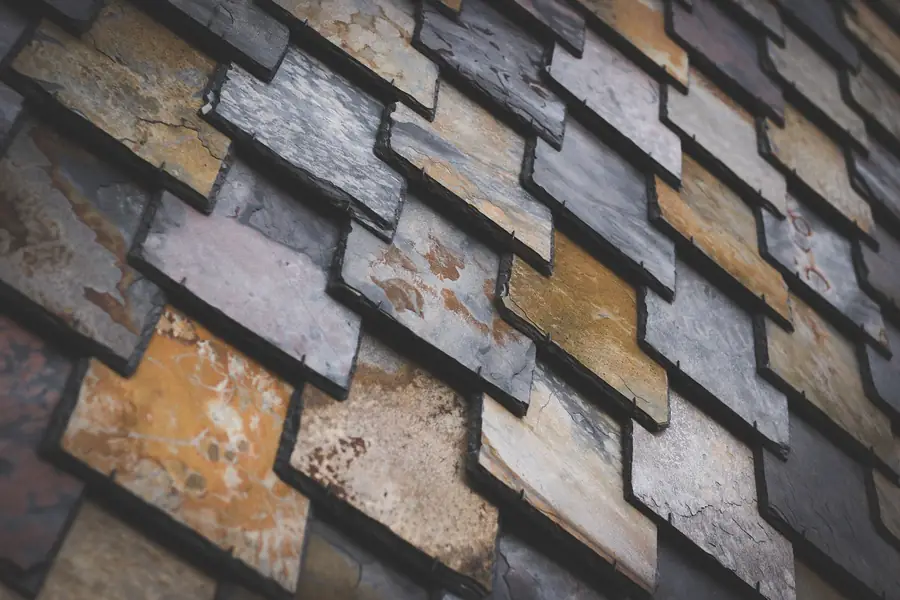
Weathered natural slates. Sound ones can usually be saved and relaid.
- Refixing a few slipped slates on a Redland villa, reached by ladder or tower: £150 to £400
- Re-leading a bay window roof: £600 to £1,500
- Repointing, reflaunching and reflashing a tall chimney stack: £600 to £1,800
- Relining a Clifton parapet gutter in lead, scaffold not included: £1,500 to £4,000
- Front scaffold on a Clifton terrace of three storeys over a basement, licence included: £1,200 to £3,000
- Stripping and relaying a mansard slope in natural slate: £5,000 to £12,000
The scaffold figure is the one that makes people wince. On a tall terrace it can cost more than the repair. So once it's up for a parapet gutter, get the chimney, dormer cheeks and copings looked at in the same visit. Natural slate also costs more than the man-made options, but in a conservation area it's usually the only thing the council will accept, and it outlasts them by decades anyway.
Frequently Asked Questions
Leak in a Clifton parapet or a Redland bay?
Tell us the street and what you're seeing. We'll get up there, photograph what's wrong and give you a written price that spells out the scaffold, the licence and the materials. The assessment is free.
Book a Free Assessment