It's the question we get asked more than almost any other on a Bristol doorstep: how long is this roof actually going to last? Fair enough too, because a roof is one of the biggest things you'll ever spend money on for your home, and nobody wants to find out the hard way that theirs was on borrowed time. The frustrating truth is that "a roof" isn't one thing with one lifespan. A natural slate roof on a Victorian terrace in Redland and a concrete-tile roof on a 1960s semi in Filton are worlds apart - one can outlive its owner, the other might be tired before the mortgage is paid off. And Bristol's damp, mild, moss-friendly weather quietly changes the maths on all of them. So here's a proper breakdown of how long each type of roof really lasts, what wears out first, and how our local climate factors in.
Why "How Long Does a Roof Last" Has No Single Answer
Before we get into the numbers, it helps to understand why the honest answer is always "it depends". A roof isn't a single material. It's a system: the covering you can see (slate, tile, felt), the timber battens holding it, the underfelt or membrane beneath, the nails and clips fixing everything down, the mortar bedding the ridge, and the lead flashing sealing the joints. Each of those has its own lifespan, and the roof only lasts as long as its weakest part.
This is the bit that surprises people. On a lot of old Bristol roofs, the slates or tiles are the toughest thing up there. It's the hidden stuff that gives out first. The nails corrode (called "nail sickness"), the battens rot, the 1970s bitumen underfelt turns brittle and cracks, and suddenly slates start slipping even though the slates themselves are perfectly good. That's why a roofer can look at two houses of the same age and tell you one has twenty years left and the other needs doing now.
Two other things move the numbers hard: how well it was fitted in the first place, and how well it's been maintained since. A quality material laid badly won't reach its potential, and even the best roof will fail early if the gutters have been overflowing against it for a decade. Keep that in mind as you read the lifespans below - they assume a decent installation and sensible upkeep.
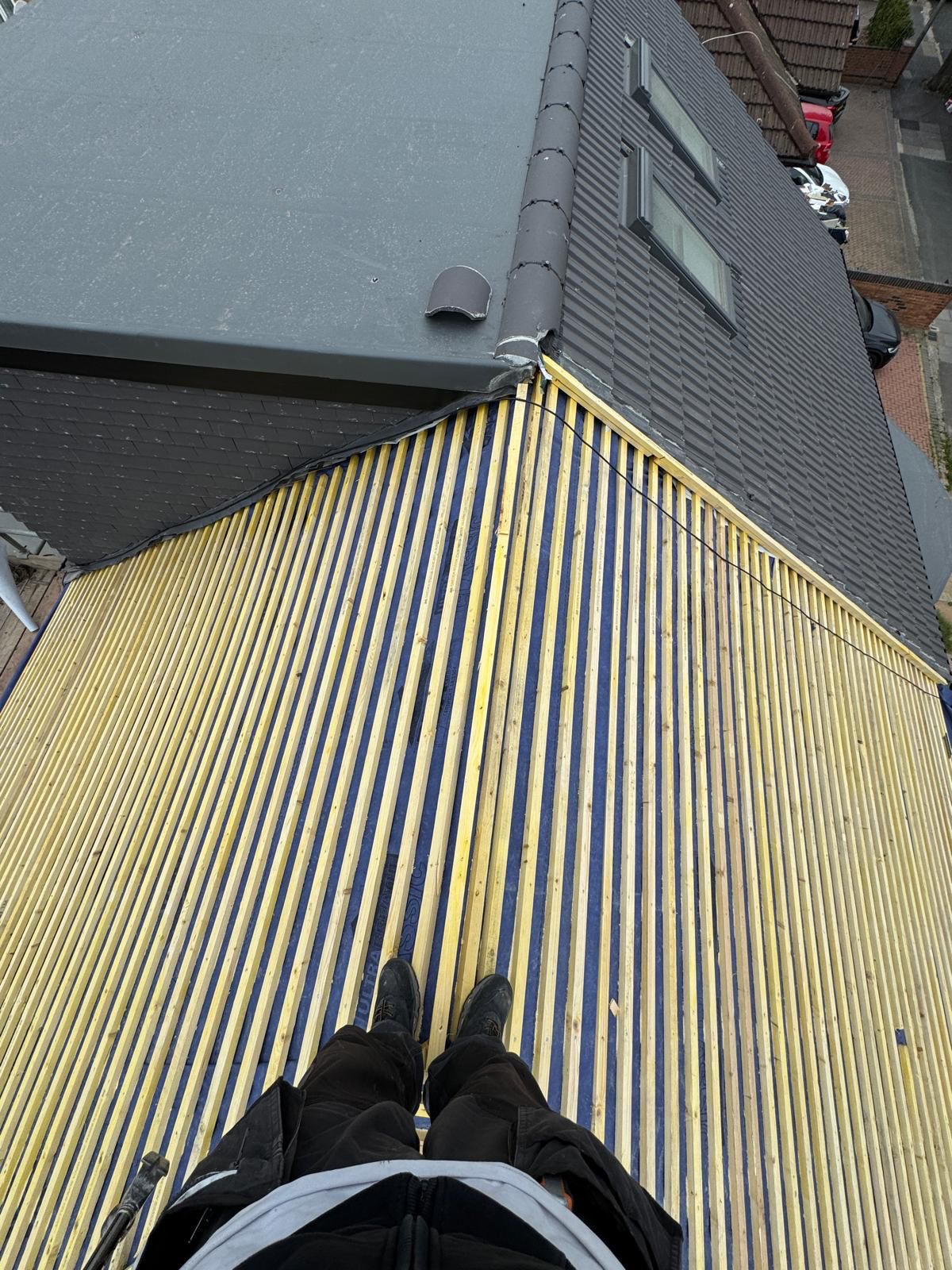
A roof is a system, not a single material. Often the battens, nails and underfelt beneath give out long before the slates or tiles on top - which is what really sets the lifespan.
Natural Slate: The 100-Year Roof
Slate is the classic Bristol roof. Walk through Clifton, Cotham, Redland or Montpelier and you're looking at street after street of Victorian and Georgian houses roofed in natural slate, a lot of it Welsh slate that came across from the quarries via the docks. There's a reason so much of it is still up there: natural slate is one of the longest-lasting roof coverings there is.
Good Welsh slate lasts 80 to 100 years comfortably, and plenty carries on past 150. Cheaper imported slate - Spanish and Brazilian slate became common in more recent decades - is more variable, and the lower grades are better thought of as a 50 to 75 year roof. The quality difference genuinely matters, because a poor slate can start to delaminate (flake apart in layers) far sooner.
Here's the key point for anyone with an old slate roof in Bristol: when it finally "fails", it's rarely the slate. It's the fixings and the timber. On a hundred-year-old roof the original iron nails corrode away, and slates start slipping in ones and twos. Often the slates are sound enough to be salvaged, cleaned and re-laid onto new battens and breathable membrane - a job that gives you another century rather than a landfill skip full of good slate. Our slate roofing service covers exactly this kind of work across the city, and if you're weighing slate against other materials, our guide to slate vs tile roofing in Bristol goes deeper on the trade-offs.
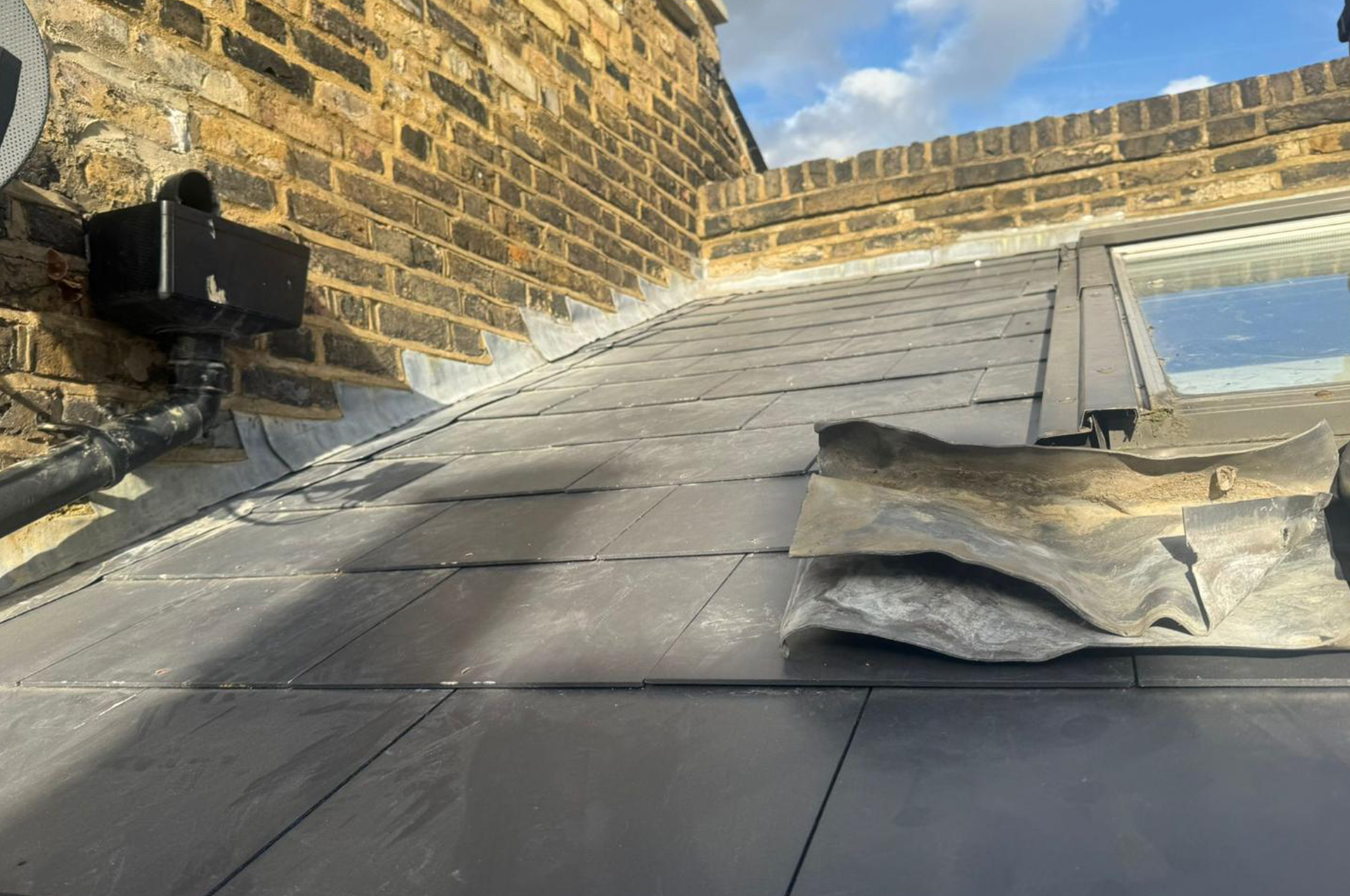
Natural Welsh slate, the classic covering on Bristol's Victorian streets, lasts 80 to 100 years and often far longer - it's usually the nails and battens that fail, not the slate.
Clay Tiles: Colour That Lasts
Clay tiles are the other traditional covering you'll see across Bristol, particularly on Edwardian and 1920s-30s houses - those warm orange-red plain tiles and pantiles. Clay is fired earth, and it ages beautifully because the colour goes right through the tile rather than sitting on the surface, so it doesn't fade or wash out the way a coating does.
A clay tile roof typically lasts 60 to 100 years. The tiles are hard-wearing and largely maintenance-free, and like slate they usually outlast the battens and felt underneath. The main enemy is frost getting into a tile that's already absorbed water, which over decades can cause the surface to flake - but good-quality clay handles Bristol's mild winters well, since we get far fewer hard frosts than roofs up north.
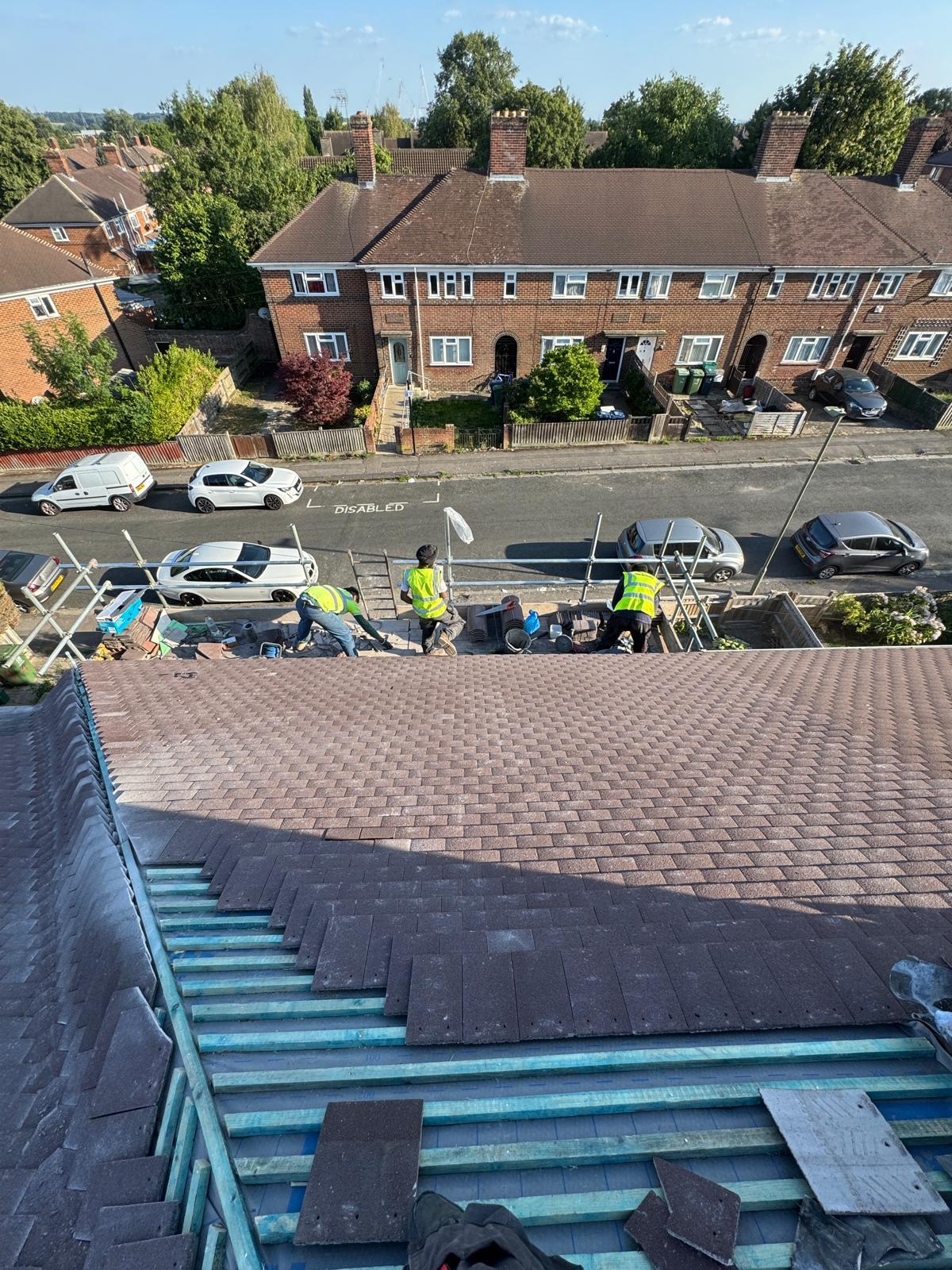
Clay tiles last 60 to 100 years and keep their colour because it's fired through the tile, not painted on - which is why old clay roofs still look warm and even.
Concrete Tiles: The Postwar Workhorse
If your house went up between the 1950s and the 1980s, there's a strong chance it's roofed in concrete tiles - the big interlocking "double Roman" profiles you see across Bristol's postwar estates in Filton, Hartcliffe, Brentry and countless 1960s-70s closes. Concrete tiles were cheap, quick to lay, and did a solid job. But they don't have the lifespan of clay or slate.
Expect around 40 to 60 years from a concrete tile roof. The catch is that the colour on concrete tiles is a surface coating, and from about 30 years that surface starts to erode and go porous. Once it does, the tile soaks up more water, moss and algae dig in, and the tiles get heavier and more brittle. So a concrete roof can look tired and mossy well before it's actually leaking, and a lot of Bristol homes from that era are now reaching the point where replacement is on the horizon.
One thing worth knowing: concrete tiles are heavy, and if a roof is ever re-covered in a different material, the timber structure has to be checked to make sure it suits the new weight, and a significant re-covering can need building control sign-off - the general position is set out on the GOV.UK planning and building rules pages. It usually goes ahead fine, but the weight is not something to assume.
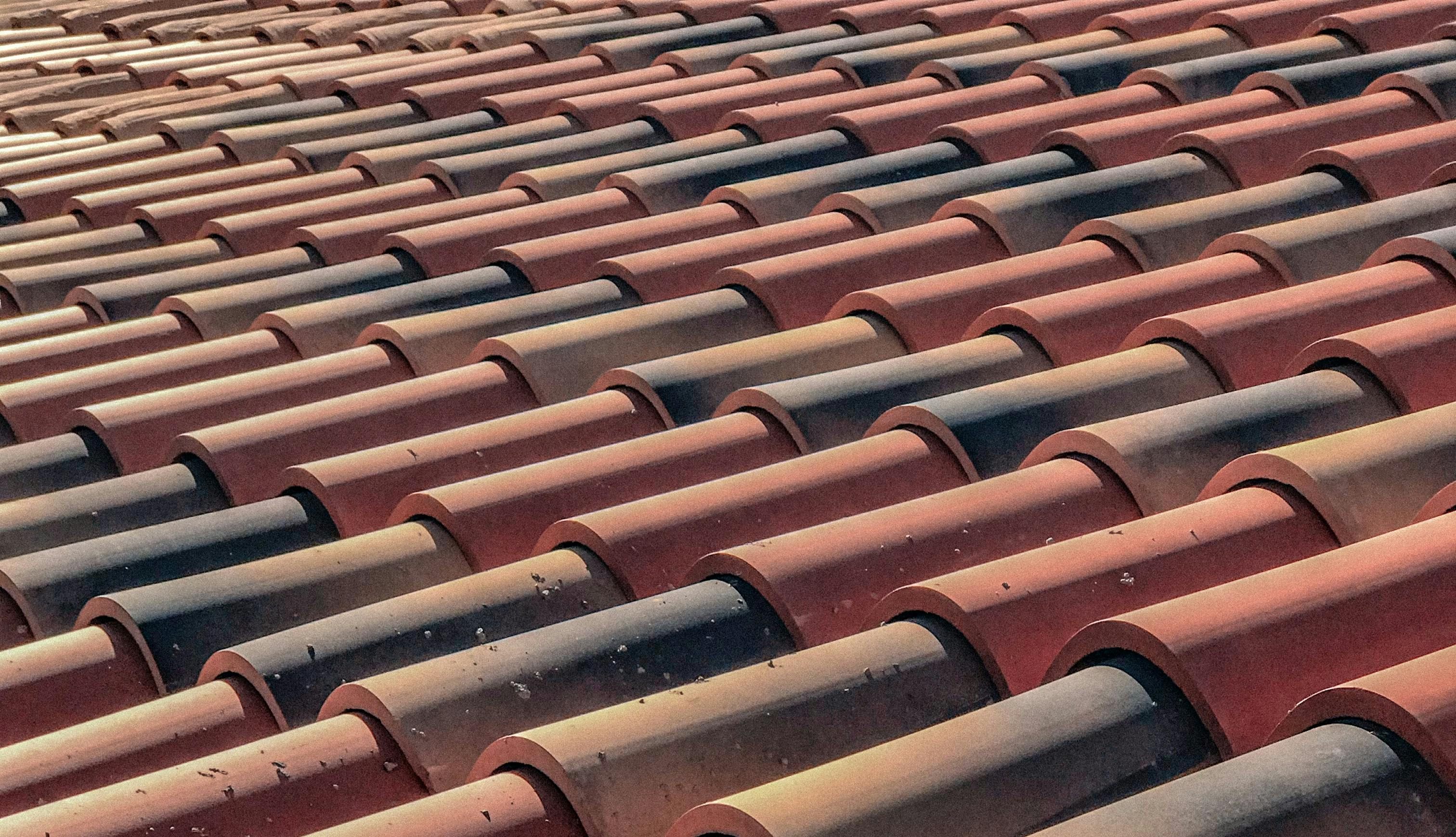
Concrete tiles last 40 to 60 years, but the surface coating erodes from about 30 years - which is when moss takes hold and the roof starts looking tired well before it leaks.
Flat Roofs: It All Comes Down to the Material
Flat roofs have a bad reputation that's largely out of date. It comes from the old built-up felt roofs of the 60s and 70s that genuinely did fail after ten years. Modern flat roofing is a completely different story, and the lifespan depends entirely on which system you've got over your extension, dormer, garage or bay.
- Built-up felt (torch-on): around 15 to 25 years for a modern multi-layer system - far better than the old stuff, but the shortest-lived of the current options.
- EPDM rubber membrane: 30 to 50 years. A single seamless sheet with very few joints to fail, which is why it's become so popular.
- GRP fibreglass: roughly 20 to 30 years, giving a hard, seamless finish that's good underfoot.
- Single-ply membrane: 20 to 30 years, often used on larger and commercial flat roofs.
Whichever it is, Bristol's wet weather is tougher on a flat roof than a pitched one, simply because water sits on it rather than running straight off. That makes the falls (the slight slope that moves water to the outlet), the drainage and the edge detailing more important than the headline lifespan. A brilliant membrane laid with nowhere for the water to go will still pond and struggle. If you're comparing options, our guide to EPDM vs felt vs fibreglass flat roofs in Bristol breaks down which suits which job, and our flat roof installation service covers all of them.
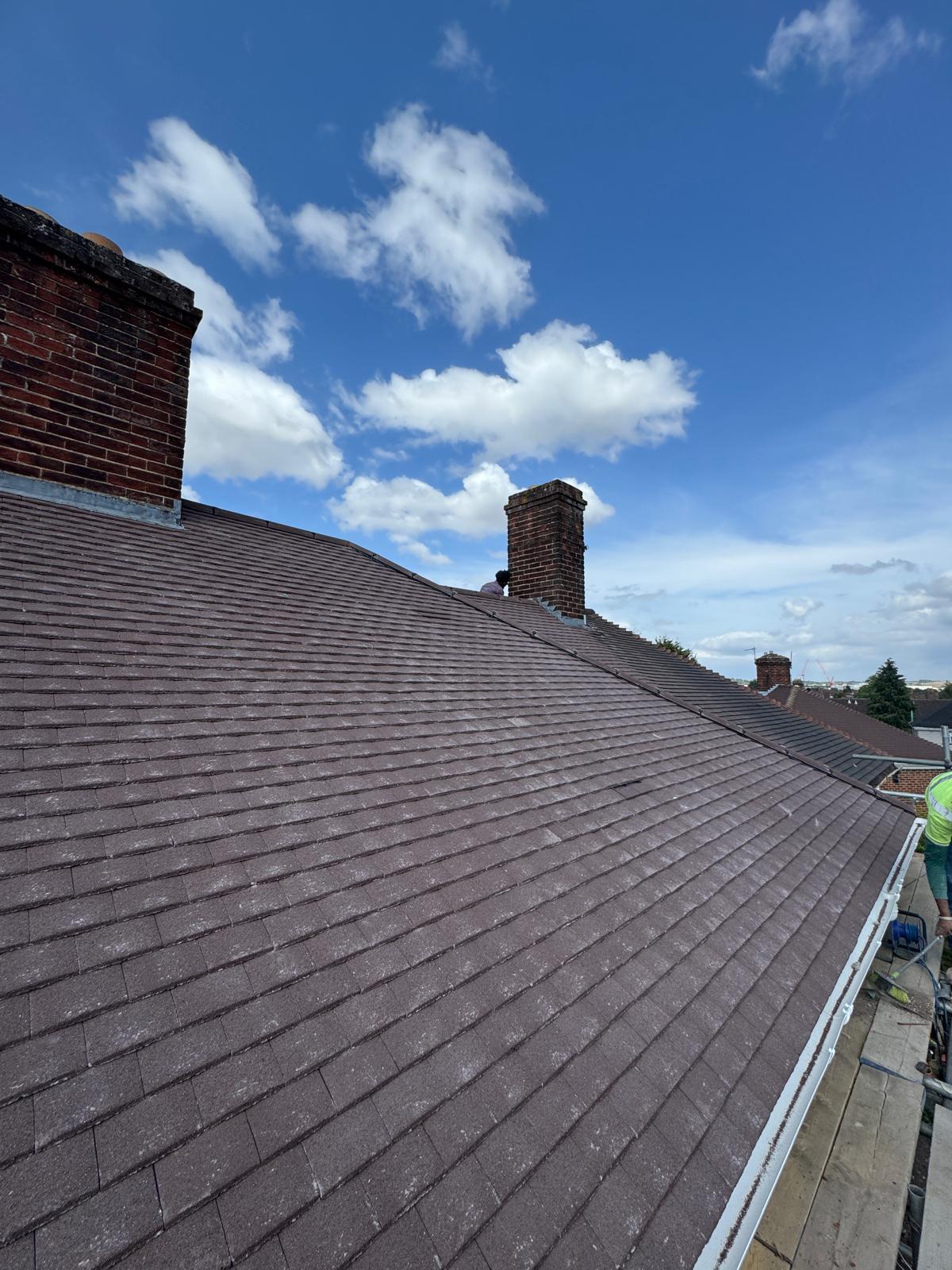
Modern flat roofs range from 15-25 years for felt to 30-50 for EPDM rubber. In wet Bristol, the falls and drainage matter as much as the material itself.
The Bits That Fail First: Flashing, Ridge and Felt
Here's something most "how long does a roof last" articles skip, and it's the bit that actually brings roofers out to Bristol houses. Long before the main covering wears out, the details start to go - and they're what let water in.
Lead flashing, the metal that seals the joints around chimneys, valleys and where a roof meets a wall, is itself extremely long-lasting (lead can last a century), but the mortar and pointing holding it, and the way it was dressed, often fails much sooner. Cracked or slipped flashing is one of the most common leak sources we see. The mortar bedding the ridge and hip tiles is another - traditional sand-and-cement bedding tends to crack and let ridge tiles work loose after 10 to 20 years, which is why modern "dry ridge" systems, which clamp the ridge mechanically instead, have become the sensible upgrade.
And then there's the underfelt. On roofs from the 1950s to 80s, the original bitumen felt beneath the tiles becomes brittle and tears with age, so even a sound tiled roof can start letting water track through. When people say a 50-year-old roof "needs doing", it's very often the felt and battens that have reached the end, not the tiles. Our guide to ridge tiles, repointing and dry ridge in Bristol covers that particular weak point in detail.
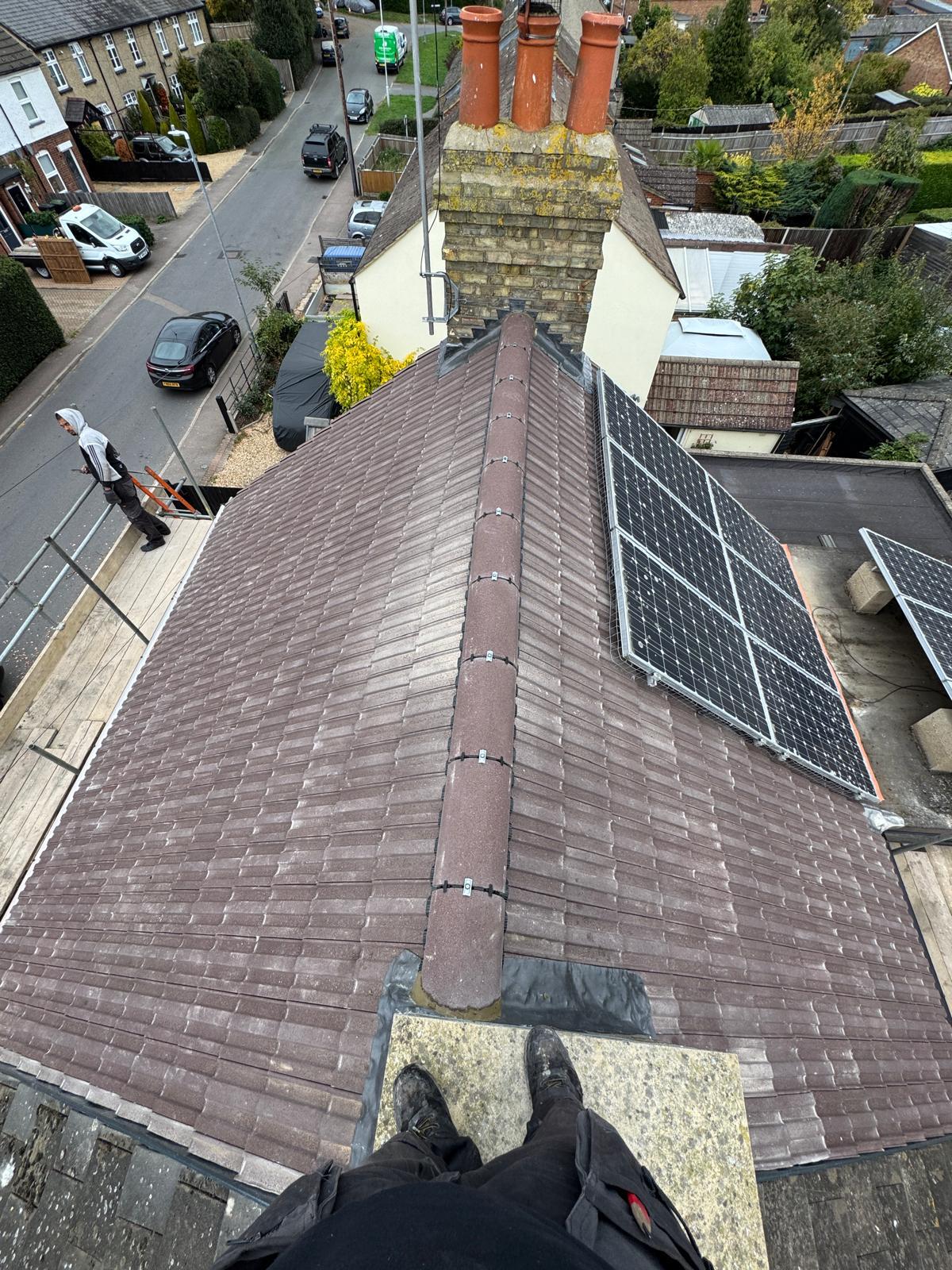
Flashing, ridge mortar and old underfelt fail long before the slates or tiles do - which is why most Bristol roof leaks start at the details, not the main covering.
How Bristol's Weather Changes the Numbers
Every lifespan above assumes typical conditions, so it's worth being straight about how our specific climate nudges them. Bristol is mild and wet. We get somewhere around 850mm of rain a year, spread across a lot of grey, damp days, and long spells where roofs barely dry out. That's a recipe for moss and algae, particularly on north-facing slopes and anywhere shaded by trees or taller buildings.
Moss isn't just cosmetic. It holds moisture against the surface, works its way under slates and tiles, and washes down to block gutters - and on concrete tiles it speeds up that surface erosion we talked about. Left for years, a heavily mossed roof ages faster than a clean one. The prevailing south-westerly winds coming up the Severn Estuary also drive rain hard against south-west-facing elevations, so those slopes tend to weather quicker than the sheltered sides.
None of this means Bristol roofs are doomed to short lives - our mild winters and rarity of hard, prolonged frost actually help, sparing us a lot of the freeze-thaw damage that batters roofs further north. The takeaway is simply that Bristol roofs reward maintenance: keeping them clear of moss and the gutters flowing is what lets a roof reach the top of its range rather than the bottom. Our guide to moss and algae roof cleaning in Bristol explains how to do that safely.
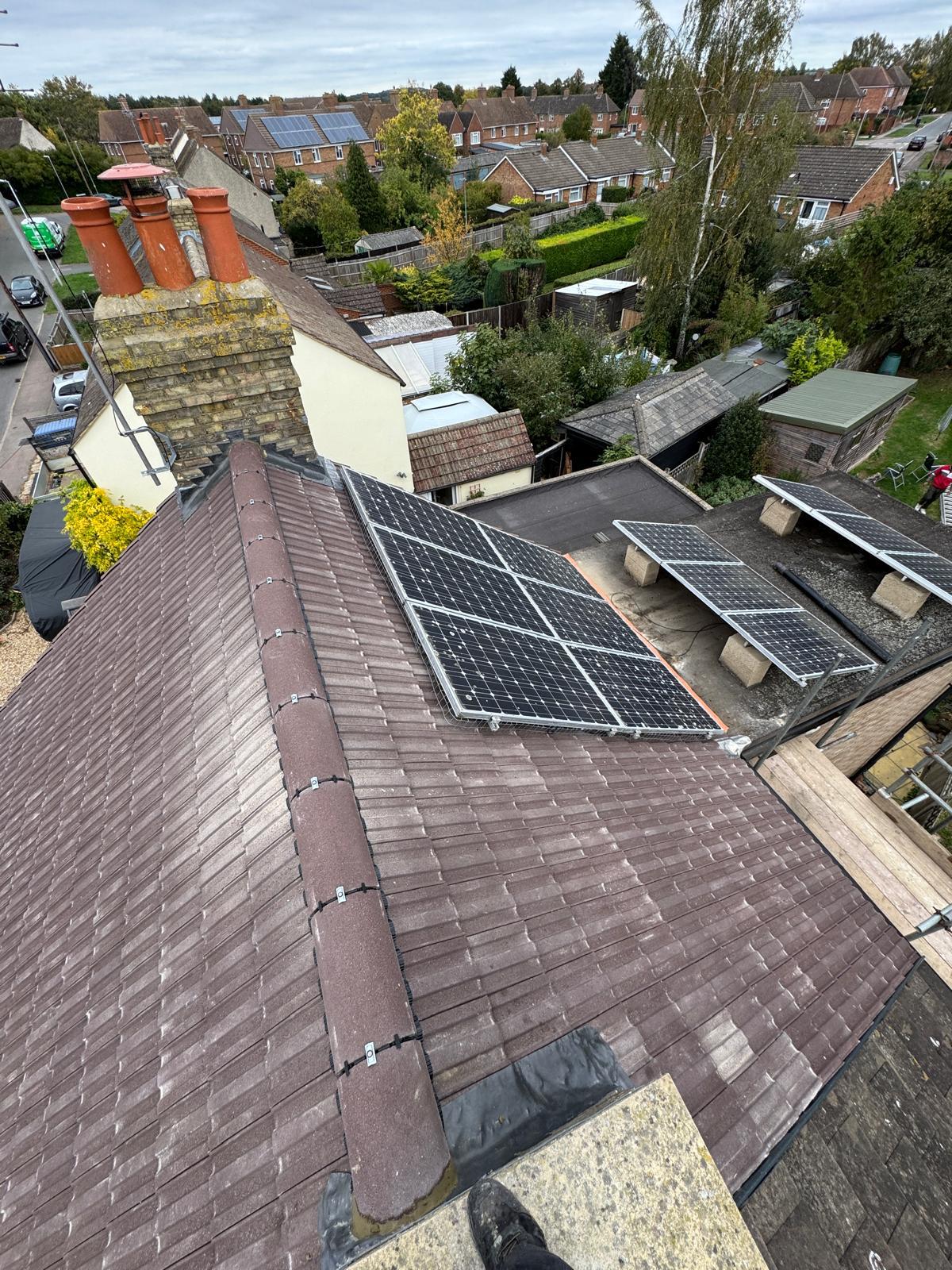
Bristol's damp, mild climate breeds moss that shortens a roof's life if left - but our mild winters spare us the freeze-thaw damage that batters roofs further north.
Repair or Replace? How To Judge It
Knowing the lifespans is one thing. The decision most Bristol homeowners actually face is simpler: is this a repair, or is it time for a new roof? A few honest guidelines help.
It's usually a repair if the covering has plenty of life left and the problem is localised - a handful of slipped slates, a cracked tile, a bit of failed flashing, a blocked valley. These are normal wear and worth fixing promptly before water gets in and the damage spreads. It's more likely replacement territory if the roof is near the end of its material life, you're getting repeated leaks springing up in different spots, a lot of tiles are spalling or slipping at once, or a roofer finds the battens and felt are perished. At that stage, chasing individual leaks becomes throwing good money after bad.
The only reliable way to know is a proper inspection - and crucially, that includes a look inside the loft, where you can see the underside of the felt, any daylight coming through, and staining that tells the real story. Age alone is a poor guide, because two roofs of the same year can be in wildly different shape. If you'd like an honest read rather than a sales pitch, our 2026 roof replacement cost guide for Bristol sets out what a new roof runs to, and the National Federation of Roofing Contractors and RICS are good places to understand the standards a proper survey and installation should meet.
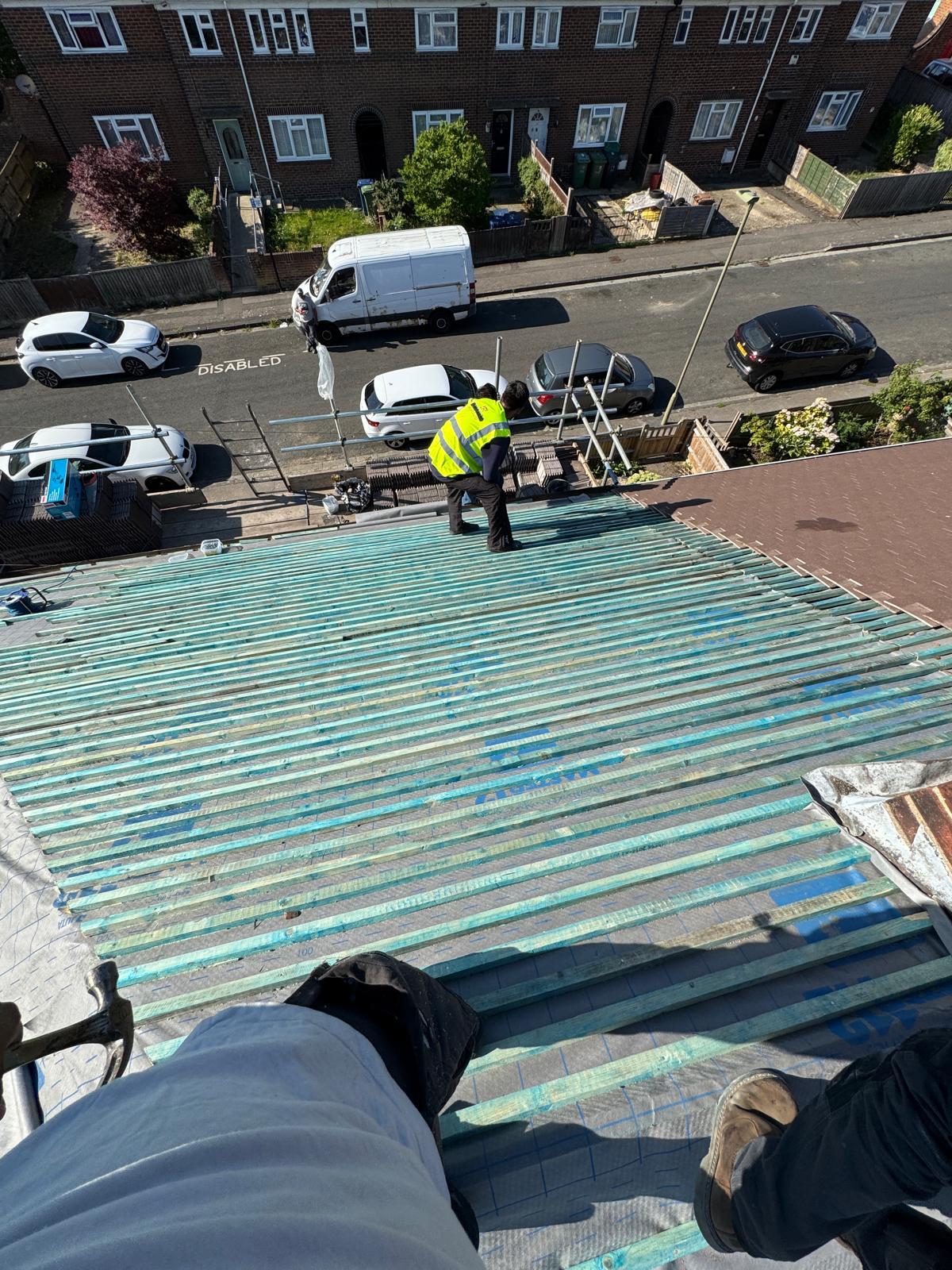
Repair or replace comes down to condition, not just age - a proper inspection, loft included, tells you whether you're fixing a localised fault or nursing a roof at the end of its life.
Frequently Asked Questions
Not sure how much life your roof has left?
We'll tell you straight - repair or replace, and roughly how long you've got. We inspect the roof and the loft across Bristol and give you an honest assessment, not a scare story. Book a free, no-obligation roof check and find out where yours really stands.
Book a Free Assessment