The ridge is the line along the very top of your roof, where the two slopes meet, capped by a row of curved or angular tiles. It's a part of the roof most people never think about until a tile slips, a chunk of mortar turns up in the gutter, or a storm sends one crashing down. Ridge problems are one of the most common jobs we get called out for across Bristol, and they're also one of the most misunderstood. This guide explains why ridges fail, the difference between re-pointing, re-ridging and a modern dry ridge system, and what each costs.
What Ridge Tiles Do and Why They Matter
Ridge tiles cap the apex of the roof, sealing the gap where the two slopes come together at the top. The same idea applies to the hips - the sloping ridges that run down the corners of a hipped roof. Without them, the top of the roof would be wide open to the weather, so they're doing a genuinely important job despite being easy to ignore.
Traditionally, ridge and hip tiles are bedded in mortar - a bed of sand-and-cement mortar holds each tile down and seals the joints between them. It's a method that's been used for well over a century, and on Bristol's Victorian and Edwardian terraces you'll find mortar-bedded ridges everywhere. The problem is that mortar doesn't last as long as the tiles do, and that mismatch is the root of most ridge trouble.
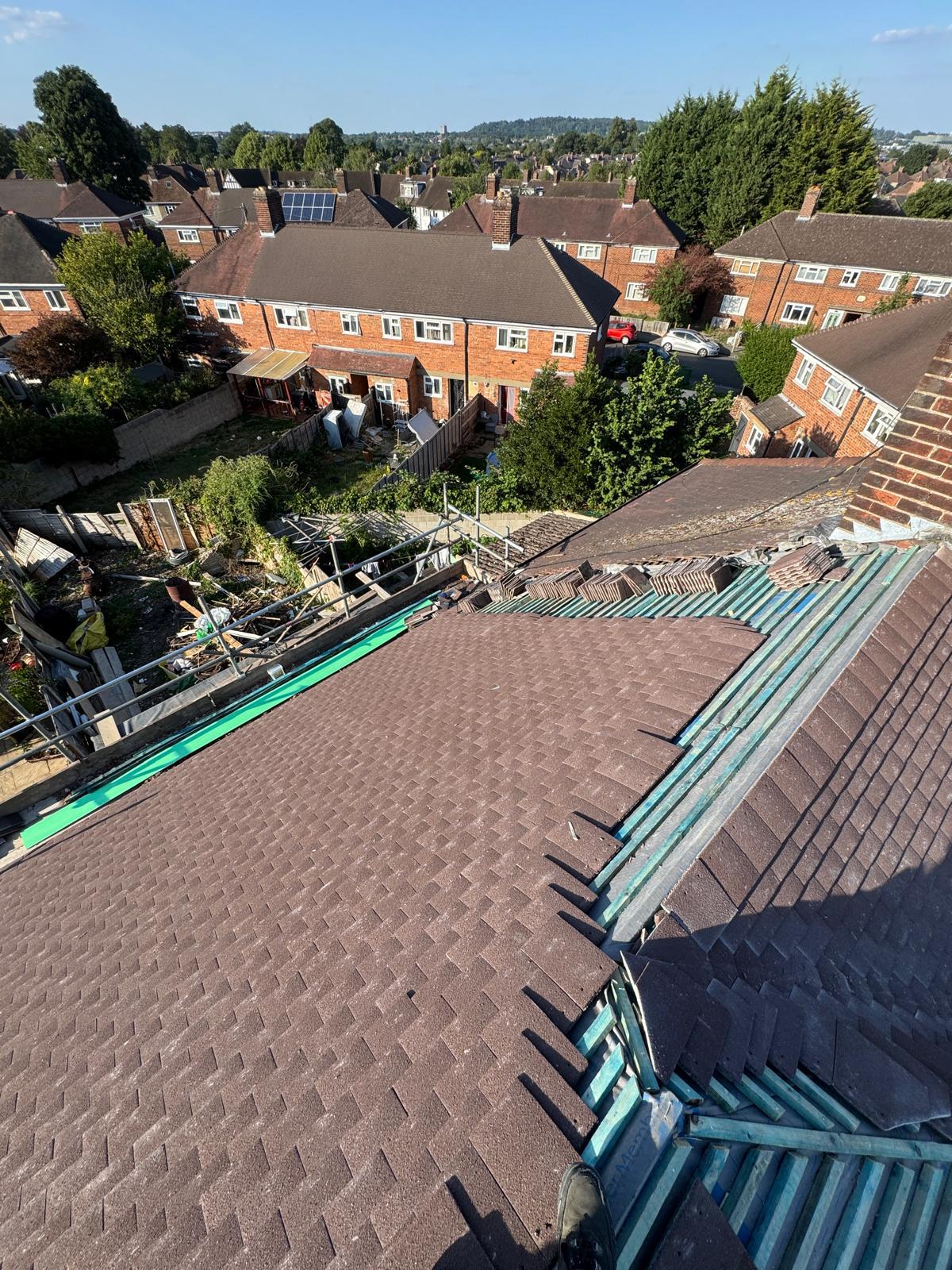
The ridge caps the apex where the two roof slopes meet - traditionally the tiles are bedded in mortar, which is exactly where the trouble tends to start.
Why Ridge Mortar Fails on Bristol Roofs
Mortar bedding has a working life of roughly 10 to 15 years before it needs attention, and several things conspire to shorten it on a Bristol roof.
The ridge is the most exposed line on the whole roof. It sits at the highest point, taking the full force of the wind, and Bristol gets plenty of that - the prevailing south-westerly weather rolling in off the Atlantic hits the ridge head-on. Add the freeze-thaw cycle, where water gets into tiny cracks in the mortar, freezes, expands and breaks it apart a little more each winter, and the mortar steadily crumbles.
There's also a materials issue on older roofs. A lot of Victorian ridges were originally bedded in soft lime mortar, and when they've been repaired over the years with hard modern cement, the mismatch cracks and fails faster - the same problem we see on chimney stacks, which we cover in our guide to chimney repairs and repointing in Bristol. Once the mortar goes, the ridge tiles have nothing holding them, and they start to slip, rock and eventually lift.
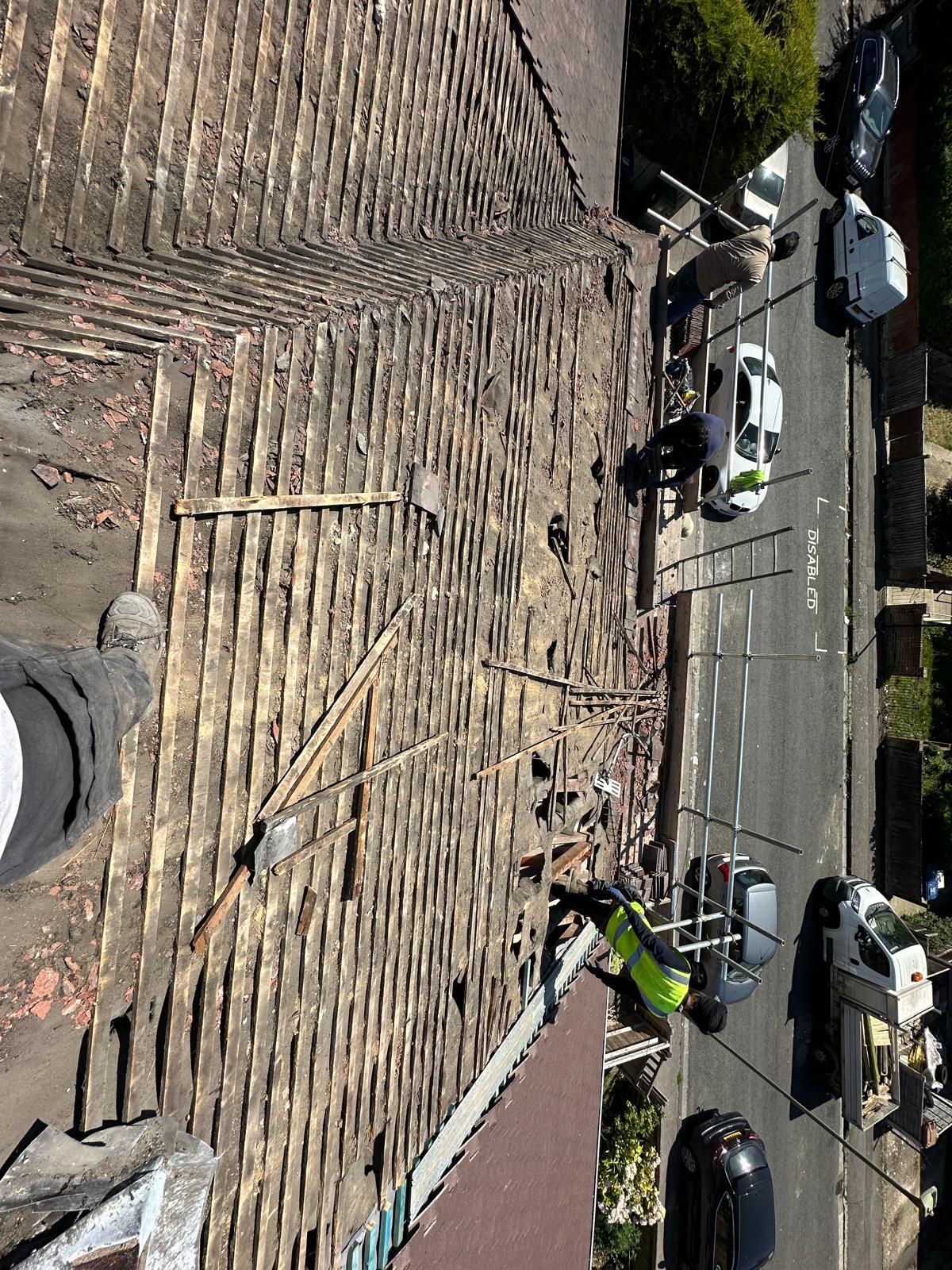
Ridge mortar has a life of 10 to 15 years - Bristol's exposed south-westerly wind and winter frost break it down until it no longer holds the tiles.
The Signs Your Ridge Needs Attention
Ridge problems are usually visible from the ground if you look up at the top line of the roof. Watch for:
- Slipped or displaced ridge tiles sitting lower, higher or at an angle to the neat line they should form.
- Visible gaps between the ridge tiles where the mortar has fallen out.
- Crumbling mortar you can see hanging or missing along the ridge line.
- Pieces of mortar in the gutters or on the ground after wind or rain - a sure sign the bedding is breaking up.
- A ridge tile that's visibly loose or has come off entirely, sometimes found on the ground after a storm.
- Damp or staining on the ceiling of the top floor, where water has got in through failed ridge joints.
Because the ridge is right at the top, a slipped ridge tile also tends to be an early warning that the whole ridge line is on the same clock - if the mortar has failed in one place, it's usually failing along the length.
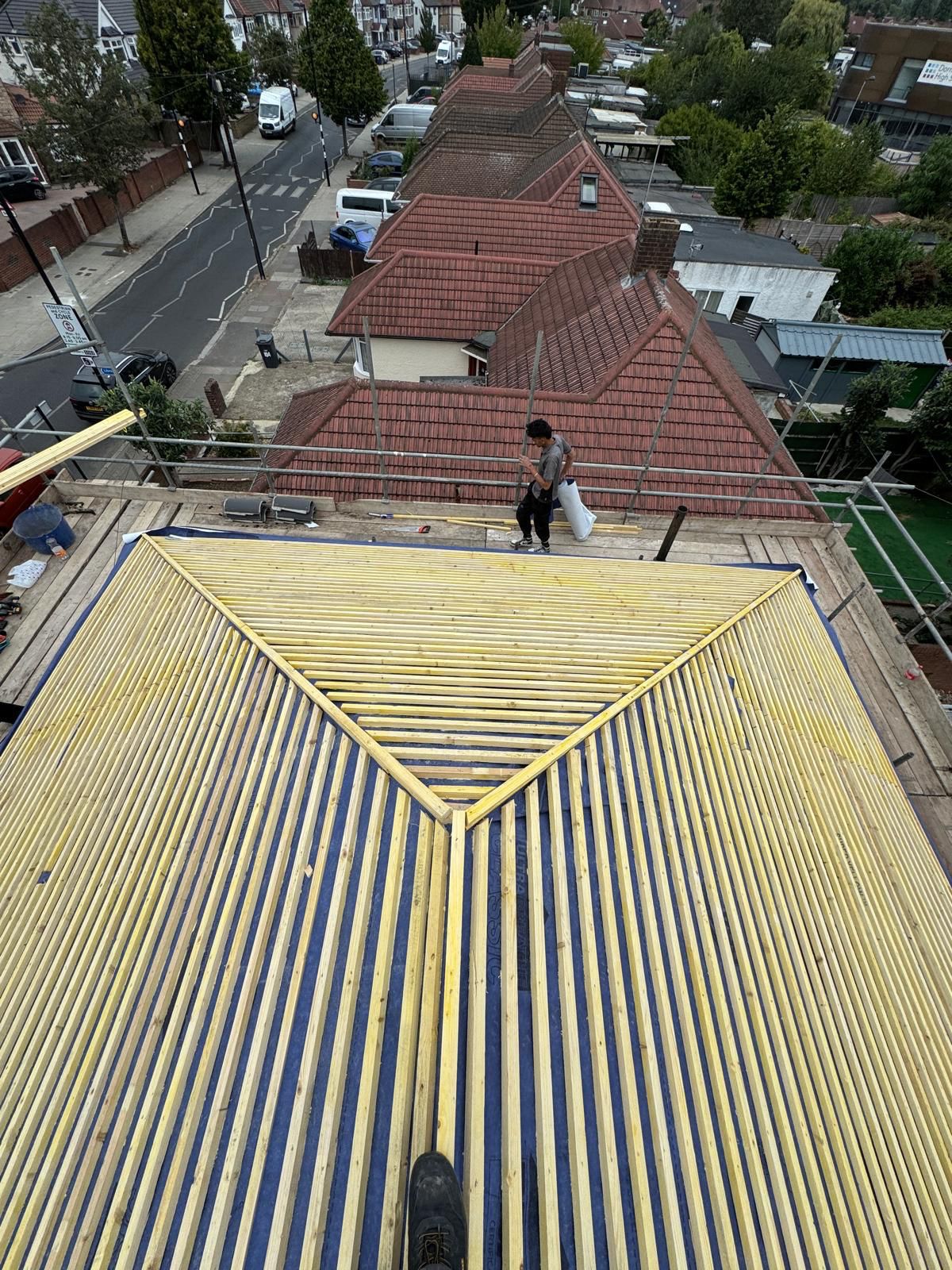
Slipped tiles, gaps in the ridge line, and lumps of mortar in the gutter are the classic signs - and usually a warning the whole ridge is going, not just one tile.
Re-Pointing vs Re-Ridging: What's the Difference?
People use these two terms interchangeably, but they're different jobs for different levels of failure. Knowing which one you actually need is what stops you overpaying, or paying twice.
Re-pointing is the lighter option. The old, failed pointing mortar is raked out of the joints and replaced with fresh mortar, without lifting the tiles. It works when the main bed holding the tiles down is still sound and it's only the surface pointing that's cracked and crumbling. It's quicker and cheaper, and on a ridge that's caught reasonably early it's often all that's needed.
Re-ridging is the full job. The ridge tiles are lifted off completely, all the old mortar is cleaned away, and the tiles are re-bedded from scratch - or, increasingly, replaced with a dry ridge system. Re-ridging is needed when the whole bed has failed, not just the surface, when tiles have already come loose, or when the tiles themselves are damaged. It costs more, but on a ridge that's genuinely worn out it's the only lasting fix.
An honest roofer will tell you which one your ridge actually needs. If someone quotes to re-ridge a whole roof when a section of re-pointing would do, or slaps new pointing over a bed that's completely gone, you're not getting good advice.
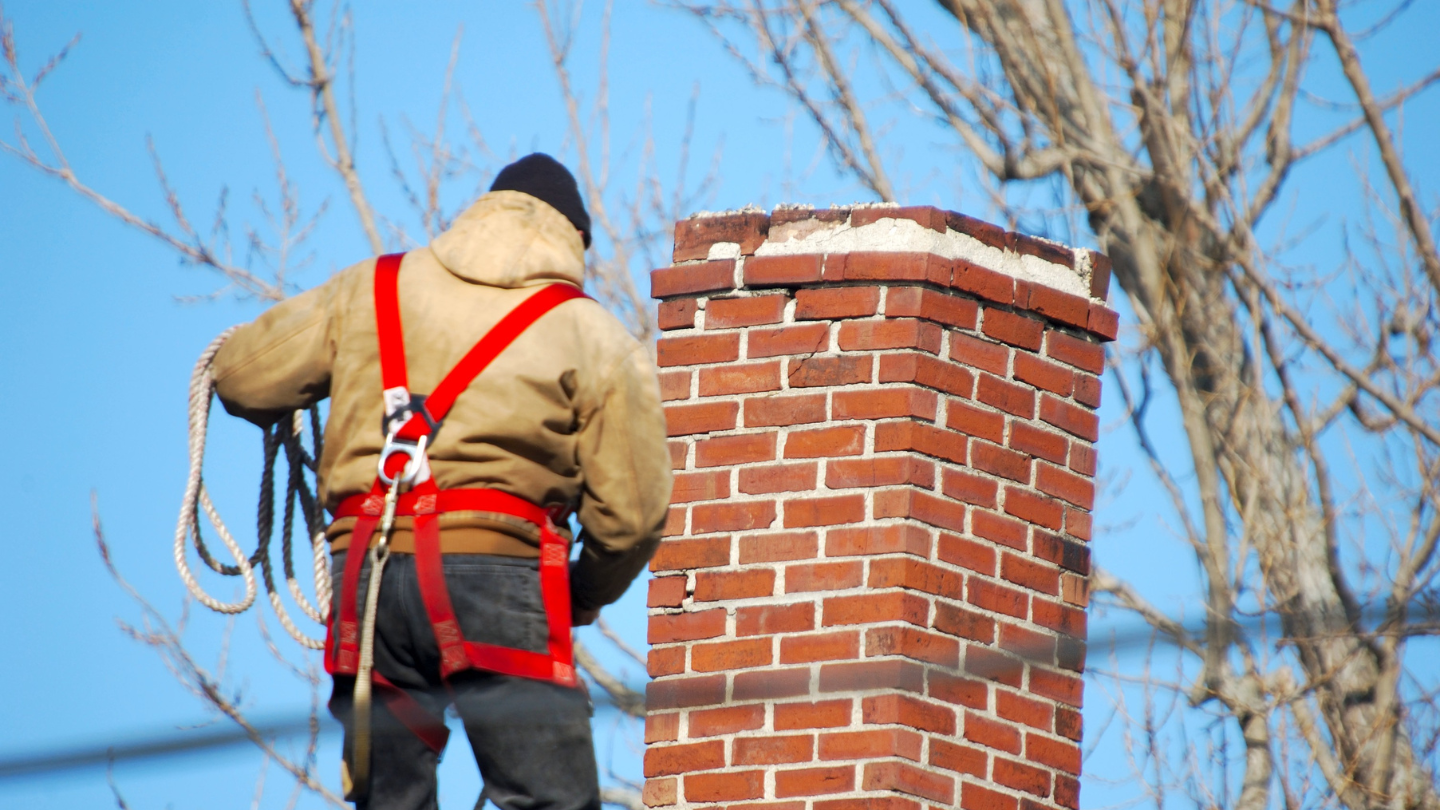
Re-pointing replaces the surface mortar without lifting the tiles; re-ridging lifts the lot and re-beds from scratch. Which you need depends on how far the bed has failed.
Dry Ridge Systems: The Modern Alternative
There's a better way to fix a ridge than mortar, and it's become the standard on new and re-roofed properties for good reason. A dry ridge system fixes the ridge tiles mechanically - each tile is screwed and clamped down onto a batten - with no mortar involved at all.
The advantages are significant. With no mortar, there's nothing to crack, crumble or wash out, so a dry ridge is far more durable and effectively maintenance-free. It also includes a ventilated ridge roll along the top, which lets the roof space breathe and helps with the condensation problems we cover in our guide to roof ventilation and condensation in Bristol lofts. And crucially, it holds the tiles down mechanically, so they can't be lifted off by wind the way a failed mortar ridge can.
This isn't just a preference. Modern building regulations and the British Standard for slating and tiling now require ridge and hip tiles to be mechanically fixed, rather than relying on mortar alone, on new roofs and re-roofs. So when we re-ridge a roof in Bristol, we'll usually recommend a dry ridge system - you get a more durable result that also meets the current standard. It's the kind of thing worth asking any roofer about before they simply re-bed in mortar.
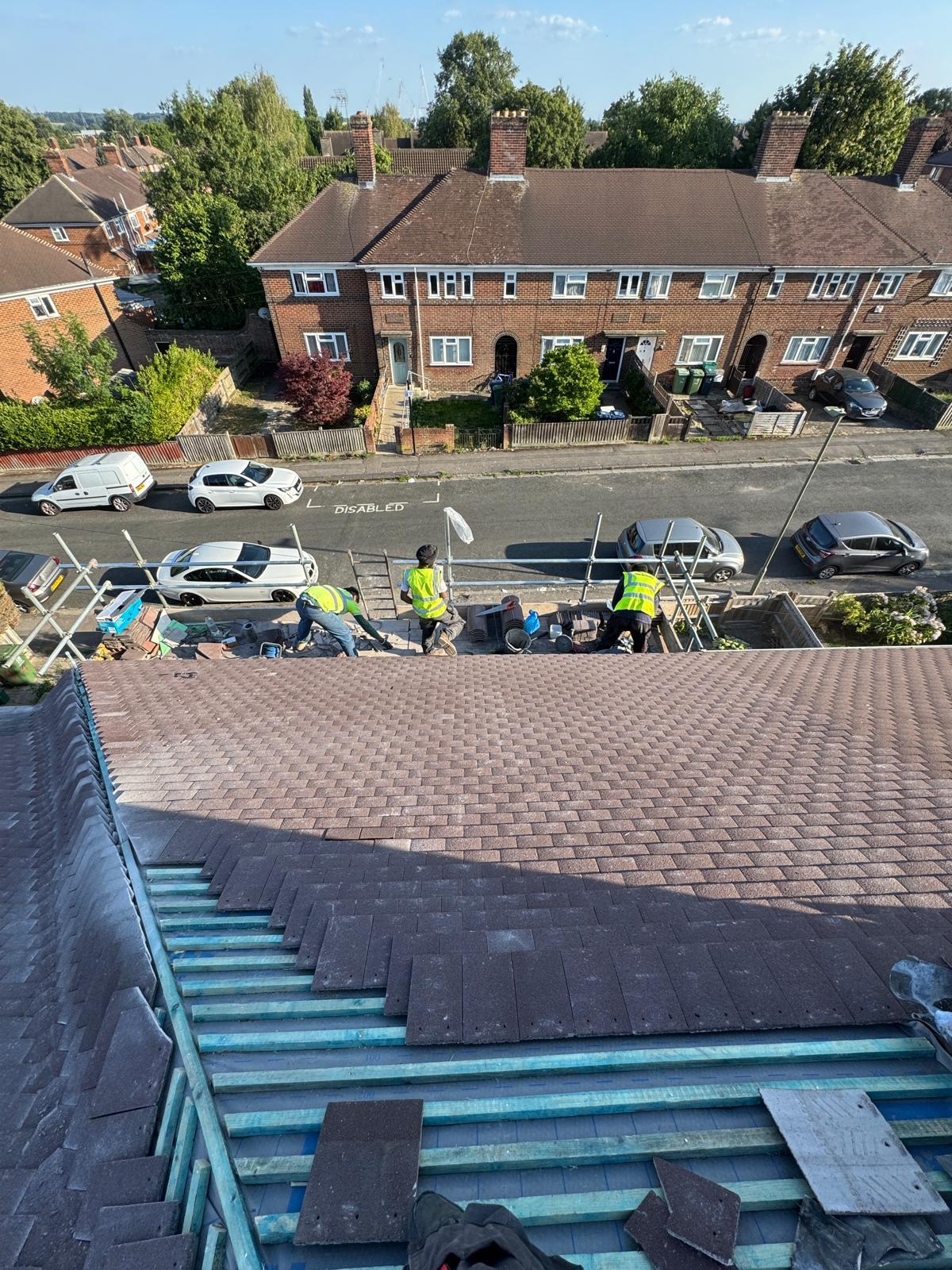
A dry ridge system screws and clamps the tiles down onto a batten with a ventilated roll - no mortar to fail, and it meets the current building standard.
What Ridge Work Costs in Bristol (2026)
Guide prices for ridge work on a typical Bristol property in 2026:
- Re-pointing a ridge line: £400 - £900
- Re-ridging (re-bedding in mortar): £700 - £1,500
- Dry ridge system (supply and fit): £900 - £1,800
- Replacing individual cracked ridge tiles: from £120 - £300
As with all roof work, access drives a chunk of the cost - the ridge is the highest point on the roof, so a scaffold or tower is needed to reach it safely, and a steeper or higher roof costs more to get to. Length matters too: a long terrace ridge costs more than a short one. Be wary of a very cheap ridge "repair" that involves smearing fresh mortar over a bed that's already failed - it looks fine for a season and then lets go. When choosing a roofer, the National Federation of Roofing Contractors and the TrustMark scheme let you check they're vetted, and our roof repair service covers ridge work across Bristol.

Access to the ridge needs a scaffold or tower, which is part of the cost - and a cheap smear of mortar over a failed bed is a false economy that soon lets go.
Why a Loose Ridge Is a Storm Priority
Of everything that goes wrong with a roof, a loose ridge tile is the one to deal with promptly. It's a safety issue as much as a leak.
A ridge tile sits at the very top of the roof, higher than anything else, and once the mortar holding it has failed there's little to stop a strong gust lifting it clean off. When that happens, it doesn't stay up there - it comes down, potentially onto a path, a car, a garden or a person below. Loose ridge tiles are among the most common things to come down in a storm, which is exactly why they're worth fixing before the autumn weather rather than after. We cover what to look for after bad weather in our guide to roof inspections after a storm in Bristol.
If you can see, from the ground, ridge tiles that have slipped out of line or are sitting loose, treat it as a job to book rather than to watch. A ridge re-point or re-ridge is a straightforward, affordable piece of work. A ridge tile through a car windscreen is not.
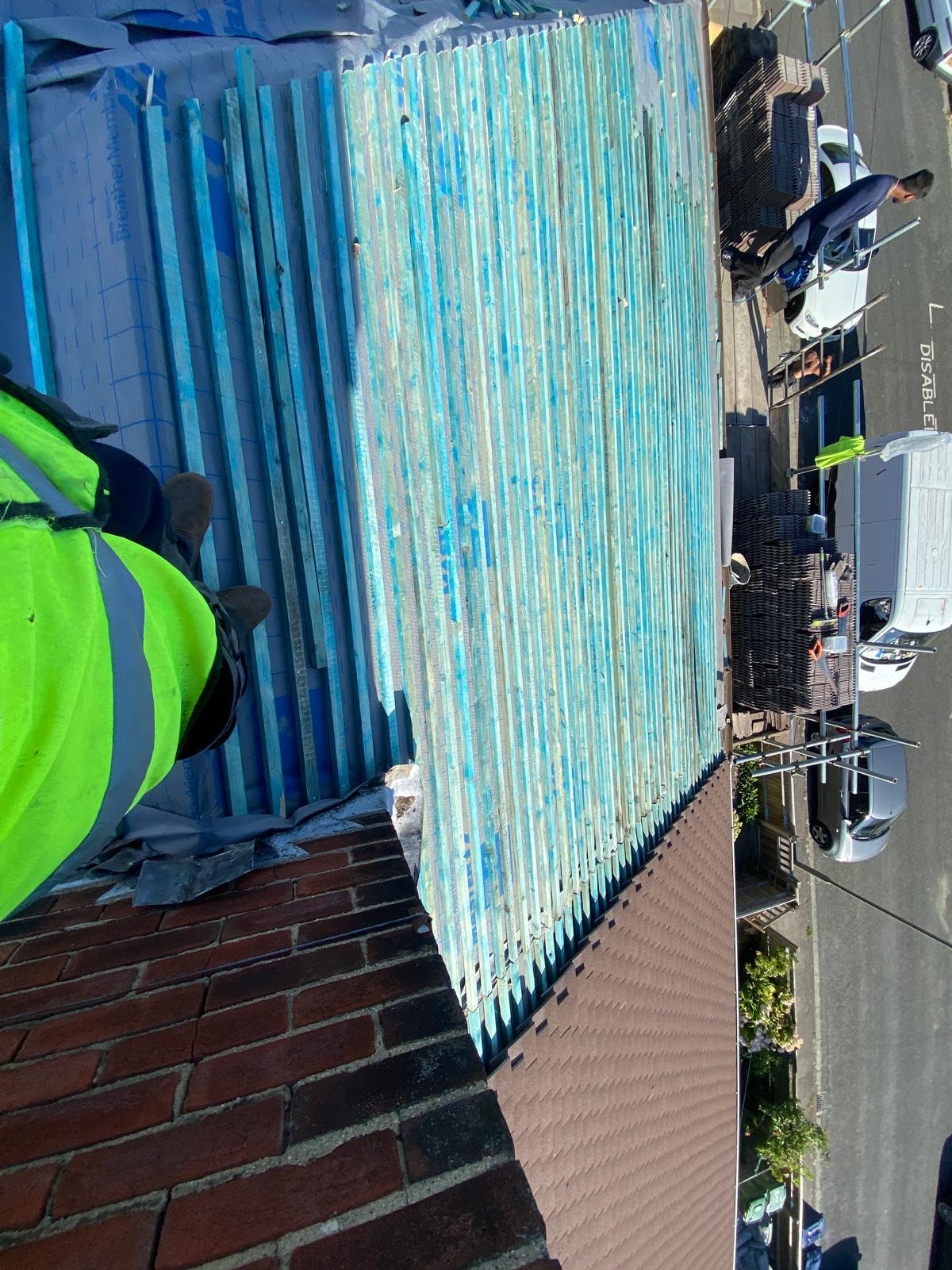
A loose ridge tile at the top of the roof is a safety issue, not just a leak - it's one of the most common things to come down in a storm, so it's worth fixing early.
Frequently Asked Questions
Slipped ridge tile or crumbling mortar?
We re-point, re-ridge and fit dry ridge systems across Bristol - and we'll tell you honestly whether yours needs a re-point or the full job. Book a free, no-obligation assessment and we'll take a proper look before the autumn weather arrives.
Book a Free Assessment