If you've got a leak coming through near a chimney, a dormer, a parapet wall, or where a bay window roof meets the main house wall, there's a good chance lead flashing is involved. It's one of the most common sources of roof leaks on Bristol's older housing stock - and one of the most frequently misdiagnosed. Homeowners sometimes spend money on new roof tiles when the slates themselves are fine; the problem is the inch-wide strip of lead sealing the junction next to them. This guide covers what lead flashing is, why it fails, and what fixing it costs.
What Is Lead Flashing and Where Is It Used?
Lead flashing is the strip of sheet lead used to waterproof junctions where a roof surface meets a vertical element - a chimney stack, a rendered wall, a parapet, a dormer cheek, or a roof window frame. It's also used in valleys, where two roof slopes meet and water concentrates.
Lead has been used for this purpose for centuries, and it still makes sense: it's malleable enough to dress tightly against irregular surfaces, it expands and contracts without cracking, and a properly installed lead detail can genuinely last 50 to 100 years. The problem isn't the material - it's that a lot of lead flashing on Bristol's Victorian and Edwardian properties was installed a long time ago, and either the mortar bedding it into the wall joint has failed, or previous patch repairs have reached the end of their effective life.
On period properties across Clifton, Redland, Cotham, and Bedminster, chimney stacks are almost always flashied with lead, and valley gutters between roof pitches are typically lead-lined too. For chimney repair and reflashing work in Bristol, this is one of the most common jobs we carry out.
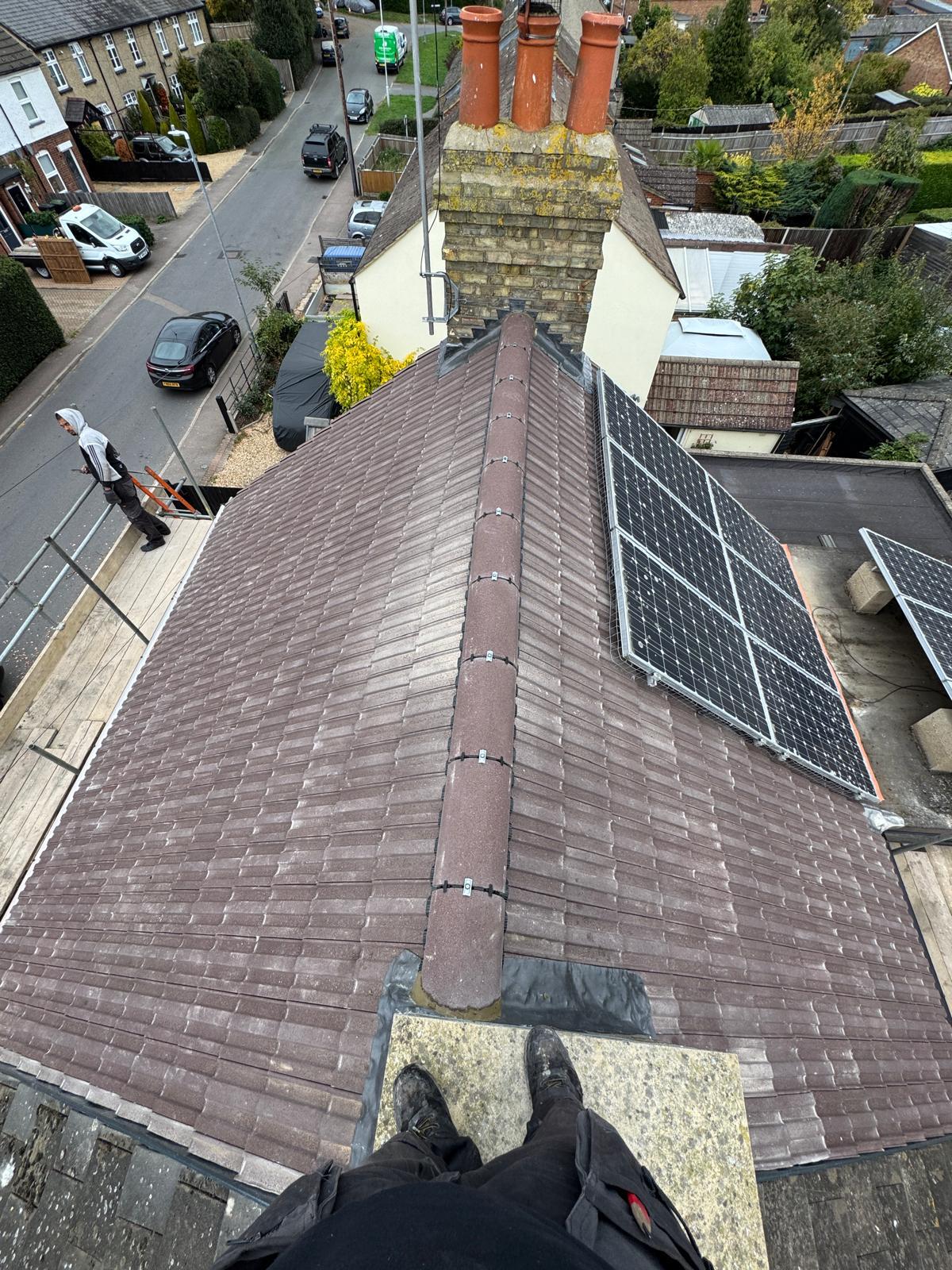
Chimney flashings on Bristol's Victorian and Edwardian properties are a frequent source of leaks when mortar pointing fails or the lead lifts.
Why Lead Flashing Fails
The most common cause of failure is mortar. Lead flashing is typically fixed by folding the top edge into a mortar joint in the brickwork - a technique called "turning in" - and then pointing over it with mortar to lock it in place. When that mortar deteriorates, the flashing lifts or pulls out, and the sealed joint opens up.
Bristol's older brick and stonework can be particularly prone to this. Lime mortar, which was used on Victorian properties, weathers more quickly than modern cement mortar and needs periodic repointing. If the joints in the brickwork around a chimney or parapet are crumbling, the flashing is probably not far behind.
A second cause is thermal movement. Lead expands significantly in warm weather and contracts in cold - more than most other building materials. If the flashing wasn't installed with enough working room at the joints, or if it's been fixed down too rigidly, that movement causes cracking over time. You sometimes see this on south-facing chimney stacks that get full afternoon sun: the lead weathers faster on that side and cracks appear at the joints.
Physical damage is less common but worth mentioning. A falling branch, an aerial or satellite dish being repositioned, or a roofer standing on a valley can all deform lead flashing enough to open a joint. And lead theft, while not epidemic on domestic Bristol properties, does happen - if a section has simply disappeared, that's usually the explanation.
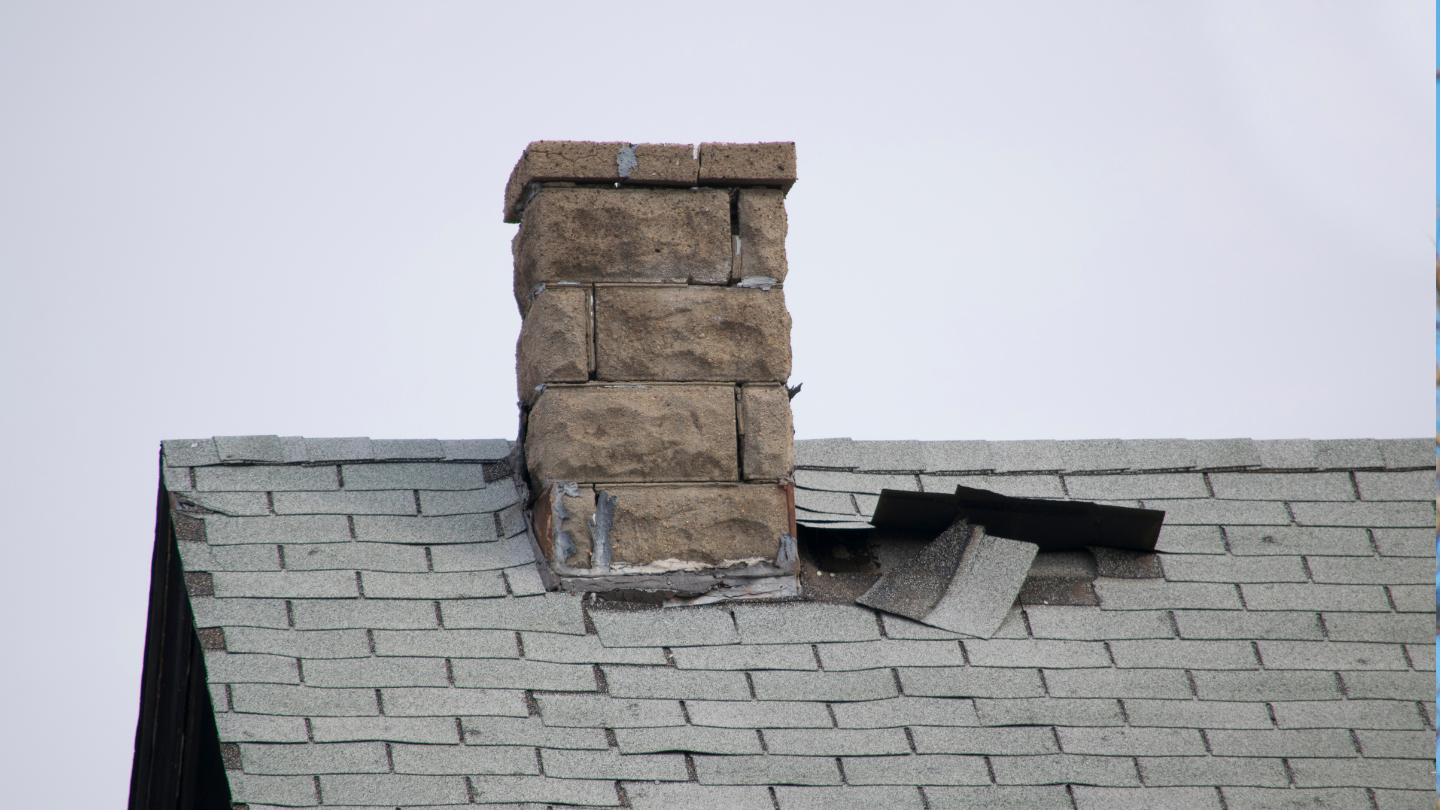
Failed pointing at the top of the flashing is the most common cause of chimney leaks - the lead itself is often fine, but the mortar holding it in place has crumbled.
How to Spot a Flashing Problem Before It Leaks Inside
From ground level with a pair of binoculars, a few things are worth looking for. Lead that has lifted away from the wall at any point, even slightly, is letting water in when it rains. Mortar that looks crumbly or missing around the top edge of the flashing is a sign the joint has failed. Dark staining on the render or brickwork directly below a chimney junction can mean water has been tracking there for some time.
Inside, the signs are more obvious once a leak is established: brown staining on the ceiling or wall near a chimney breast, damp patches that appear during or after rain and dry out between wet spells, or - on upper floors - moisture tracking down the chimney breast wall.
The tricky thing about flashing leaks is that water can enter at one point and appear on the ceiling several feet away. A chimney flashing failure can show up as a damp patch on a bedroom ceiling well away from the chimney itself, because the water tracks along the roofing felt or timber before finding a gap to drip through. This is why getting someone onto the roof to look at the actual flashing - rather than just trying to diagnose from the damp patch - is the only reliable approach.
Repair vs Full Reflash - What Makes Sense?
This is the key question, and the honest answer depends on the condition of what's already there.
If the lead itself is sound - no cracks, good thickness, properly dressed - and the problem is just failed mortar pointing at the top, repointing is all that's needed. That's a quick, inexpensive fix that can extend the life of the existing flashing by another decade or more. Repointing flashing joints with a flexible mortar (important - standard cement is too rigid and cracks again quickly) is a common repair that we carry out regularly.
If the lead has cracked, corroded through, lifted significantly, or been damaged and patched with sealant tape that has itself failed, replacement makes more sense. Sealant patches are a temporary measure at best - they crack as the lead moves through temperature cycles, and the underlying joint is often worse than it looked when the sealant was applied.
A full chimney reflash typically involves stripping all the existing lead back, repointing the brickwork joints where the new lead will be turned in, cutting and forming new Code 4 lead to the correct profile, dressing it tightly against the masonry, and repointing over the turned-in edges. Done properly, it should be problem-free for 40 to 60 years.

A full chimney reflash involves stripping the existing lead, repointing the brickwork joints, forming new lead to the correct profile, and pointing over the turned-in edges.
What Does Lead Flashing Repair Cost in Bristol?
Costs vary depending on the extent of work, access requirements, and whether scaffolding is needed.
- Repointing existing flashing (chimney, one face): £120 - £280
- Full chimney reflash (two faces, typical semi): £350 - £750
- Valley reflash (per metre run): £80 - £150
- Dormer cheek reflash (per side): £200 - £500
- Parapet wall flashing (per metre): £90 - £180
These figures assume ladder or hop-up access. Scaffold, where needed for high stacks or steep pitches, adds to the cost. On many Bristol semi-detached properties with standard chimney heights, lead work can be carried out from a roof ladder without erecting full scaffold, which keeps the price down. We'll always confirm what's needed during the free assessment and include it in the written quote.
The National Federation of Roofing Contractors covers lead and weathering as a specialist area within roofing - their directory lets you search for approved contractors who carry the correct insurance and are assessed for quality.
A Note on Lead Code and Thickness
Lead sheet for flashing is graded by "code," which refers to its thickness and weight. Code 3 is the lightest grade used in roofing and is suitable for small details. Code 4 is the most common specification for chimney and valley flashings on domestic properties. Code 5 is heavier and used for larger or more demanding applications like parapet cappings.
It's worth asking any contractor what code they're using for replacement work. Some cheaper quotes use Code 3 where Code 4 would be the correct specification - it's thinner, lighter, and less durable. Properly specified leadwork uses the right code for each location. The NHBC standards for roofing and weatherings give guidance on the correct lead code for each application, and any competent contractor should be working to those or the equivalent BS EN 12588 specification.
If you're getting quotes for lead work, asking "what code are you using and why?" is a reasonable question. A contractor who knows their trade will answer it clearly. You can also read our post on flat roof replacement in Bristol if your flat roof also has lead upstands or parapet details that need attention at the same time.
Frequently Asked Questions
Think your flashing might be the source of a leak?
We offer free, no-obligation assessments across Bristol and the surrounding areas. We'll get up and look at it properly, tell you what's causing the problem, and give you a clear written quote before any work starts.
Book a Free Assessment