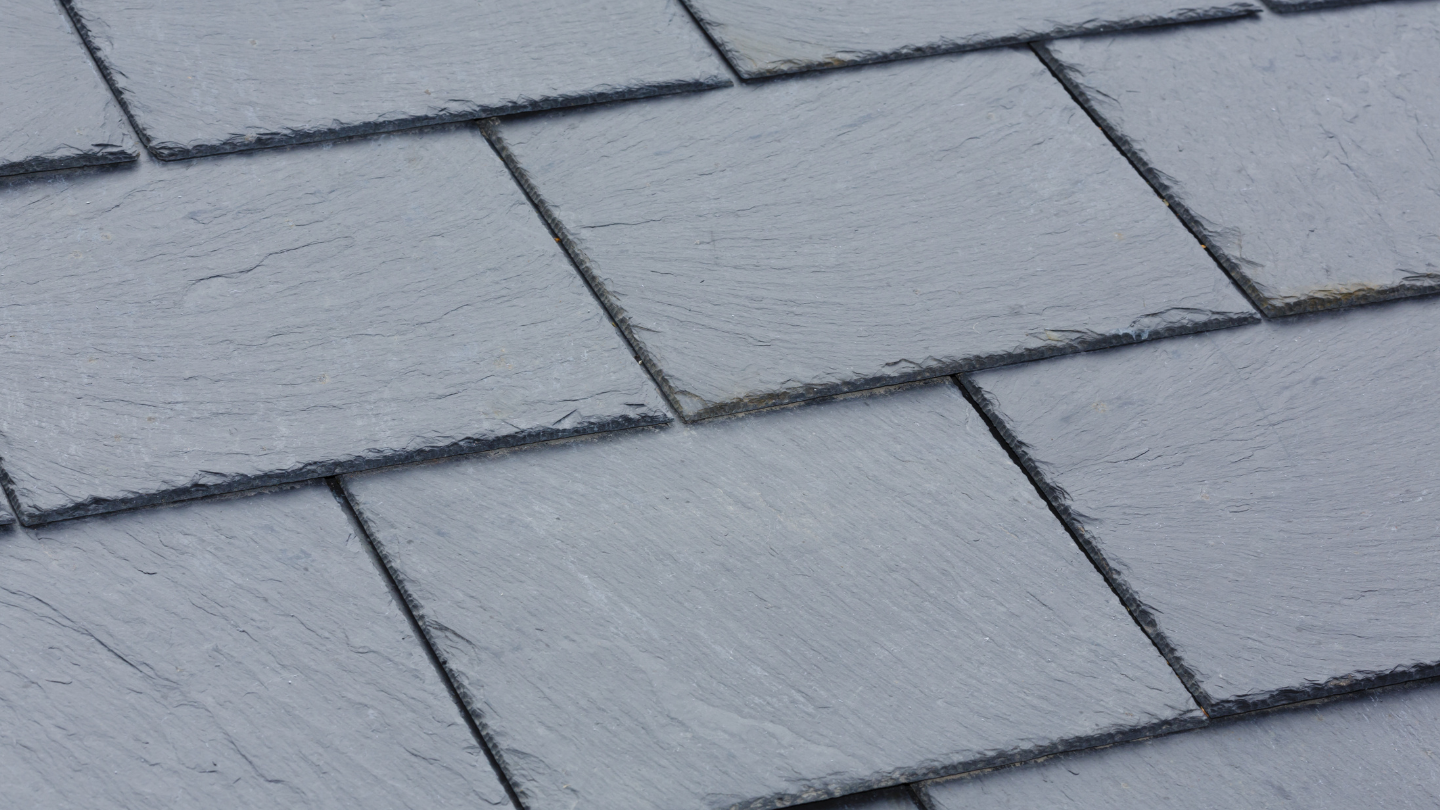
You come home, look up, and there's a dark gap where a slate used to be - or worse, you find the slate itself in pieces on the patio. It's one of the most common calls we get from Bristol homeowners, and the first question is always the same: is this a quick fix, or the start of a much bigger bill? The honest answer depends on why the slate slipped in the first place, and on a Victorian roof that reason has a name. Here's how to tell a simple repair from a roof that's quietly telling you it's done.
Why Slates Slip: The Nail Sickness Problem
Bristol is a city of slate roofs. The Victorian and Edwardian terraces that fill Bedminster, Totterdown, Redland, Cotham, Montpelier and St Andrews were built with natural Welsh slate, and a lot of those roofs are original - which means they're now well over a hundred years old.
Here's the thing about a slate roof: the slate itself barely wears out. Good Welsh slate can last 100 to 150 years, and much of it on Bristol's roofs is still perfectly sound. What fails is the nails holding it up. The original iron nails rust and weaken over the decades until they can no longer hold the slate against gravity and wind, and the slate simply slides down out of place. Roofers call this "nail sickness", and it's the single most common reason slates slip on the city's period stock.
The important part is what nail sickness tells you. If one slate has slipped because its nails have gone, the nails on every other slate of the same age are on the same clock. It doesn't mean the whole roof fails tomorrow, but it does change how you read the problem - a single slipped slate on a 120-year-old roof is a different conversation from one on a roof that was redone twenty years ago.
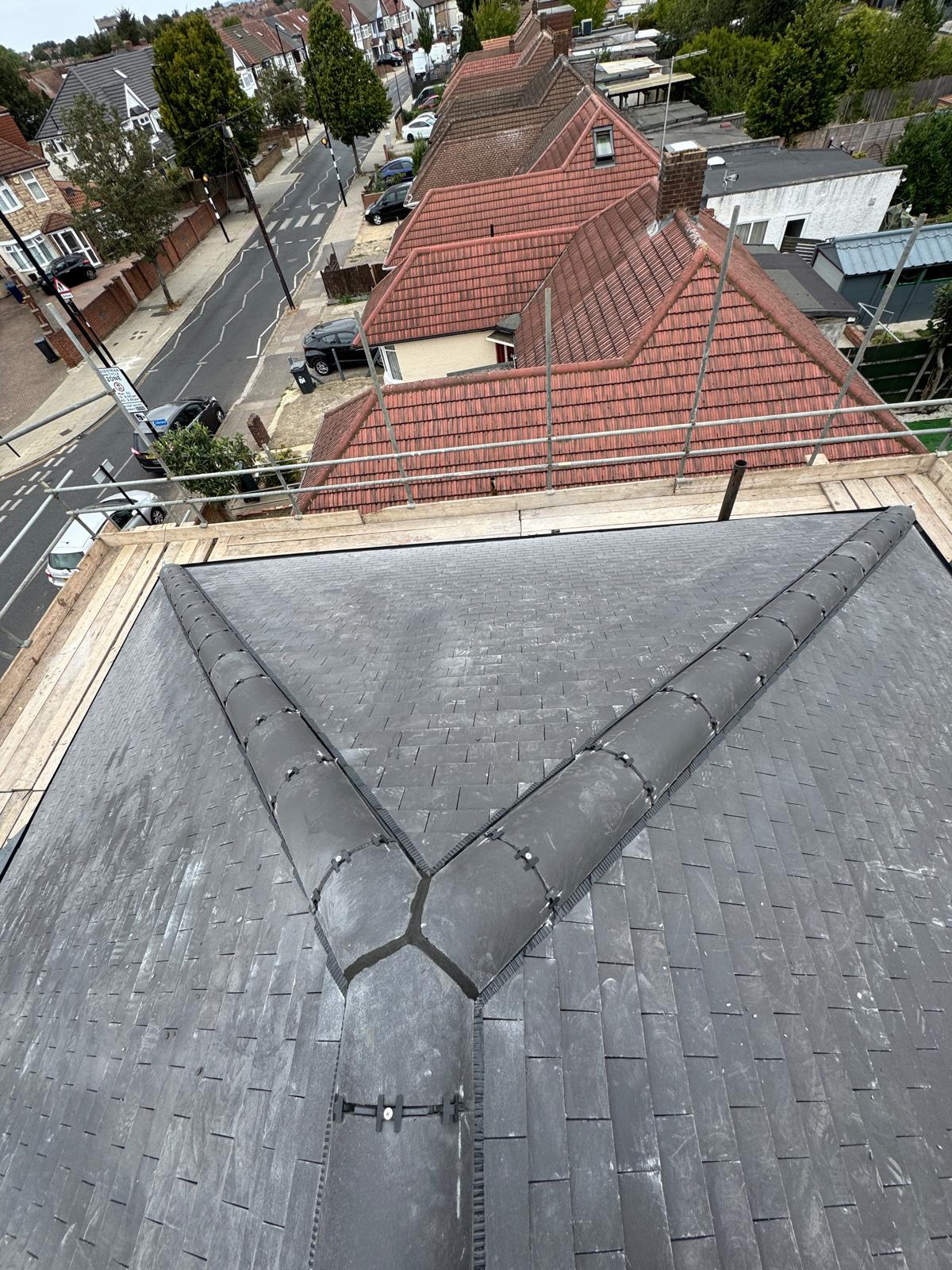
On Bristol's Victorian roofs the slate is often still sound - it's the century-old iron nails that rust and fail, letting slates slide out of place. Roofers call it nail sickness.
The Signs to Look For
Slate problems show themselves in a few ways, some obvious from the street and some only from inside. Watch for:
- Visible gaps or dark patches on the roof slope where a slate has slipped or gone missing entirely.
- Slates slid out of line, hanging lower than their neighbours or sitting at an angle - a slate on its way out.
- Pieces of slate on the ground, in the garden, on the drive, or in the gutters after a windy night.
- Damp patches or staining on upstairs ceilings, especially after rain, where water has got in through the gap.
- Daylight through the roof when you look up in the loft - even a small gap lets a surprising amount of water in.
One slipped slate matters more than it looks, because the gap it leaves exposes the roofing felt and the slates around it to wind and rain, which can dislodge more. It's worth dealing with reasonably promptly rather than leaving it to become several.
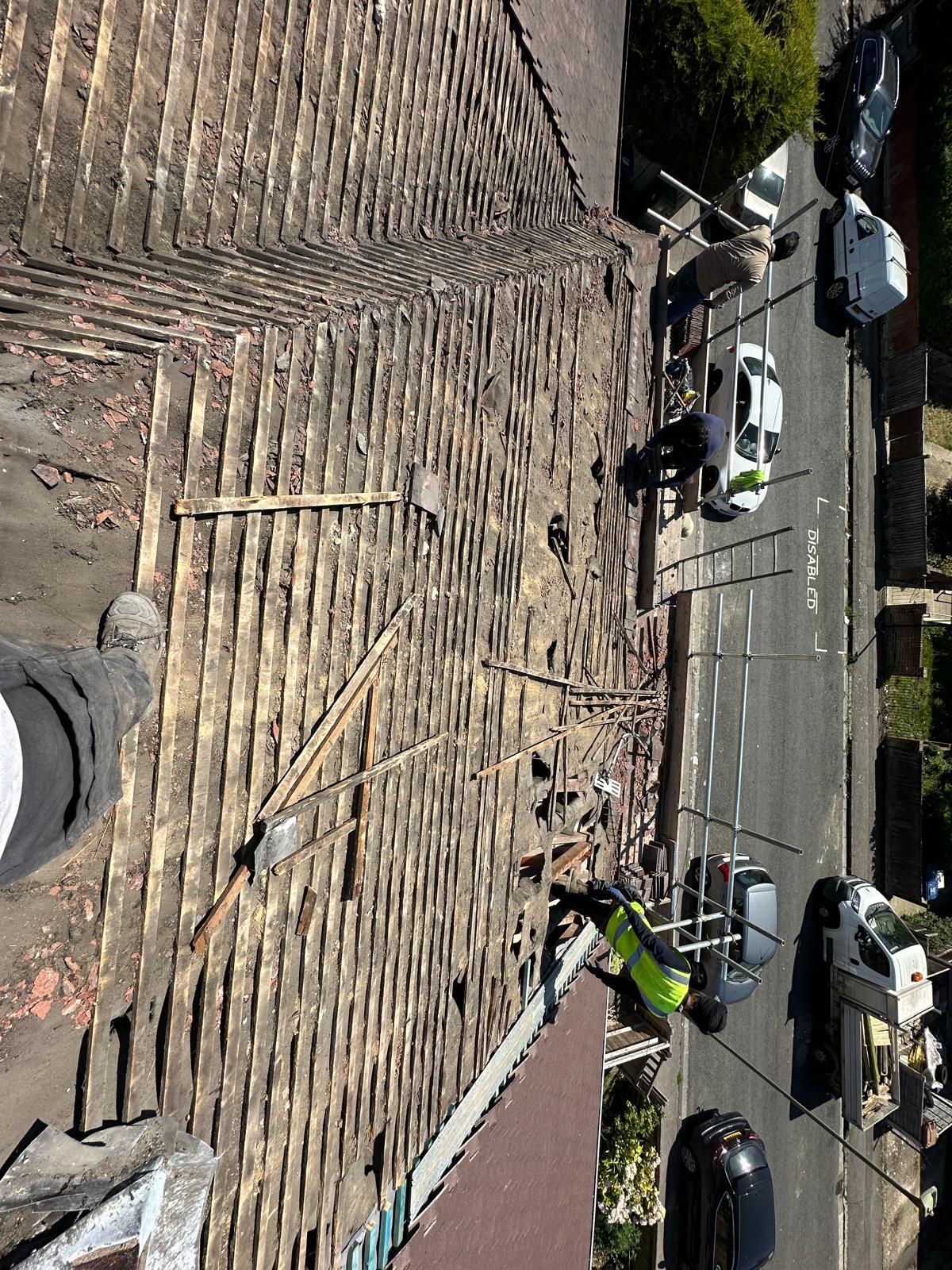
A single gap exposes the felt and the surrounding slates to wind and rain - which is how one slipped slate becomes several if it's left.
How a Single Slate Is Repaired
Replacing one slipped or broken slate sounds simple, and it mostly is. But there's a knack to it worth understanding, because it's exactly where cheap work cuts corners.
The complication is that you can't just nail a new slate back in from above. The slates above the gap overlap the one you're replacing, so the fixing point is hidden underneath them. Rather than lifting half the roof to get at it, a roofer secures the replacement slate with a tingle - a thin strip of lead or copper that hooks over the batten and folds up over the bottom edge of the new slate to hold it in place. Done properly, with the right material, a tingle is a neat and durable repair that will hold for years.
What you don't want to see is a slate stuck back with a blob of mortar or, worse, silicone or foam. That's a bodge - it looks passable from the ground for a season, then fails, and it makes the eventual proper repair harder. If your roof is a period slate roof, it deserves matching materials and proper fixings. Our slate roof service covers repairs and re-roofing across Bristol, and we treat old slate with the care it needs.
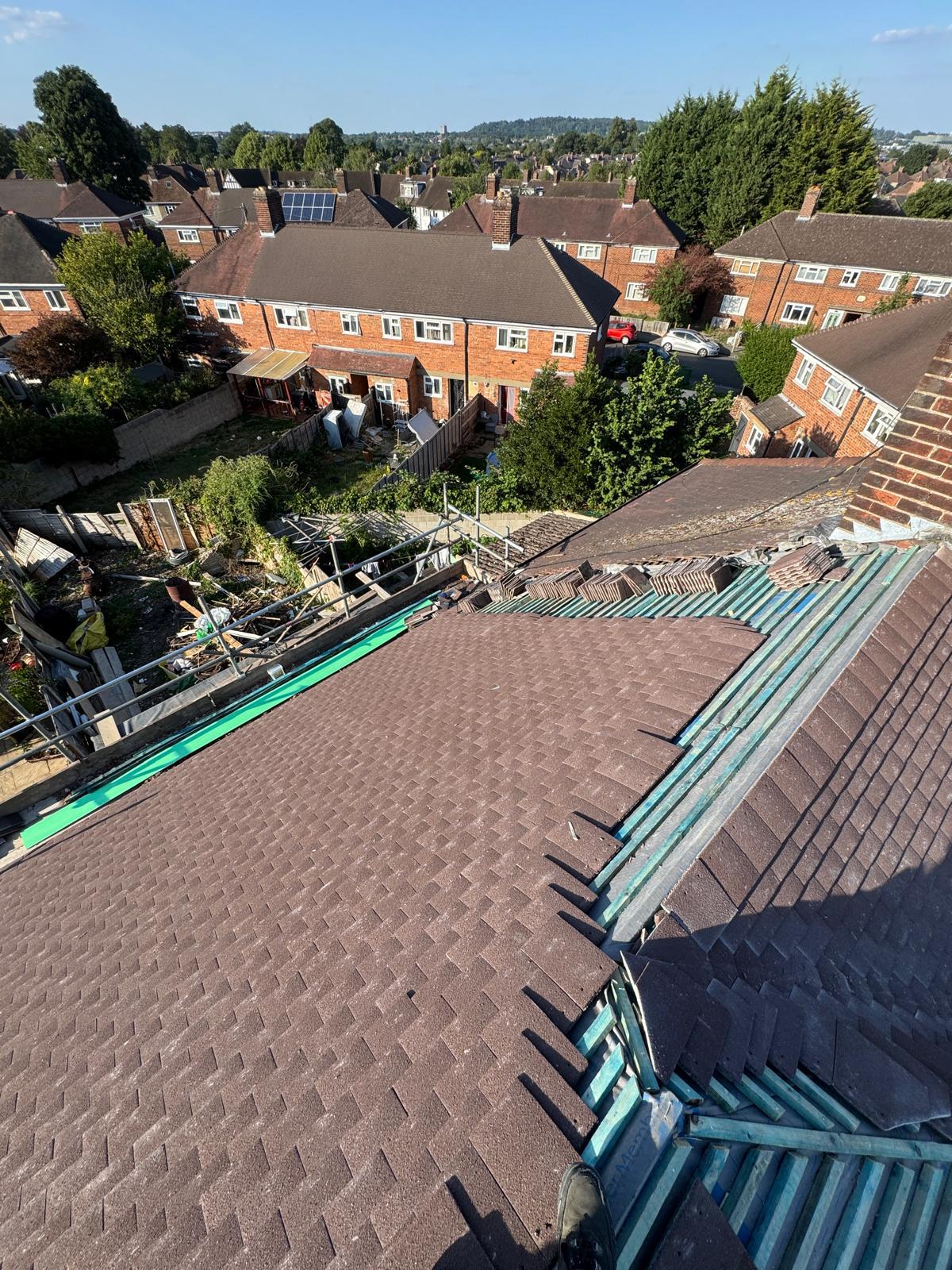
A replacement slate is held with a lead or copper tingle that hooks over the batten - a neat, lasting repair. A blob of mortar or silicone is a bodge that soon fails.
When a Repair Won't Hold: Reading the Whole Roof
This is where a good roofer earns their reputation. Sometimes replacing a slipped slate is exactly the right call. Sometimes it's a plaster on a roof that needs re-covering, and you deserve to be told which one you're looking at rather than sold the answer that suits the roofer.
The tell is how widespread the problem is. If you've had one slate off and the rest of the roof is sound, repair it and move on. But if slates are slipping in different places, if you're finding one on the ground after every windy spell, or if a roofer lifts a few and finds the nails crumbling everywhere, that's systemic nail sickness. At that point, individual repairs become a losing game - you fix one, another goes the following month, and you're paying call-out after call-out for a roof that's fundamentally at the end of its fixings.
The other thing a roofer checks is what's underneath. On a very old roof the timber battens the slates are nailed to, and the felt beneath, may have deteriorated too. If the battens are soft or the felt has perished, no amount of re-fixing slates from above solves the underlying problem. That's the point where a re-roof - stripping the slates, renewing the battens and felt, and re-covering - is the sensible, cost-effective answer. Our guide to whether you need a roof replacement in Bristol goes deeper into that decision.
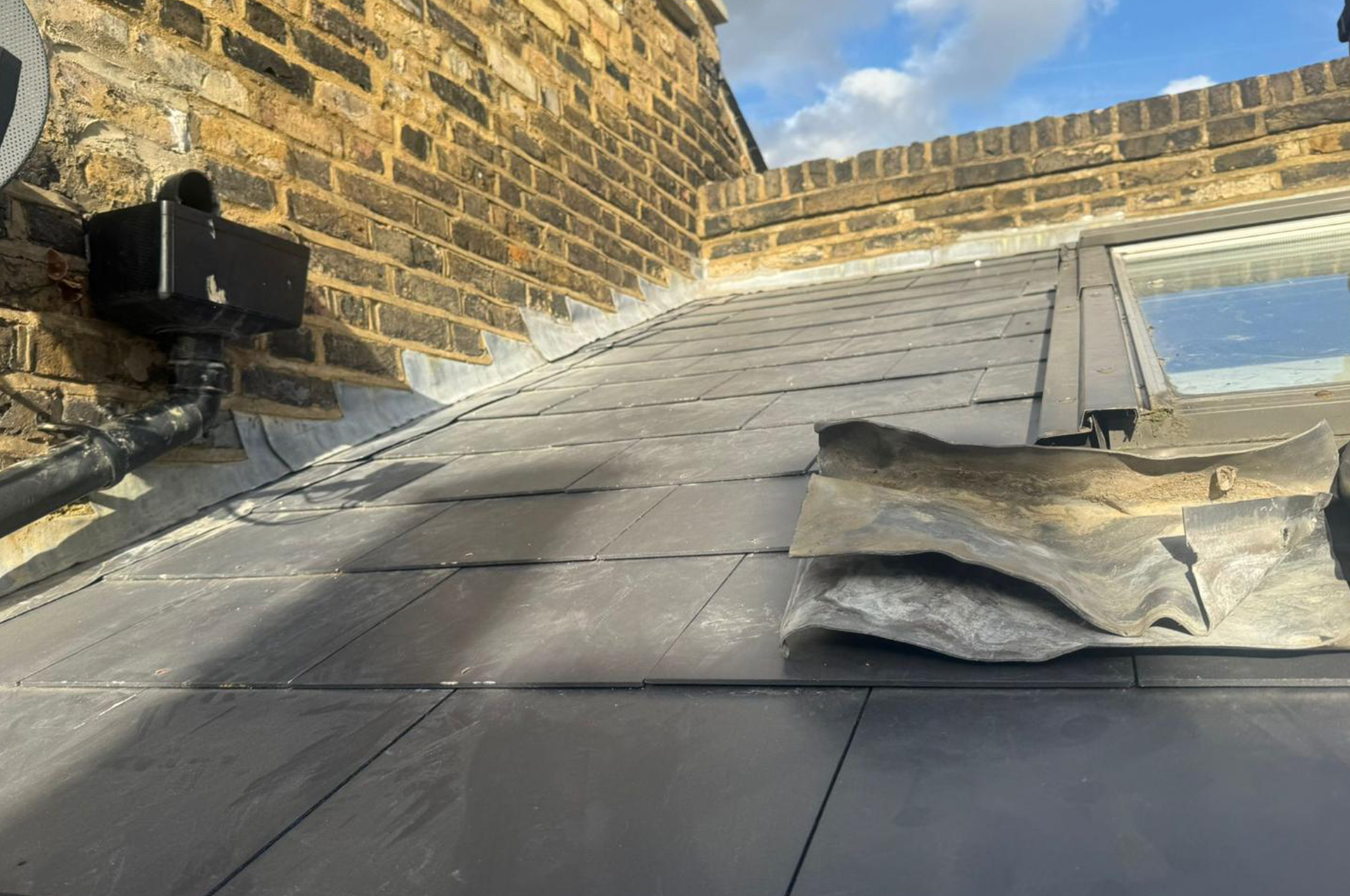
When slates are slipping all over and the nails are failing across the roof, endless single repairs become a losing game - a re-roof with new battens, felt and fixings is the answer.
Re-Roofing: Slate Choice and Conservation Rules
If it does come to a re-roof, you've got a decision to make on the slate, and in Bristol that decision often isn't entirely yours to make freely.
The options are natural Welsh slate (the traditional, longest-lasting and most expensive), Spanish slate (a good-quality, more affordable natural slate), reclaimed slate (salvaged from other roofs, good for matching a period look), and synthetic composite slate (the budget option, shorter-lived). On many roofs any of these is fine. But a large share of Bristol's slate roofs sit in conservation areas - Clifton, Redland, Cotham, Montpelier, Bishopston and more - where the visible roof material is treated as part of the building's character. Swapping natural slate for something that looks obviously different can require consent, and reclaimed or matching natural slate is usually the right route. GOV.UK's planning guidance covers the general position.
For a fuller comparison of slate against the alternatives, our post on slate vs tile roofing in Bristol weighs up cost, lifespan and looks. And for the whole-roof job itself, see our roof replacement service.
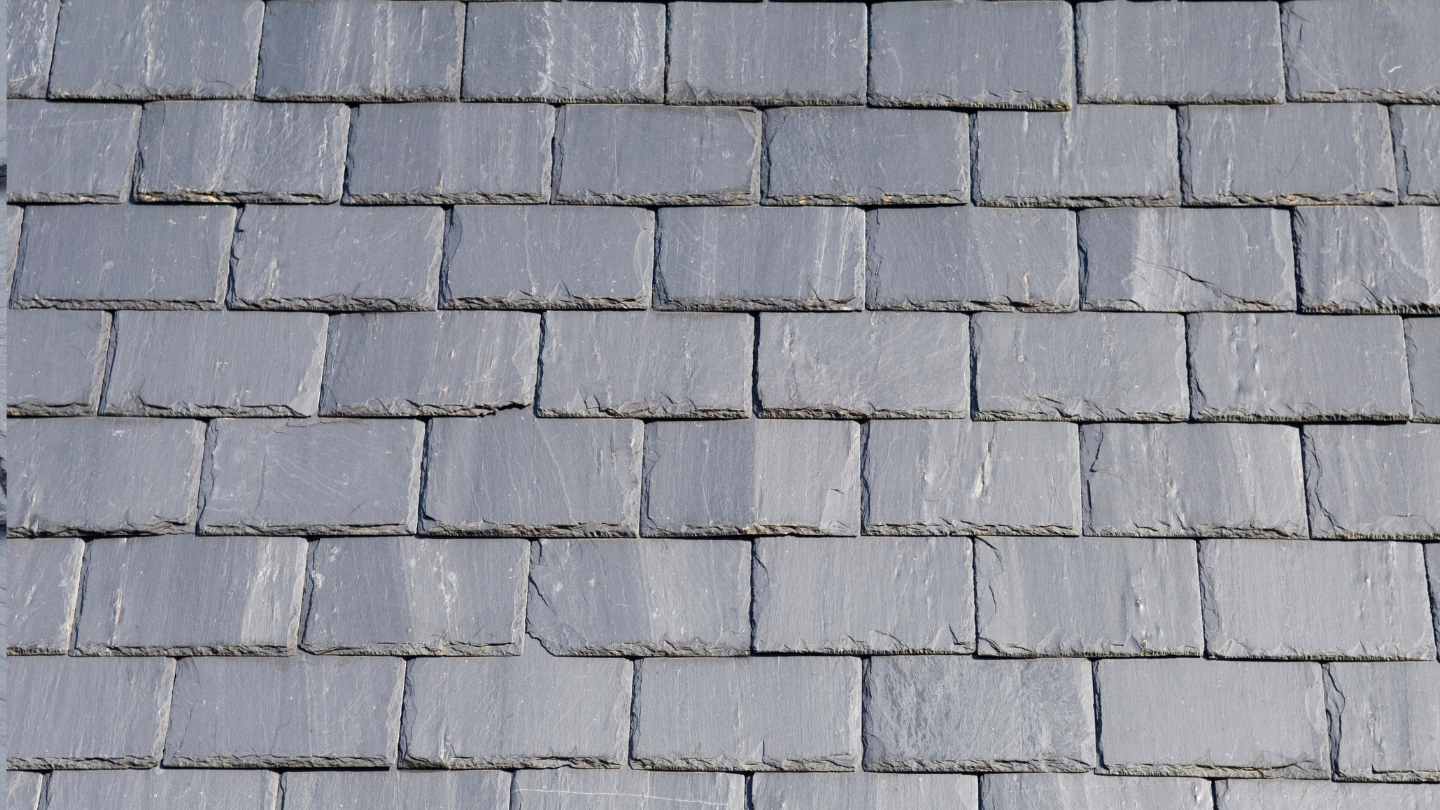
In Bristol's conservation areas the visible roof material is part of the property's character, so matching natural or reclaimed slate is often the required choice.
What Slate Work Costs in Bristol (2026)
Guide prices for slate roofing work on a typical Bristol property in 2026:
- Single slipped or broken slate repair: £100 - £250
- Several slates across the roof: £250 - £600
- Spanish slate re-roof (semi-detached): £5,000 - £9,000
- Natural Welsh slate re-roof (semi-detached): £7,000 - £14,000
- Synthetic composite slate re-roof: £4,000 - £7,500
Two things drive the cost of any slate work. Access is one - almost all of it needs a scaffold or tower for safe working at height, and that's a real part of the price. The condition of the structure underneath is the other: if the battens and felt need renewing as part of a re-roof, or if there's timber repair needed, that adds to the figure. Be wary of a slate repair quoted suspiciously cheap - it often means a mortar bodge rather than a proper tingle, or someone working off a ladder they shouldn't be on. When choosing a roofer, the National Federation of Roofing Contractors and the TrustMark scheme both let you check they're properly vetted.
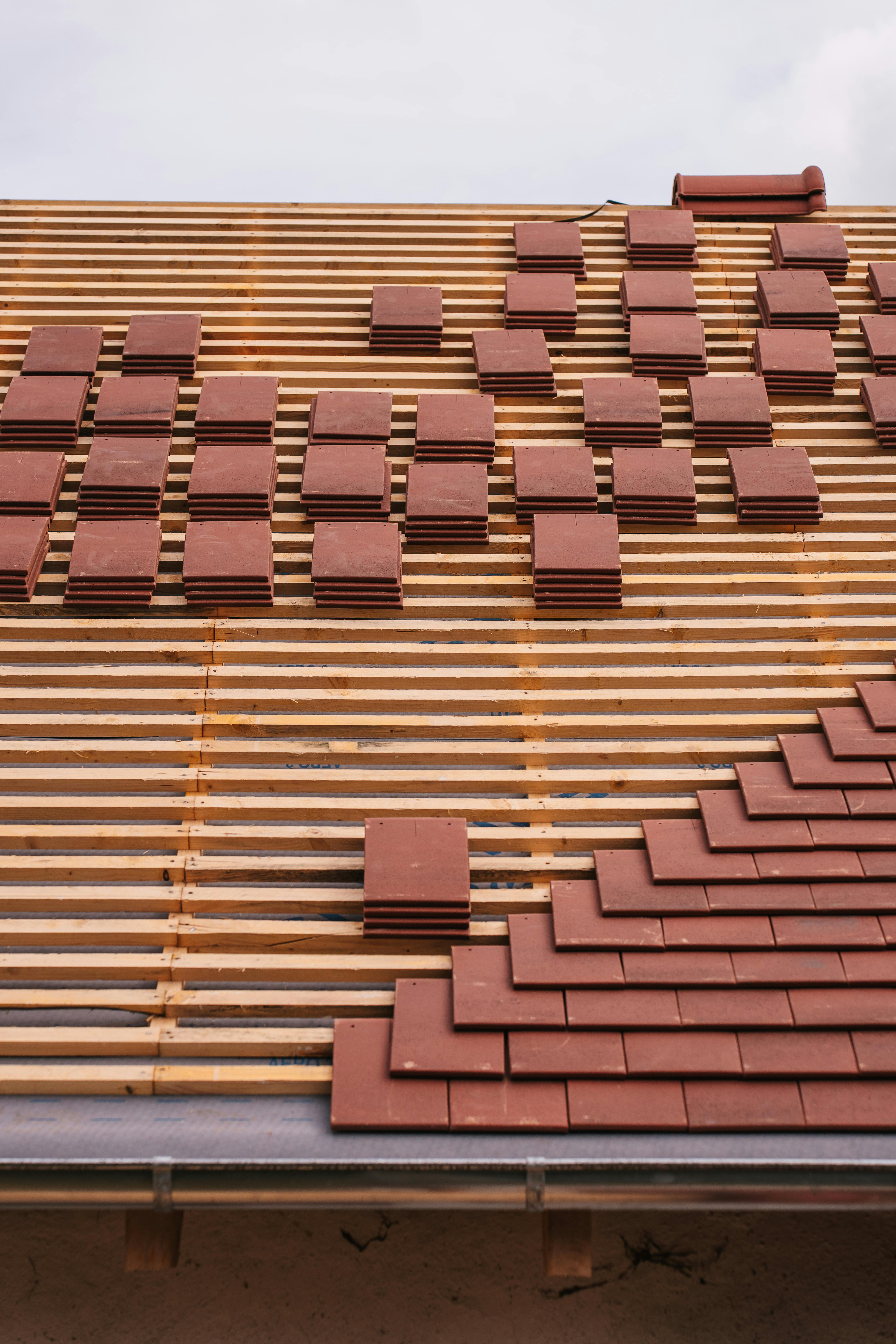
A proper assessment - of the slates, the fixings, and the battens and felt beneath - is what tells you honestly whether it's a repair or a re-roof.
Frequently Asked Questions
Got a slipped or broken slate?
Whether it's one slate or a roof full of them, we'll tell you honestly whether it's a repair or a re-roof - no pushing you toward the bigger job. Book a free, no-obligation assessment across Bristol and we'll take a proper look at the slates, the fixings, and what's underneath.
Book a Free Assessment