
If you own a Victorian terrace in Bishopston, Southville, Totterdown, Easton or St Andrews, there's a decent chance your roof isn't entirely your own. A huge number of Bristol's terraced houses were built with roofs and gutters that run straight across the boundary into next door, and that quiet fact causes some of the most stressful and confusing problems we get called out to. A stain appears on your bedroom ceiling, you get a roofer up, and the answer comes back: the leak's coming from the shared gutter between you and number 42. Now what? Whose job is it, who pays, and what happens if the neighbour shrugs? This guide walks through how shared terrace roofs actually work in Bristol, where the responsibility sits, what the law says, and how to get these repairs done without it turning into a feud.
Why So Many Bristol Terraces Share a Roof
To understand the responsibility question, you first need to understand the roof. A lot of Bristol's Victorian and Georgian terraces don't have the simple pitched roof most people picture, sloping down to gutters at the front and back. Instead they have what's known as an M-shaped or "butterfly" roof: two pitches that slope inwards towards a central valley gutter running from the front of the house to the back, hidden behind a decorative parapet wall at street level.
It was a popular design because it kept the roofline low and let builders put a handsome flat-topped parapet on the street frontage. But it comes with a catch that Victorian builders didn't have to live with and we do: that central gutter is the sole drainage for a big chunk of the roof, it sits right on or near the party wall line, and on terrace after terrace it's physically continuous with the gutter of the house next door. Your rainwater and your neighbour's often end up running through the same channel.
So when people ask why their terrace has "a gutter in the middle of the roof", that's the answer - and it's exactly why shared responsibility becomes an issue the moment that gutter fails.
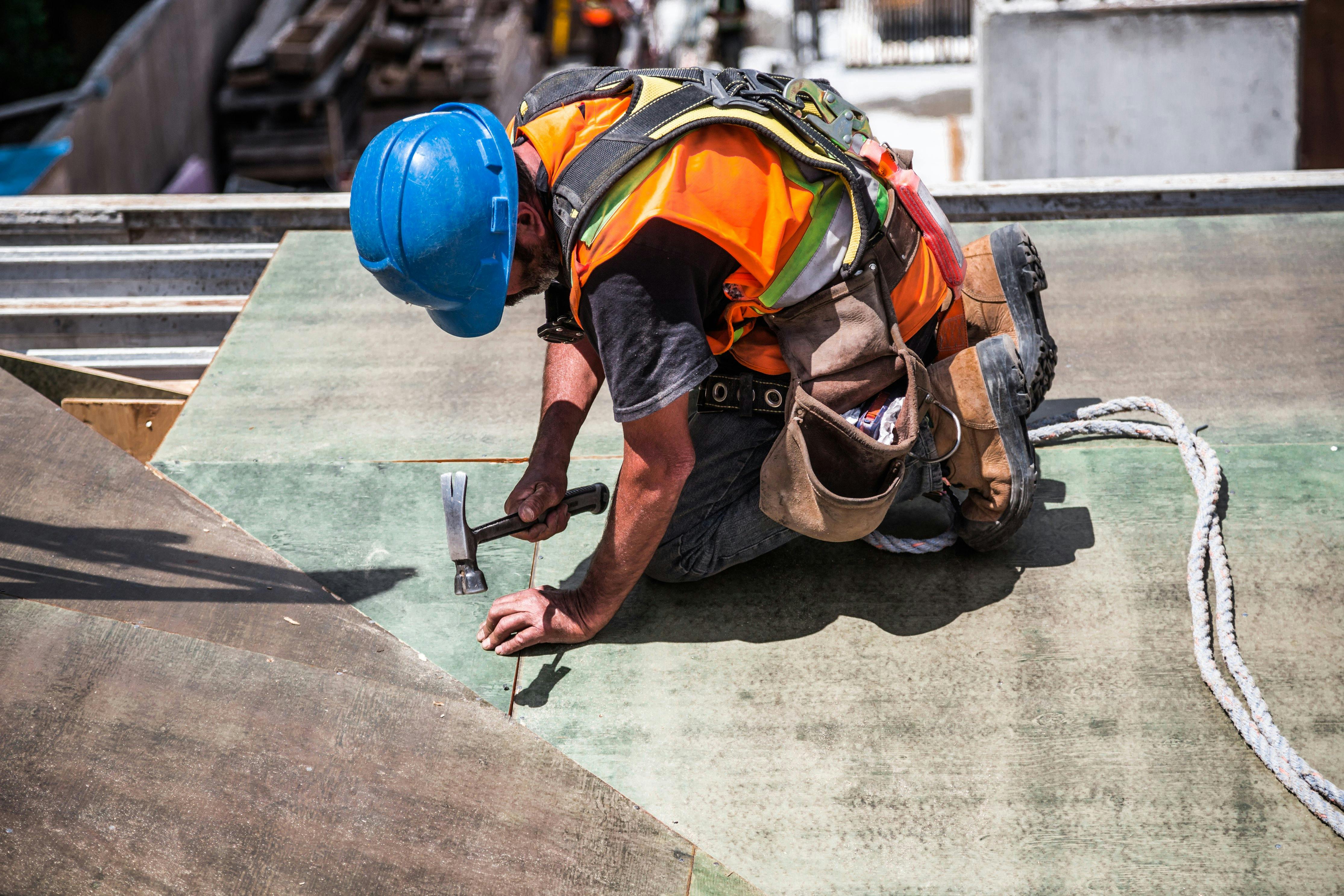
Many Bristol terraces have an M-shaped roof - two pitches draining inwards to a central valley gutter behind a parapet, often running straight through to the house next door.
The Party Wall, and Where Your Roof Ends
The wall dividing your terraced house from the one next door is a party wall - jointly owned, right up through the roof space. On many terraces that wall continues above the roofline as the masonry the central gutter sits against, or forms the upstand between your slope and theirs. In other words, the boundary between you and your neighbour doesn't stop at the ceiling. It carries on up and through the roof.
That matters because the shared gutter, the flashings dressing into the party wall, and sometimes the parapet itself sit on or across that jointly-owned line. A repair to any of them isn't neatly "yours" or "theirs" the way a repair to your front slope would be. It's work on or around a shared structure, and that's the root of both the responsibility question and the legal one we come to next.
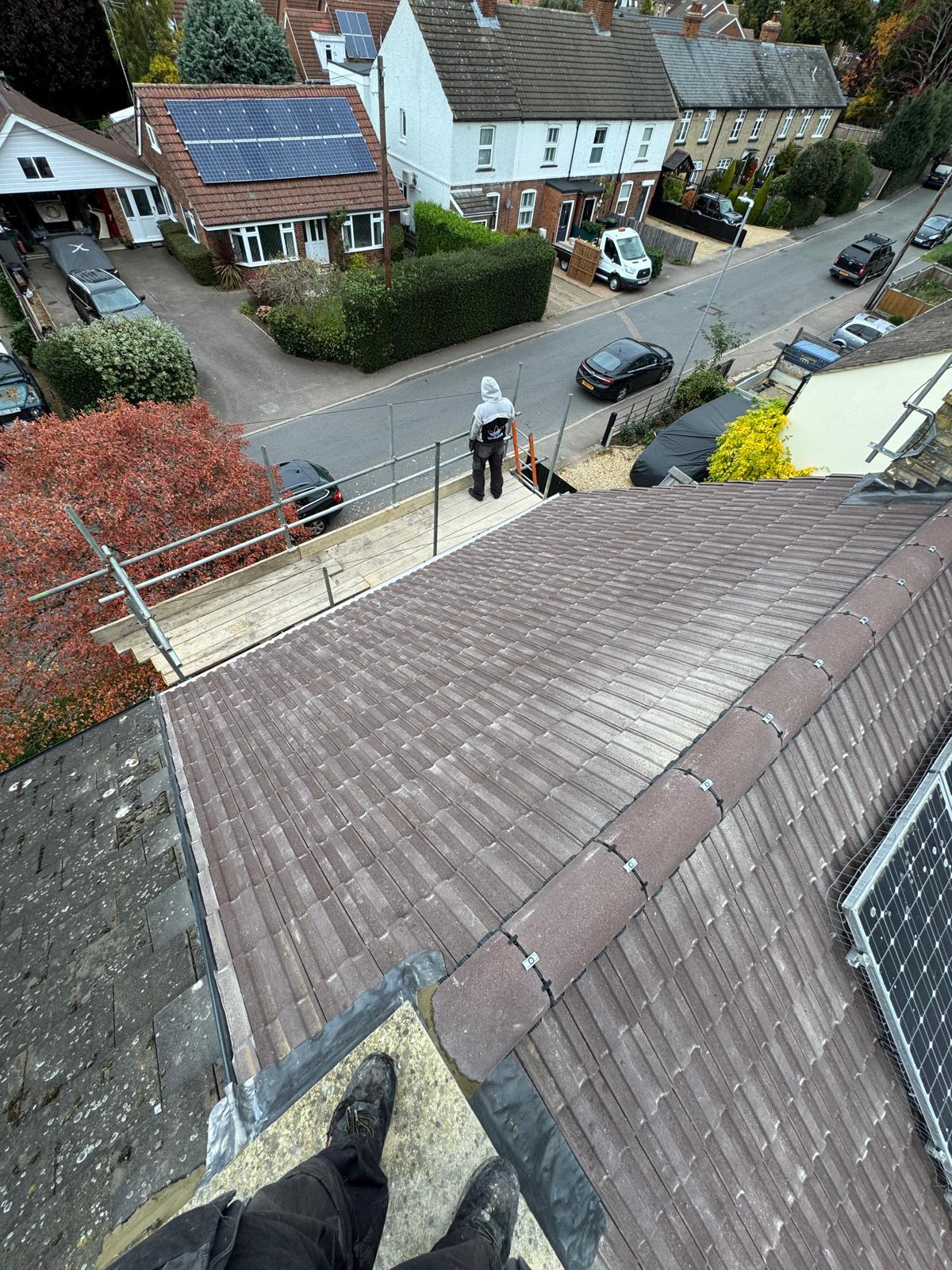
The party wall between terraced houses carries on up through the roof - so the shared gutter and the flashings dressing into it sit on jointly-owned ground, not neatly on one side.
Who Actually Pays? The Honest Answer
Here's what people really want to know, so let's be straight about it. As a general principle, each owner looks after their own half of the structure, but where a gutter or parapet genuinely serves both houses and straddles the boundary, the responsibility for it is shared. A leak in a jointly-serving valley gutter is usually a joint problem to fix.
The practical reality reinforces that. These gutters have to be repaired as a continuous run - you can't reline half a shared gutter and dress it into thin air at the halfway point, the join would just leak again. So even where the strict legal split could be argued over, the sensible, and often cheapest, route is a joint repair with the cost divided between the two owners. We've seen countless Bristol terrace jobs where two neighbours split a scaffold and a gutter re-line down the middle and both come out far better off than if they'd each tried to sort their "own half".
The exact position can hinge on the wording of your deeds and where the boundary legally falls, so if there's real disagreement it's worth digging out your title documents. But for the everyday case - a shared gutter causing a shared leak - treat it as a shared responsibility and you won't go far wrong.

A shared gutter has to be repaired as one continuous run - which is why splitting the cost between neighbours is usually both the fairest and the cheapest way through.
What the Party Wall Act Means for You
This is where it gets slightly technical, but it's worth knowing because it protects you as much as your neighbour. The Party Wall etc. Act 1996 governs work to shared walls and structures, and that includes the party wall running up between terraced houses and the shared gutters and flashings at roof level.
If your planned repair involves cutting into the party wall, working on a shared parapet or gutter, or needing access from your neighbour's side to reach the work, you may need to serve a formal party wall notice on them before starting. It sounds heavy-handed but the process exists to keep things fair - it makes sure the neighbour knows what's happening, and it records the condition of things beforehand so nobody can later blame your roofer for damage that was already there. The Government's own guidance on party walls and building work explains when a notice is needed, and there's a fuller explanatory booklet on the Party Wall etc. Act 1996 worth a read before any work on a shared structure.
Simple repairs entirely on your own side of the roof often don't trigger the Act at all. It's the moment work touches the shared structure, or needs access next door, that it comes into play. A roofer used to Bristol terraces will flag this for you rather than blundering in.
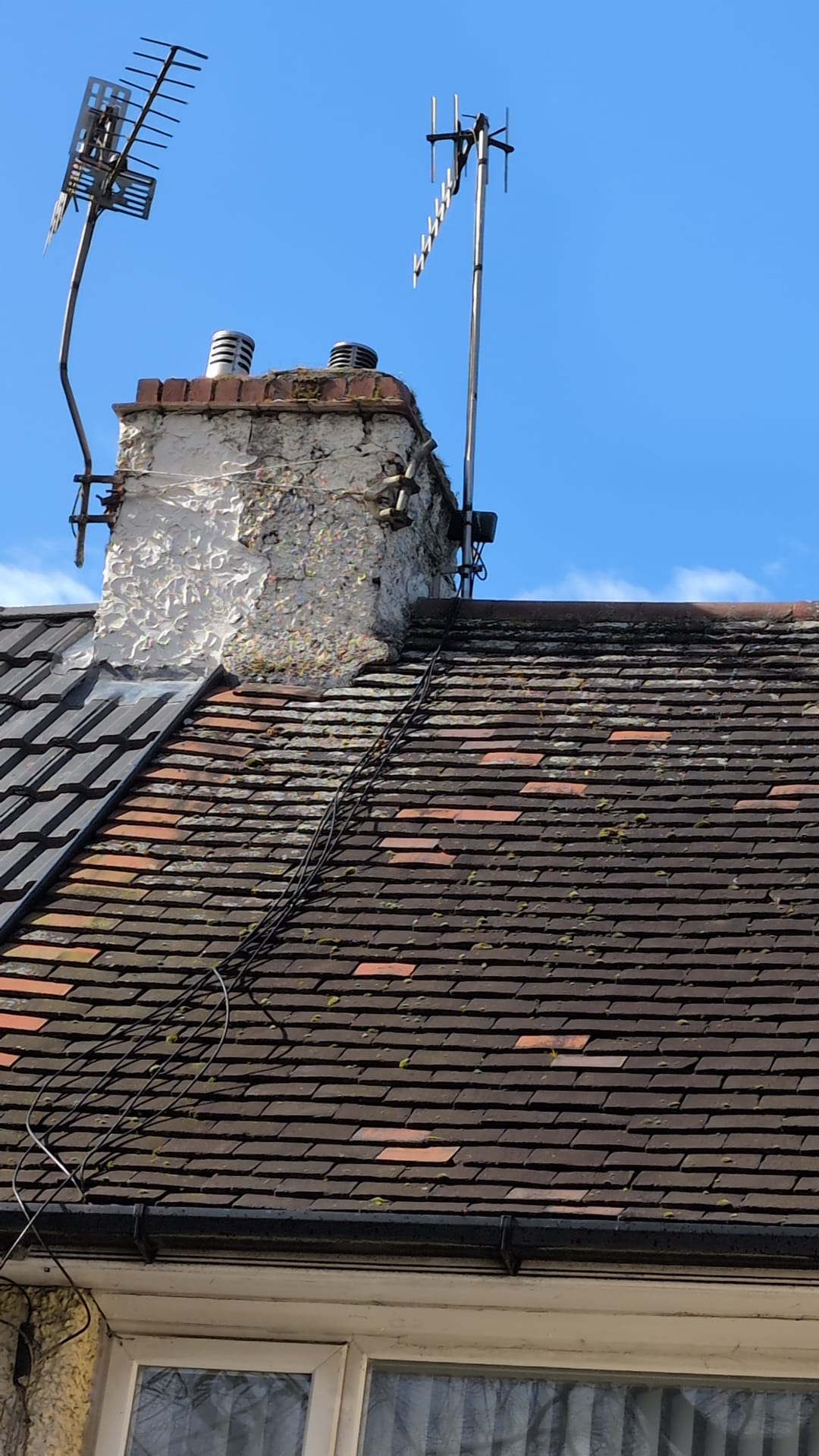
The Party Wall etc. Act 1996 covers work touching the shared wall, gutter or parapet - and serving notice protects you as much as your neighbour by recording the condition first.
When the Neighbour Won't Play Ball
Let's deal with the situation everyone dreads, because it's genuinely one of the most common we hear about on Bristol terraces: the leak is in the shared gutter, it's affecting your house, and the neighbour won't engage, can't afford it, or flatly denies it's their problem.
Start reasonable and start documented. Get a roofer up to inspect and produce a short written report showing the cause of the leak and that it stems from the shared gutter affecting both properties. People dig their heels in when they think they're being dumped with someone else's bill; they soften a lot when a professional shows them, in writing and with photos, that it's a real shared fault. Take that report round with a single quote for the whole job and an offer to split it - most disputes end there.
If it still won't move, your rights under the Party Wall Act and your deeds are the backstop, and Citizens Advice can help you understand where you stand, including the position if either property is rented. Formal legal routes do exist, but they're slow, they cost, and they turn the person on the other side of your bedroom wall into an adversary. For most people the documented, reasonable, "here's the report and here's a fair split" approach is not just the nicer path but the one that actually gets the roof fixed fastest.

A roofer's written report showing the leak is a genuine shared fault - not one owner's problem - is what turns a stubborn neighbour into a willing one.
Flats and Converted Terraces: A Different Set of Rules
Plenty of Bristol's terraces aren't single houses any more - they've been carved into flats, which is common right across areas like Redland, Cotham, Montpelier and St Pauls. If you own a flat in a converted terrace, the roof responsibility usually works differently again, and it comes down to your lease rather than the Party Wall Act.
In most cases the freeholder or the management company is responsible for the roof and the main structure, and the cost of roof repairs is recovered from the leaseholders through the service charge or a one-off major-works bill. So if you're a leaseholder with a roof leak, your first call is usually the freeholder or managing agent, not a roofer directly - though it's always worth reading your lease to confirm who owns and maintains what, because the details vary. Where a converted terrace shares a roof or gutter with the house or flats next door, you can end up with both the leasehold structure and the party wall questions overlapping, which is exactly the kind of thing worth getting a clear professional opinion on early.
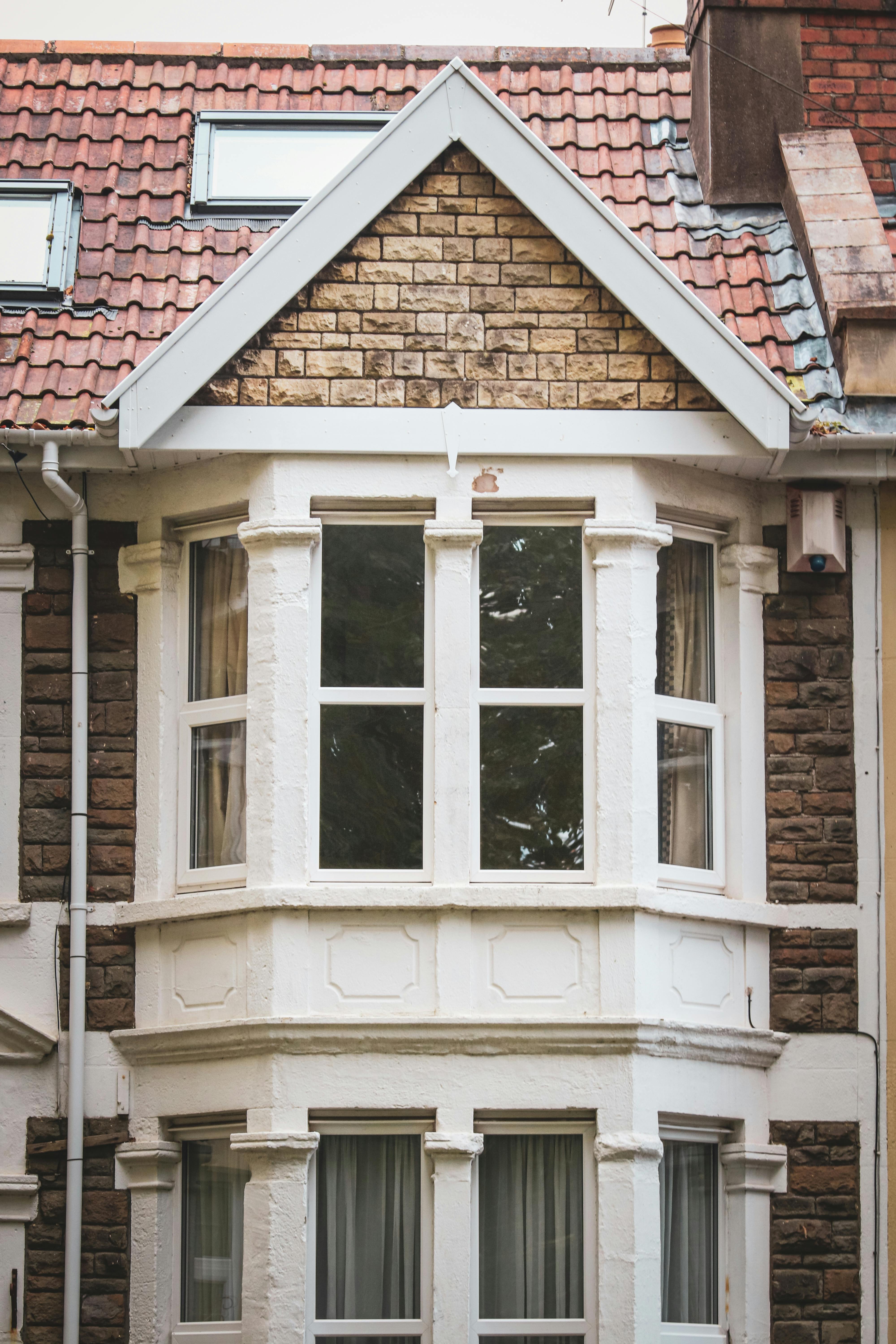
On converted terraces split into flats, the roof is usually the freeholder's responsibility and costs come through the service charge - so leaseholders should check the lease first.
Fixing a Shared Gutter Properly
Whoever ends up paying, the repair itself needs doing right, because a botched shared gutter is a leak waiting to come back and a fresh round of neighbour aggro. These central valley and parapet gutters were traditionally lined in lead, and good lead lasts, but the joints and the way it's dressed can fail, and cheaper repairs over the years often leave a patchwork that traps water.
A proper repair means relining the full run - either in new lead where you want to keep it traditional, or increasingly in a modern membrane like EPDM or a high-performance liquid system that gives a seamless, jointless finish and dresses cleanly into both roof slopes. The gutter needs the correct fall so water actually runs to the outlet, the outlets and downpipes need to be clear and adequate, and the flashings into the party wall and both pitches need dressing properly rather than sealing with mastic and hope. It's skilled work on an awkward, often three-storey terrace, which is why access and scaffold are a real part of the cost. Our guides to roof valley repairs in Bristol and lead flashing repairs in Bristol go into the detail of getting these junctions watertight.
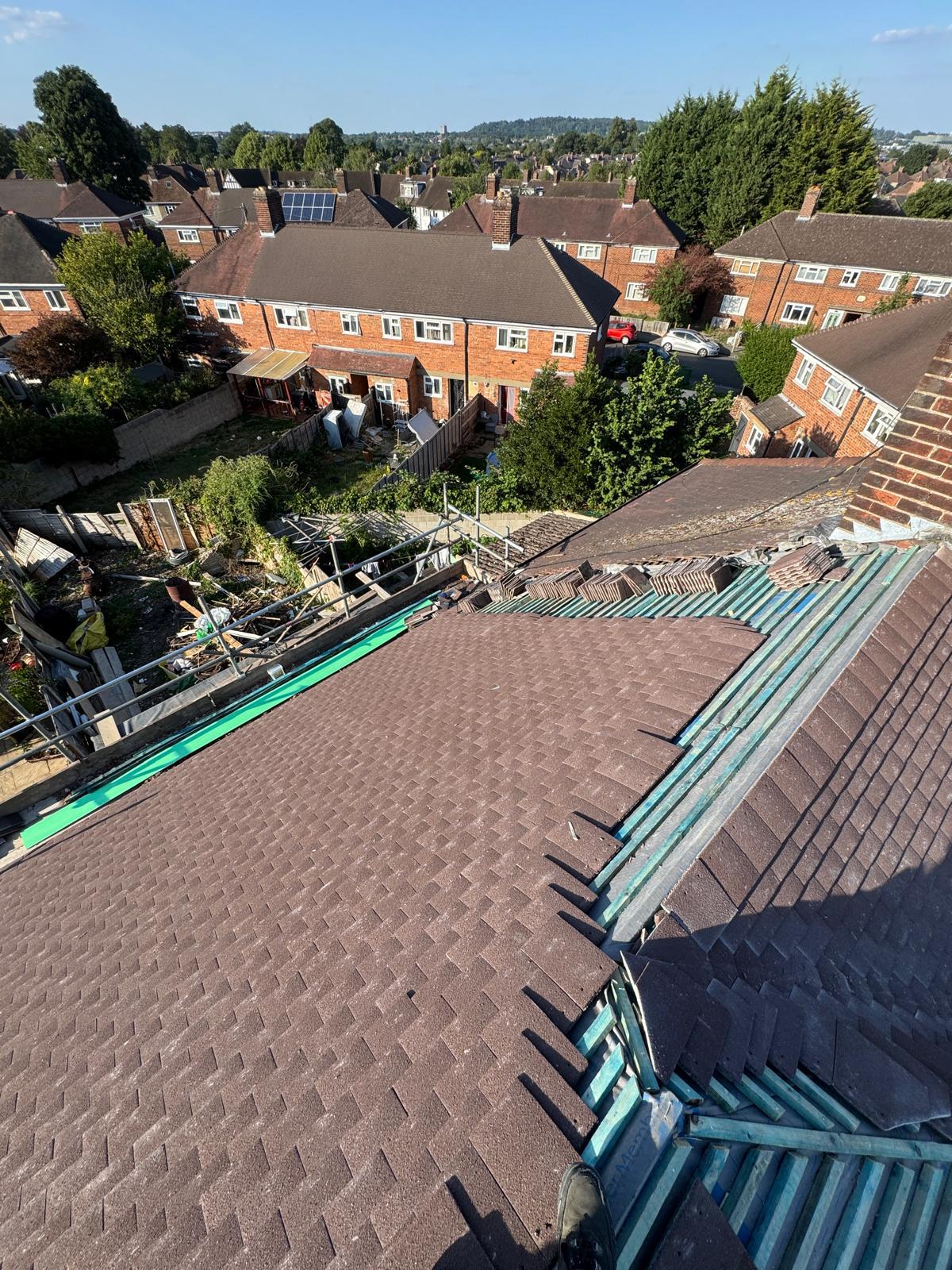
A proper fix relines the whole run - lead or modern membrane - with the correct fall and clean flashings into both roofs, not a patchwork of mastic repairs that traps water.
Getting Ahead of It: Maintenance on a Shared Roof
The best shared-roof dispute is the one that never happens, and on a terrace that mostly comes down to keeping the central gutter clear. Because it's the sole drainage for a large area and it's tucked away out of sight behind a parapet, a terrace valley gutter blocks quietly and you don't notice until it's overflowing into the loft. Leaves, moss washed down off the slopes, a stray slate, even a tennis ball - any of it can dam the gutter and back water up under the tiles.
A clear-out and a quick check once or twice a year, especially after autumn, is cheap insurance against a repair that could run into thousands and a row with next door. It's also the ideal moment to spot a tired lining before it actually leaks. If you share the gutter, there's a strong case for doing this jointly with your neighbour and splitting the small cost - it's far easier to agree on a bit of routine maintenance than to thrash out who pays for emergency repairs at 11pm in a storm. When you do need someone up there, use a roofer who knows Bristol terraces and their quirks. Our roof repair service covers shared gutters, valleys and party wall junctions right across the city.
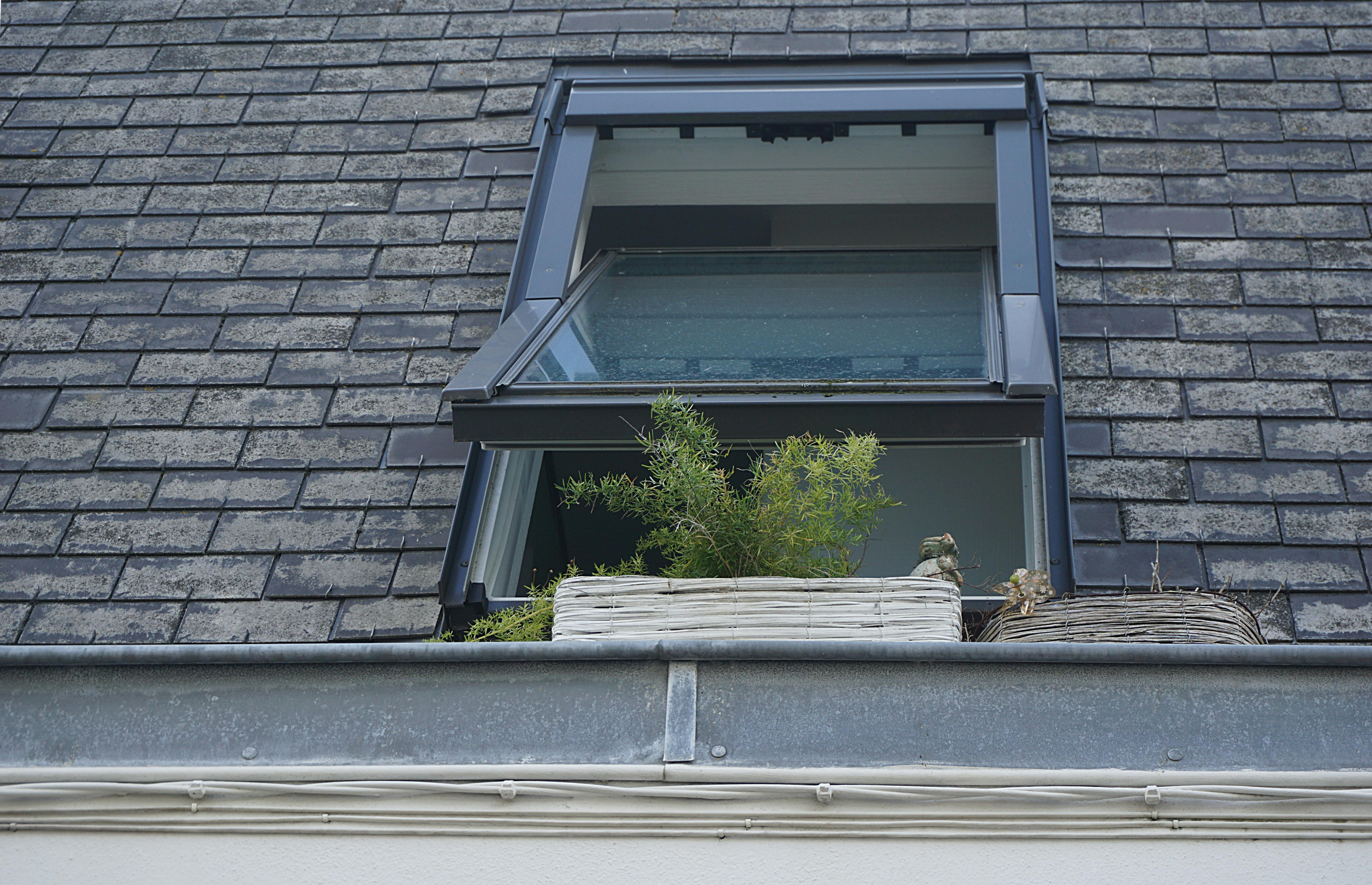
A hidden central gutter blocks silently - clearing it once or twice a year, ideally jointly with the neighbour, is cheap insurance against a costly leak and a costly falling-out.
Frequently Asked Questions
Leak from a shared gutter or party wall?
We know Bristol's terraces inside out - the M-shaped roofs, the hidden parapet gutters, and the neighbour questions that come with them. We'll inspect it, tell you exactly where the water's getting in, and give you a clear written report you can take next door. Book a free, no-obligation assessment.
Book a Free Assessment