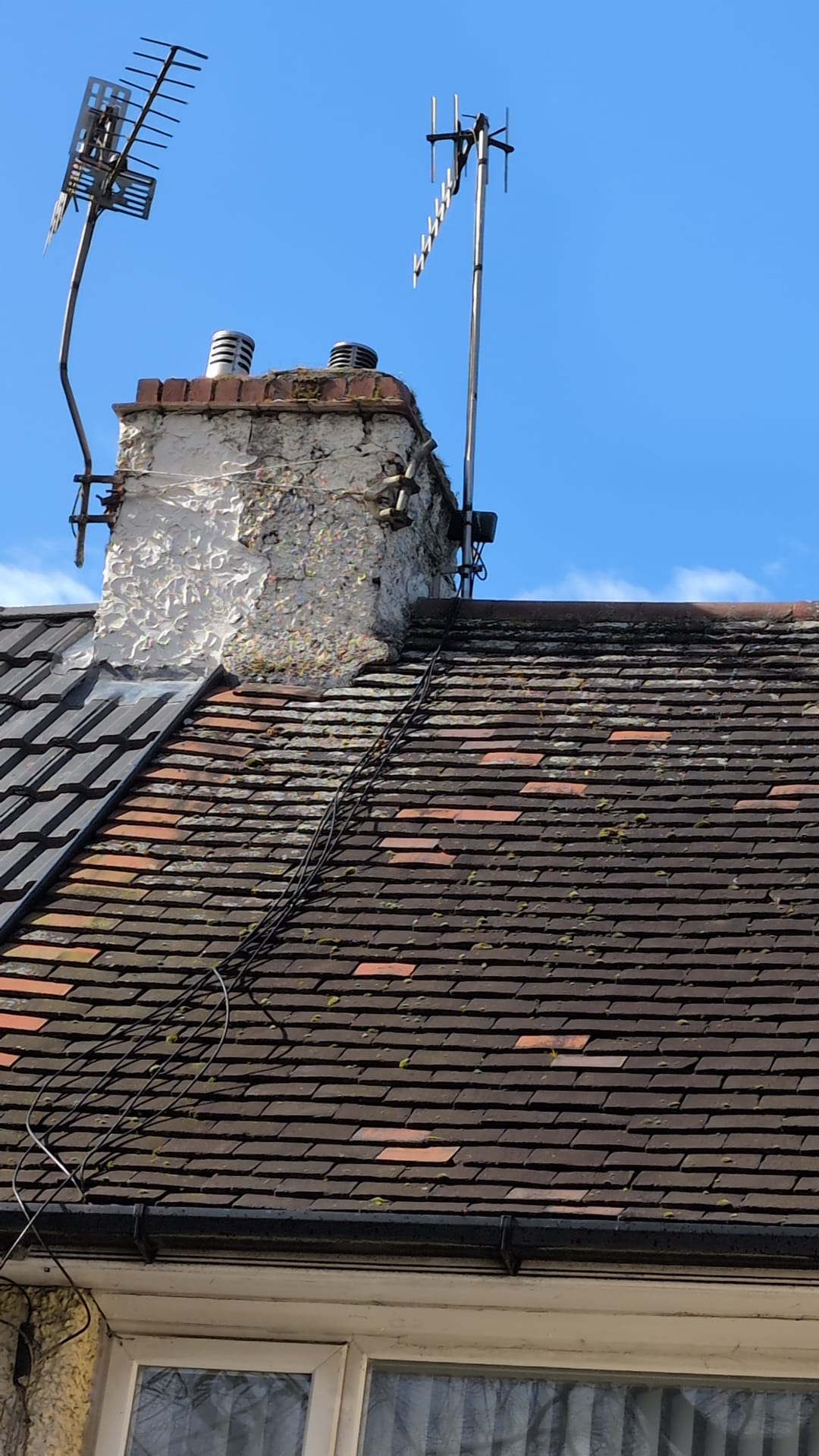
Damp patch on an upstairs ceiling, but the roof looks fine from the ground? Nine times out of ten the culprit is a valley. Valleys are one of the hardest-working parts of a roof and one of the most common places for a leak to start, yet most homeowners have never heard the word until a roofer points at one. This guide explains what a roof valley is, why they fail so often on Bristol roofs, and what it costs to put right - from a quick clear-out to a full renewal.
What Is a Roof Valley?
A roof valley is the internal angle where two roof slopes meet and form a channel running down the roof - think of the V-shaped gully you get where an L-shaped house has two roofs joining, or where a bay window's roof meets the main roof. Its job is simple but demanding: collect the rainwater running off both slopes and funnel it down to the gutter.
That's the reason valleys matter so much. A valley takes the water from two large areas of roof and concentrates it into one narrow channel, so it handles a far greater volume of water than any single slope. When it's working, you never think about it. When it fails, all that concentrated water goes somewhere it shouldn't - straight into the roof.
Bristol's roofs have a lot of valleys. The city's Victorian and Edwardian housing is full of complex roof shapes - bays, rear additions, back extensions, L-shaped plans - and every junction between two roof sections is a valley that has to be detailed and maintained.
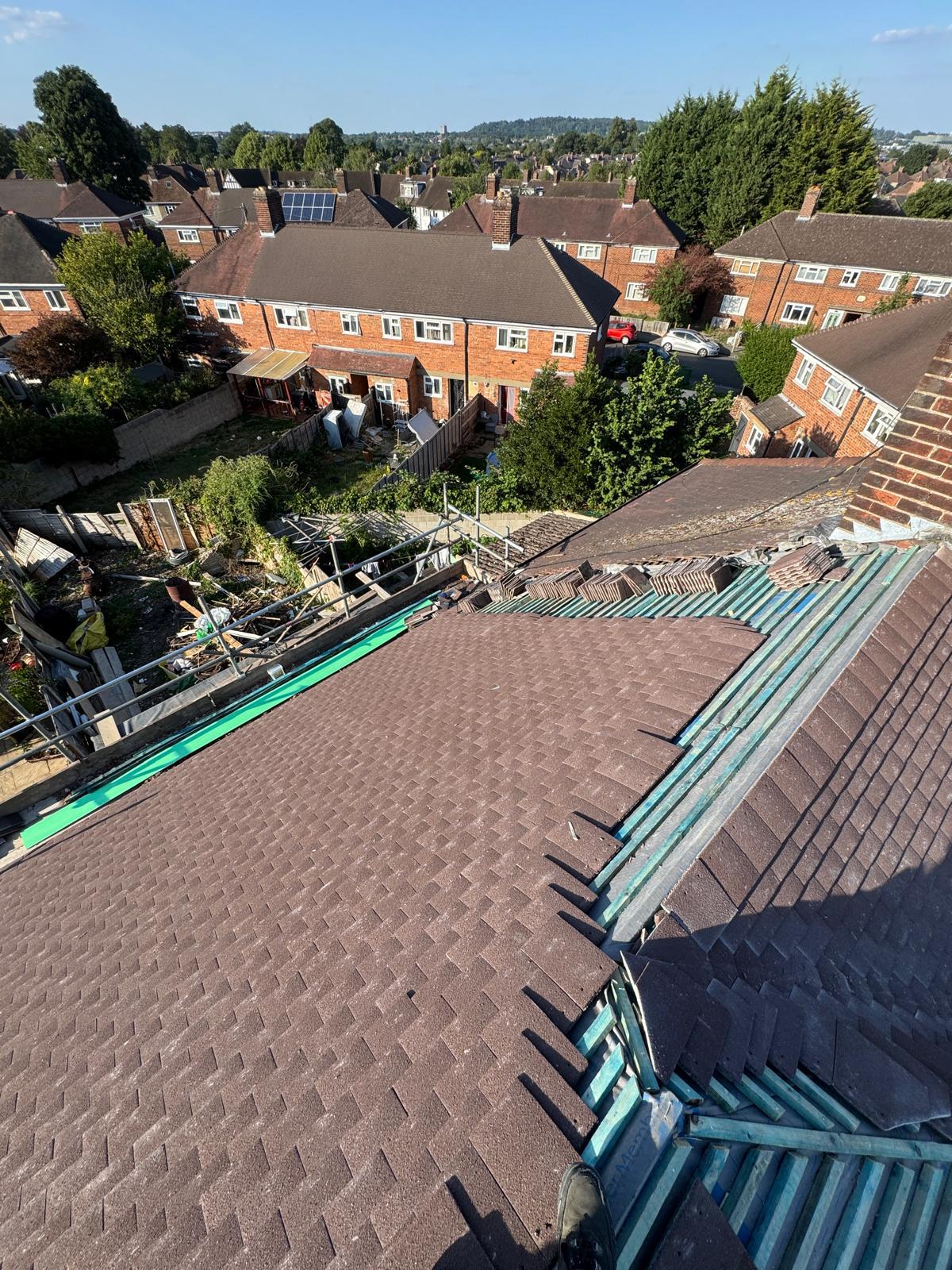
A valley is the channel where two roof slopes meet - it collects water from both and funnels it to the gutter, handling far more water than any single slope.
Why Valleys Are Such a Common Leak Point
Valleys leak more often than almost any other part of a roof, and the reason is simple: they take the most water and the most wear. Everything about the job makes them vulnerable.
The sheer volume of water is the first factor. Concentrate the runoff from two slopes into one channel and you get fast-moving water in heavy rain, which finds any weakness instantly. Bristol's climate makes this worse - over 800mm of rain a year, and the driving Atlantic downpours that really load a valley up.
Then there's debris. Valleys are natural collection points. Leaves, moss, grit and roof debris all get washed down the slopes and end up in the valley, where they build up and dam the channel. Once a valley is partly blocked, water backs up, spreads sideways under the tiles or slates, and finds its way in. In Bristol's leafier suburbs - Bishopston, Redland, Stoke Bishop, anywhere with mature trees - this happens faster. If your roof also carries a lot of moss, our guide to moss and algae roof cleaning in Bristol is worth a read, because moss clumps are a frequent cause of valley blockages.
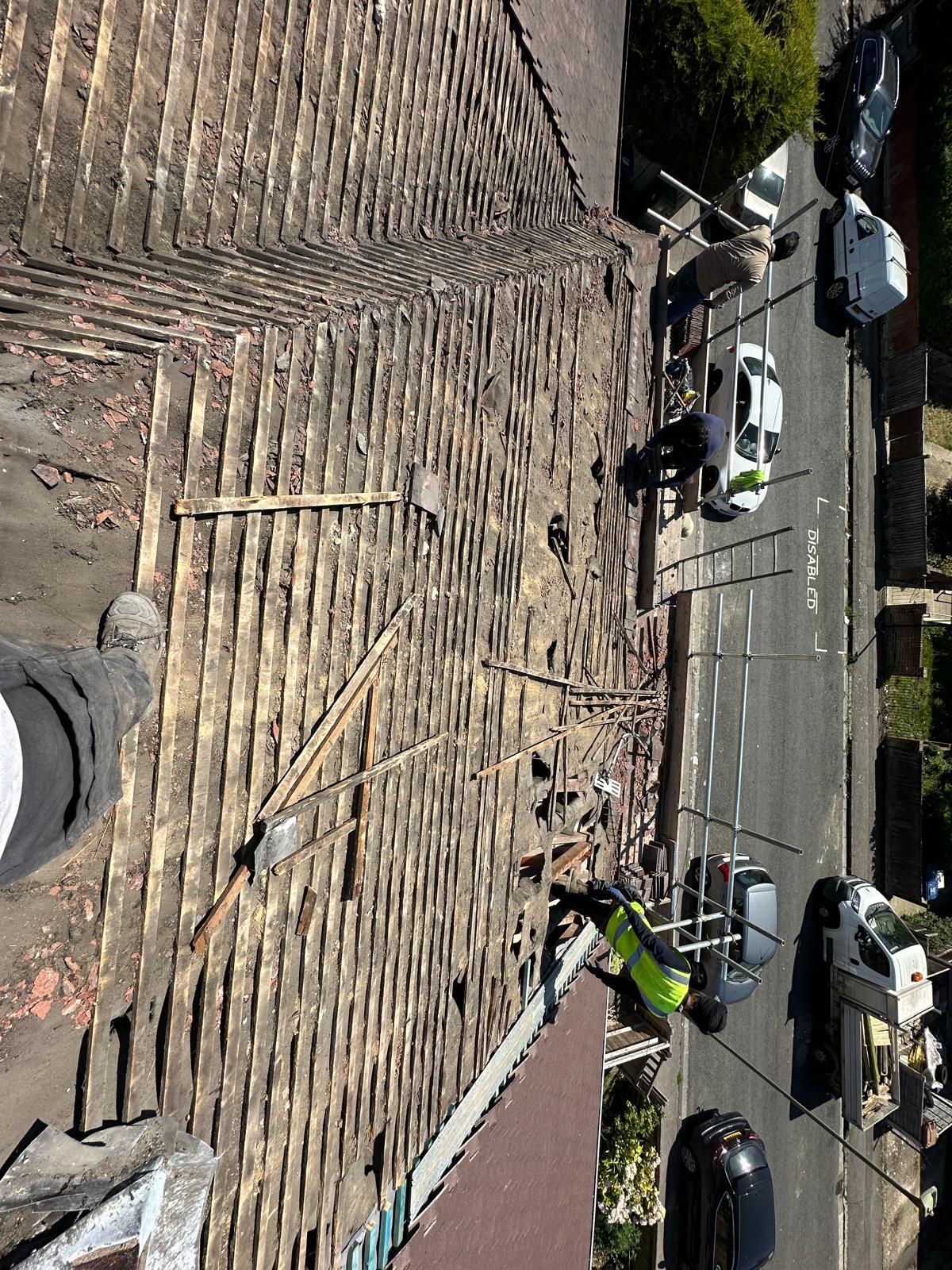
Valleys are natural collection points for leaves, moss and grit - once the channel dams up, water backs up under the tiles and finds its way into the roof.
The Types of Valley You'll Find
Not all valleys are built the same, and the type you have affects how it fails and how it's repaired. The main ones on Bristol roofs:
- Lead valley: The traditional and best-quality option - a channel of lead sheet laid into the valley, with the tiles or slates dressed over its edges. Common on period properties and, done well, very long-lasting.
- Mortar-bedded (closed) valley: Where the tiles are cut and bedded in mortar to close the valley up, with no visible channel. Common on some concrete-tile roofs, but the mortar cracks and crumbles over time.
- Fibreglass (GRP) valley: A modern pre-formed valley trough, durable and increasingly used for renewals.
- Dry valley: A modern plastic or metal pre-formed valley system that needs no mortar, giving a clean channel that's easy to keep clear. A common, reliable choice when renewing a valley today.
Most of the valley leaks we deal with in Bristol are on older lead valleys that have aged or cracked, and on mortar-bedded valleys where the mortar has failed. When a valley is renewed, we'll often move it to a lead or dry-valley system for longevity.
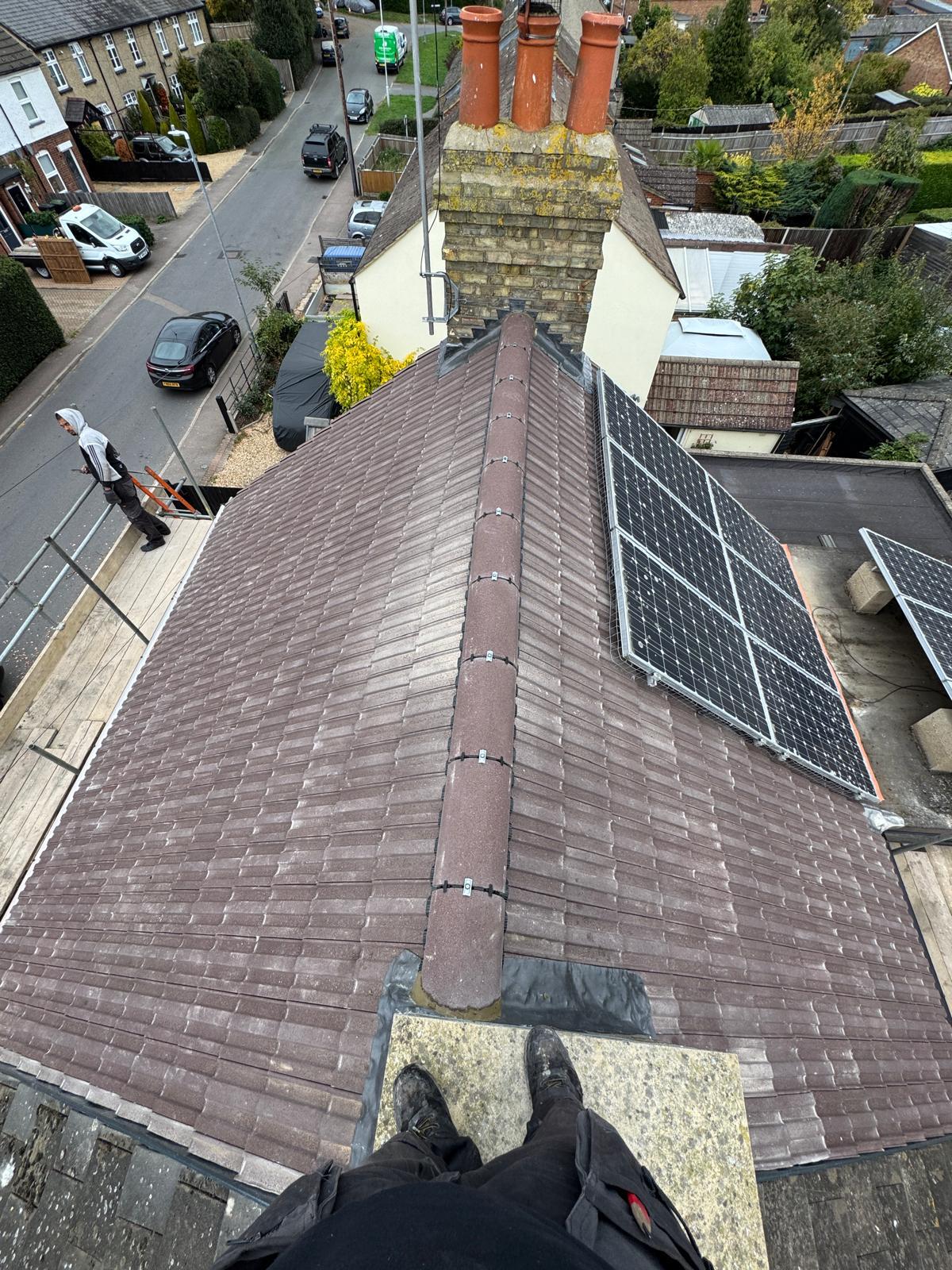
A lead valley, done well, lasts for decades - most valley leaks we see are aged or cracked lead, or mortar-bedded valleys where the mortar has crumbled.
Why Valleys Fail
Knowing why valleys go wrong helps you understand what a repair actually needs to fix. There are four main causes, and often more than one is at play.
Cracked lead. Lead expands and contracts with temperature, and if it was laid in lengths that are too long - a common old shortcut - that movement has nowhere to go and the lead splits, usually across the middle. Age does it too; very old lead simply fatigues and cracks. Once cracked, water runs straight through.
Failed mortar. On mortar-bedded valleys, the mortar holding the cut tiles cracks, crumbles and drops out over the years, opening gaps for water. Frost accelerates it.
Blockage. As covered above, debris dams the channel and forces water sideways under the roof covering. This one's the easiest to prevent and the easiest to fix.
Poor original detailing. Some valleys were simply built badly - too shallow, too narrow, or with the tiles cut too tight - so they overflow in heavy rain no matter how clean they are. These need re-forming properly rather than patching. The leadwork side overlaps heavily with flashing, which we cover in our guide to lead flashing repairs in Bristol.

Cracked lead, failed mortar, blockage and poor original detailing are the four causes of valley failure - often more than one is at work on the same valley.
Repair or Full Renewal?
When a valley leaks, the question is whether it can be repaired in place or needs renewing, and the honest answer depends on its condition.
A repair makes sense when the problem is localised: a single crack that can be sealed, a section of failed mortar that can be repointed, or a blockage that just needs clearing. These are quick, affordable fixes, and if the rest of the valley is sound they'll hold well.
A full renewal is the better call when the lead is old and cracking in several places, when the mortar has failed along most of the valley, or when the valley was badly formed in the first place. Renewing a valley means lifting the tiles or slates on both sides, taking out the old valley, fitting a new lead or dry-valley channel, and re-laying the roofing over it. It's more work, but on a valley that's fundamentally worn out it lasts far longer than patching the same thing again and again. This is exactly the kind of job our roof repair service handles, and we'll always tell you honestly which option your valley needs rather than defaulting to the bigger job.
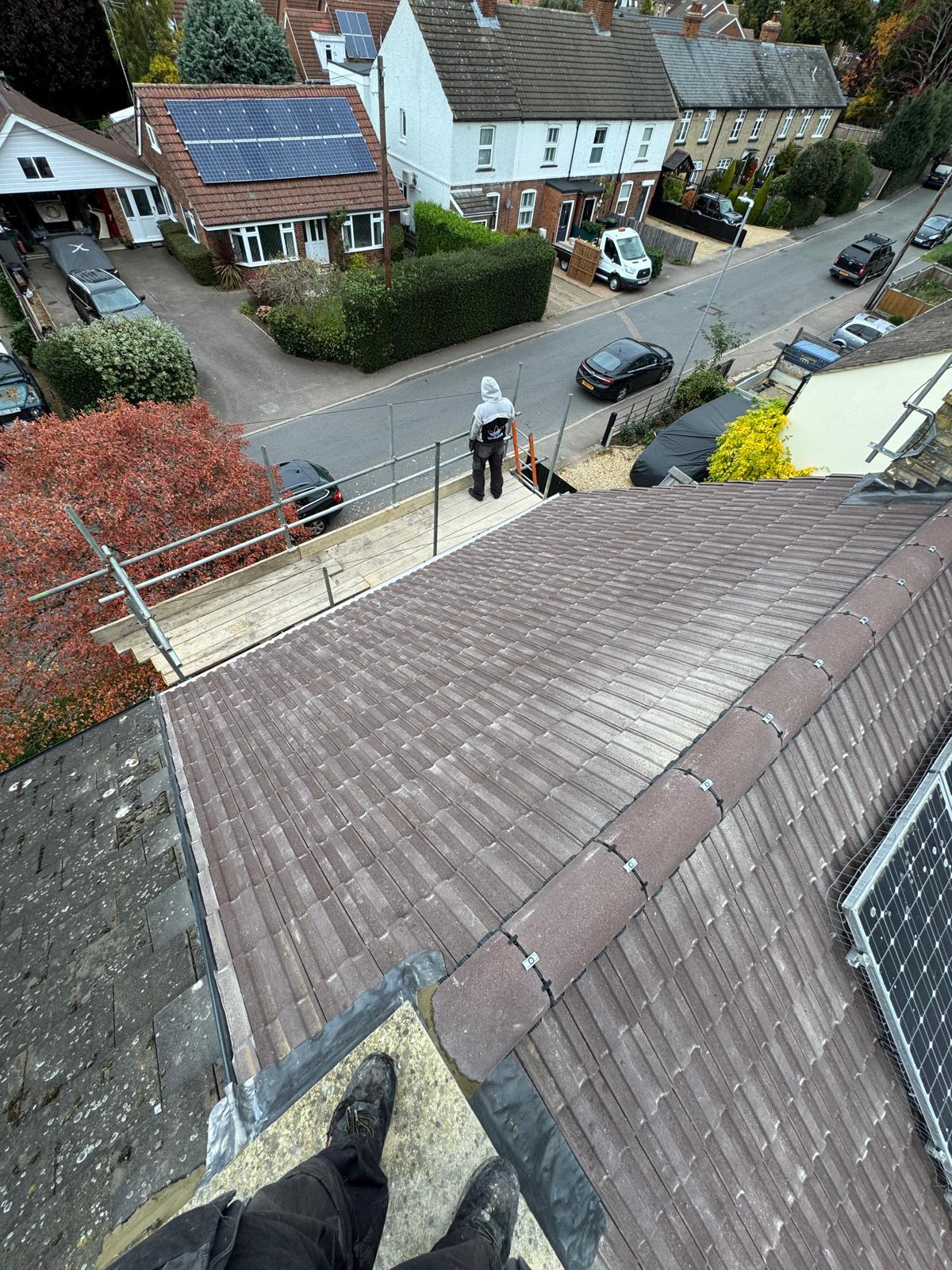
A localised crack or blockage is a repair; lead that's cracking in several places or a badly formed valley is worth renewing properly rather than patching repeatedly.
What Valley Repairs Cost in Bristol (2026)
Guide prices for valley work on a typical Bristol property in 2026:
- Clearing a blocked valley: £80 - £200, often combined with a gutter clear.
- Localised repair (resealing a crack, repointing a section): £200 - £600.
- Full valley renewal (per valley): £600 - £1,500, depending on length, the covering, and access.
- Multiple valleys or a complex roof: priced per valley after assessment.
As with any roof work, access drives a lot of the cost - a valley that needs a scaffold or tower to reach safely costs more than one reachable from a single tower position. Be wary of a valley "repair" quoted very cheap, especially if it involves smearing mortar or sealant over the problem; that's a short-lived bodge on a part of the roof that really needs doing properly. When choosing a roofer, the National Federation of Roofing Contractors and the TrustMark scheme both let you check they're vetted. For wider repair pricing, our 2026 roof repair cost guide covers the full range.
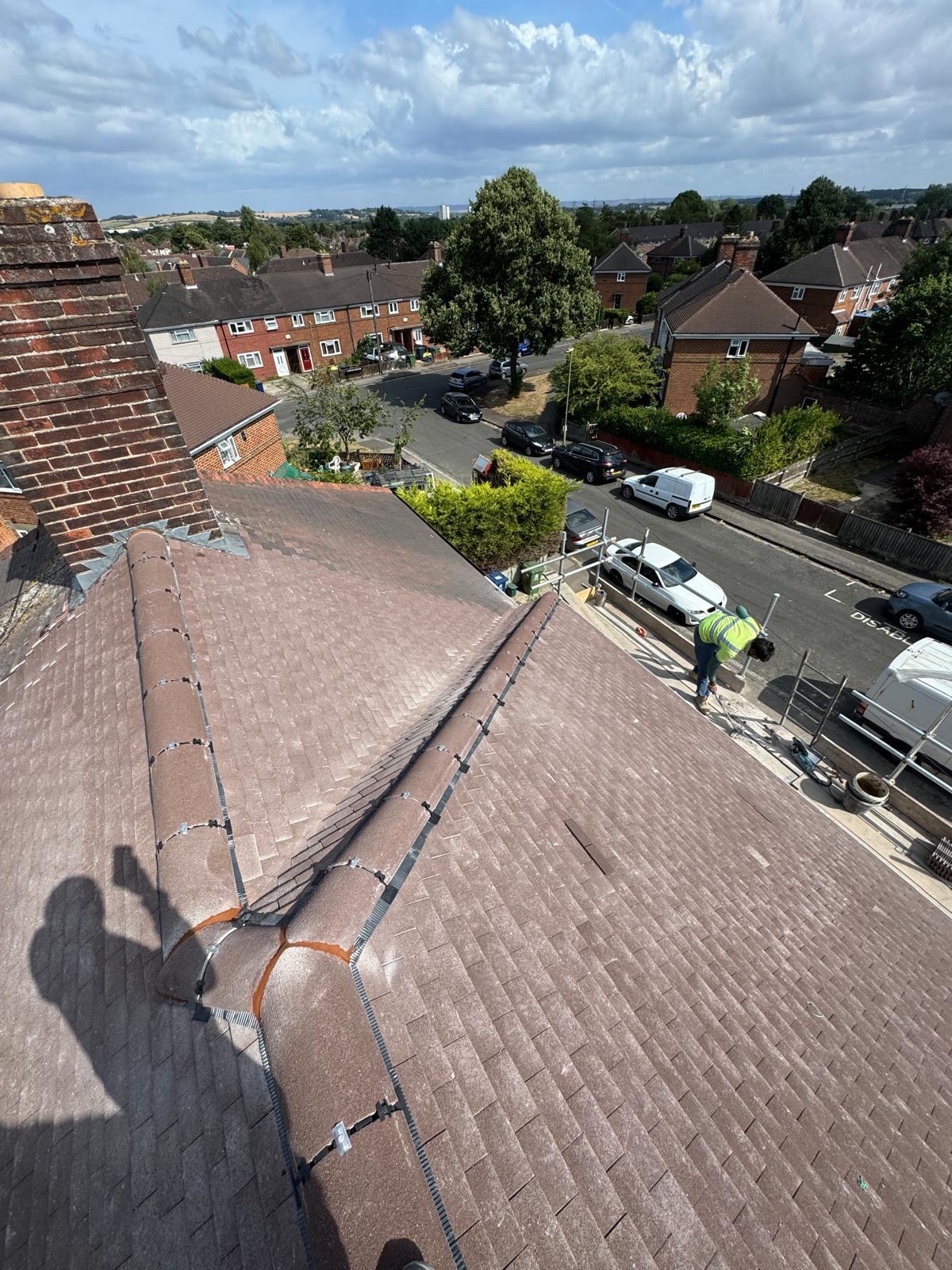
A properly renewed valley - lead or a modern dry-valley system - keeps water flowing cleanly to the gutter and lasts far longer than a smear of sealant over a crack.
Keeping Valleys Clear and Trouble-Free
Most valley problems are far cheaper to prevent than to fix, and prevention comes down to keeping the channel clear. A blocked valley is the most common and most avoidable cause of a valley leak.
The simplest thing you can do is have the valleys and gutters cleared as part of an annual autumn check, before the wet season loads them up - something we cover in our guide to preparing your roof for winter in Bristol. If your property is near trees or your roof grows moss readily, it's worth doing more than once a year. Clearing valleys ties in closely with keeping the gutters flowing, which our guide to gutters and downpipes in Bristol covers in detail. A ten-minute clear-out beats a soaked bedroom ceiling every time.
Keeping the valley clear is the cheapest insurance there is - an annual autumn clear-out of valleys and gutters prevents most valley leaks before they start.
Frequently Asked Questions
Got a damp patch and a suspect valley?
Valley leaks are easy to misdiagnose and easy to bodge. We'll find out whether yours needs clearing, a localised repair or a full renewal, and give you a straight answer and a clear price. Book a free, no-obligation assessment across Bristol.
Book a Free Assessment